4 November 2026, 14:17
Loading...
First-ever summit on critical minerals held in Paris
Jana Ochvatová
8 November 2023, 11:37
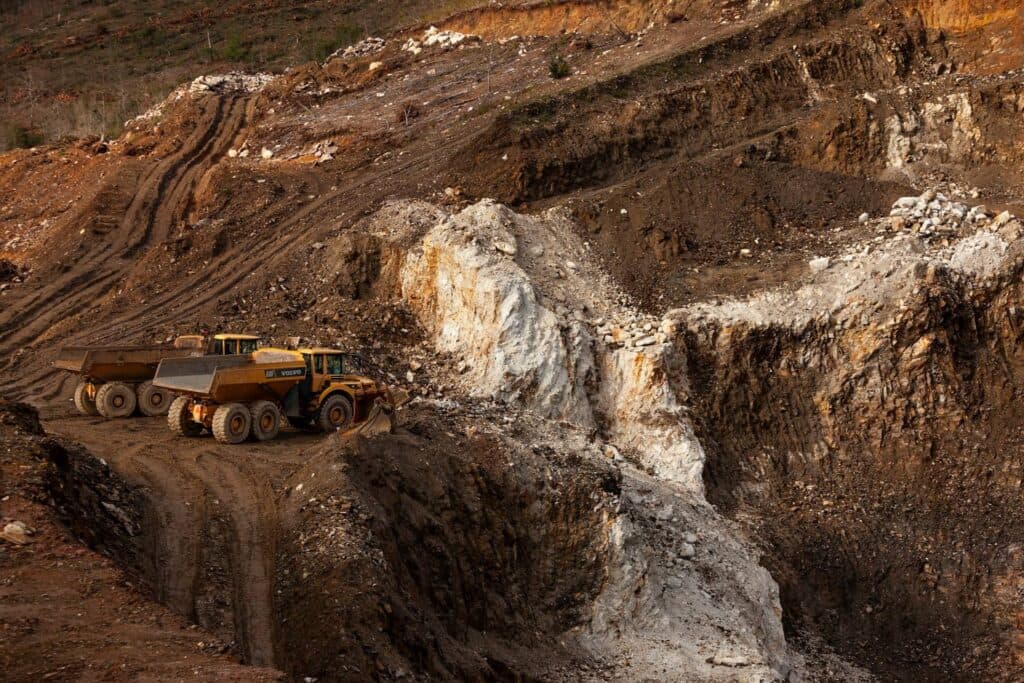
Representatives of 50 countries from around the world gathered in the French capital for the first summit organized by the International Energy Agency (IEA) to discuss clean energy’s dependence on critical minerals.
Low-emissions technologies such as solar panels, wind turbines, electric vehicles and batteries contain significantly more so-called critical materials than fossil fuel-based technologies. These include minerals such as copper, lithium, nickel, cobalt, graphite and rare earth elements.
According to the IEA, these minerals—or raw materials more broadly—can be considered “critical” if:
- They play a role in a country’s strategically important economic sectors
- The country depends on imports of them
- The political and economic situation in the producing countries is unstable
- It is difficult to replace one mineral with another, making a particular mineral used for a specific purpose very scarce and creating a high dependence on a stable supply
- Production is dominated by very few countries, which are therefore able to control large portions of supply, leaving buyers dependent on only a handful of producing countries.
Criteria and context vary significantly from country to country
The summit established six key pillars for ensuring secure, sustainable and reliable supplies of critical minerals, emphasizing progress in diversifying supply sources, making full use of technologies and recycling them, market transparency, the availability and reliability of information, sustainable and responsible production, and international cooperation.
“The level of excessive concentration we see today in critical minerals markets is unlike that of any other major commodity on which we have relied in the modern world. History has shown us that failing to diversify the supply of and trade routes for essential resources carries serious risks,” said IEA Executive Director Fatih Birol. “
The types of mineral resources used vary by technology. Lithium, nickel, cobalt, manganese and graphite are key materials for battery storage. Rare earth elements, for example, are essential for permanent magnets used in wind turbines and electric vehicle motors.
A typical electric vehicle requires six times more mineral inputs than a conventional car, while an offshore wind farm requires thirteen times more mineral resources than a similarly sized gas-fired power plant.
Electricity grids require large quantities of aluminum and copper, the latter being a cornerstone of all electricity-related technologies.
According to the IEA’s Announced Pledges Scenario, demand for critical minerals will more than double by 2030. Under the Net Zero Emissions by 2050 Scenario, it will increase three-and-a-half-fold by 2030, exceeding 30 million tonnes. The World Bank forecasts annual demand growth of up to 450% for cobalt, graphite and lithium. Given this trajectory, ensuring their secure supply is a crucial task.
Green conflict minerals
Mining and refining these minerals have significant negative environmental impacts, including habitat destruction and pollution of water sources. Meeting growing demand often conflicts with stricter environmental regulations and broader social considerations.
The International Institute for Sustainable Development (IISD) has published a report on how mining and trade in these minerals contribute to human rights abuses. Cobalt mining in the Democratic Republic of the Congo (DRC), for example, is often associated with artisanal mining, including child labor.
The IEA will continue to pay close attention to critical minerals and their role in energy transitions. Among other things, it will host a webinar on the topic on November 9: Navigating Geopolitical Uncertainties and Scaling Up Investment for Diversified Supplies
Translation disclaimer
This article is a machine translation of the Czech original and has not yet been fully reviewed. In case of any doubt, please refer to the Czech version.
Sdílejte článek prostřednictvím:
You might also like

4 November 2026, 12:34
4 November 2026, 09:09