
23 October 2026, 14:38
Loading...
France gets EU green light to add another CZK 11bn a year for renewables

Martin Voříšek
10 October 2017, 14:37
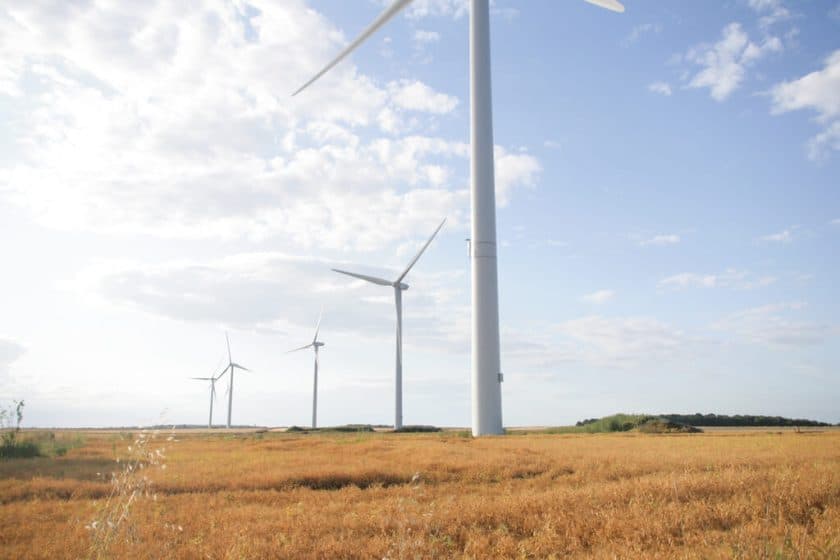
The European Commission has approved a support scheme for renewables in France. Funding will be allocated through a total of four support mechanisms for onshore wind farms and solar power plants. This should enable France to meet its 2020 targets.
Energiewende is not only planned in Germany; to a limited extent, the transition towards renewable sources will also take place in nuclear-powered France. While Germany plans to remove nuclear power from its energy mix entirely, France wants to reduce its share by around 25 %. In both countries, renewables are to replace nuclear power.
This represents a significant change for France, given its considerable reliance on nuclear generation. France is currently the EU's largest electricity exporter, but given its ageing fleet of nuclear power plants, it may cede this position to another country. Moreover, of the new nuclear facilities, only Flamanville is under construction.
From the perspective of low-emission energy, France therefore has few options other than joining the trend of renewable build-out. This is also why it applied for approval of a support scheme that should also ensure it meets its target of a 23% share of renewables in energy consumption.
A total of CZK 11bn per year will be allocated through auctions, in which support will be awarded to the applicant seeking the lowest price for the electricity produced. If successful, the project will receive support for 20 years. The auctions will be divided into four sections:
- Support for onshore wind farms (max. 3 GW), to be distributed as green premiums among projects with at least six turbines or one turbine with capacity exceeding 3 MW.
- Support for larger-scale rooftop photovoltaics in the form of a feed-in tariff or a green premium, depending on the size of the plant.
- Support for larger-scale ground-mounted photovoltaics (max. 3 GW) in the form of green premiums.
- Support for onshore wind farms and photovoltaic power plants (max. 200 MW).
France can be expected not to face a major problem with variable renewable generation. Apart from nuclear power plants, the remainder of its energy mix consists primarily of hydroelectric and gas-fired power plants. These will be able to flexibly cover electricity supply if renewable output is insufficient.
{„country“:“FR“,“type“:“AREA“,“from“:“2017-09-10″,“to“:“2017-10-08″,“caption“:“Electricity generation in France over the past 30 days“,“url“:“https://energodock.cz/energodock/get_online_generation_data.php“,“source“:“shortcode“,“start_date“:“2017-09-10″,“end_date“:“2017-10-08″}
This winter may also show what France's power sector will look like in the coming years with a lower share of energy from nuclear units. Last autumn and winter were not particularly fortunate for France's largest electricity producer. EDF was significantly troubled by nuclear plant outages, and this year does not look any different. Following the announced outages at the Tricastin plant came outages at the Chooz plant and 10 outages of currently operating units at the Flamanville nuclear power plant.
The most visible consequence has been rising electricity prices, while another is a higher volume of electricity imports into France. Last year, for the first time in years, France even had a positive cross-border balance with Germany in a given month.
Lead image source: Flickr @Hans Trapp
Translation disclaimer
This article is a machine translation of the Czech original and has not yet been fully reviewed. In case of any doubt, please refer to the Czech version.
Sdílejte článek prostřednictvím:
You might also like
23 October 2026, 11:01

23 October 2026, 06:34