
23 October 2026, 14:38
Loading...
GWEC: 2024 was a record year for new wind power capacity

Eduard Majling
3 May 2025, 12:18
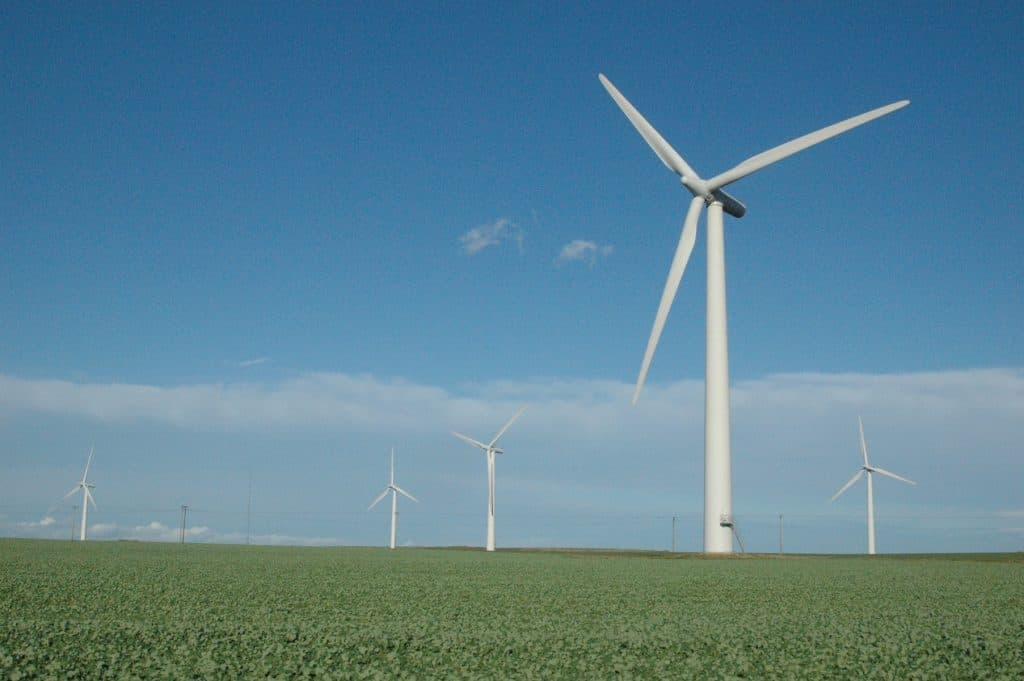
Last year brought another increase in installed wind power capacity. Onshore wind farms, meaning facilities installed on land, continue to dominate the global wind power sector. As with solar PV, China accounts for the bulk of new capacity, with more than two-thirds of the capacity commissioned last year coming online there. At the same time, however, new facilities are being commissioned while ageing wind farms are being decommissioned, as can be seen, for example, in neighbouring Germany.
Last year again saw strong global growth in renewable energy sources, including the construction of wind farms. According to the Global Wind Energy Council (GWEC), wind farms with a total installed capacity of 117 GW were commissioned last year. The council nevertheless warns of growing policy instability in some markets and highlights the need to improve permitting processes, as well as the development of transmission infrastructure and auction mechanisms.
Onshore wind farms still account for the largest share of installed capacity, contributing a dominant 109 GW of new capacity. Offshore wind farms accounted for a further 8 GW of newly commissioned capacity. Overall, the council says, global installed wind capacity rose to 1136 GW.
"Wind is one of the cheapest sources of energy in the world and is one of two renewable energy sources that will account for 95% of global growth in installed renewable capacity this decade. It can provide high-quality energy for consumers with large baseload needs and ensure grid stability," said Girish Tanti, Vice Chairman of the Suzlon Group and Vice Chair of GWEC.
Growth was driven mainly by several markets, with China far ahead of the others in new installations. It commissioned 79.8 GW of capacity last year. The United States and Germany followed, with approximately 4 GW each. India and Brazil also commissioned more than 3 GW of capacity.
Retirements reduce the total capacity increase
However, the figures reported by GWEC appear to capture only gross capacity growth and are not adjusted for facilities taken out of service. The net increase in capacity may therefore be lower, depending on the situation in each region.
For example, according to Germany's grid regulator, many projects involve so-called repowering, meaning the replacement of old machines with more powerful turbines. Some older wind farms are also permanently decommissioned each year; last year, this amounted to a total of 0.7 GW of capacity.
According to the regulator's data, installed onshore wind capacity in Germany rose by just 2.5 GW last year. Germany added a further 0.7 GW of offshore capacity. Total installed wind capacity in Germany therefore increased by 3.2 GW last year, 20% less than the gross growth reported by GWEC.
Translation disclaimer
This article is a machine translation of the Czech original and has not yet been fully reviewed. In case of any doubt, please refer to the Czech version.
Sdílejte článek prostřednictvím:
You might also like


23 October 2026, 11:01


23 October 2026, 06:34