Martin Sedlák: Renewables could eventually cover two-thirds of current Czech electricity demand
The second part of our interview with Martin Sedlák, executive director of the Alliance for Energy Self-Sufficiency, focuses on the potential of renewables in the Czech Republic, opportunities to increase energy efficiency, and Martin Sedlák’s views on nuclear power.
In the first part of the interview, we asked about the level of support for rooftop photovoltaic power plants, the poor reputation of renewables in the Czech Republic, and the dispute between the Energy Regulatory Office and the Ministry of Industry and Trade over the announcement of support for subsidised energy sources.
The potential of renewable sources in the Czech Republic is relatively limited, whether wind or solar power plants are concerned. In your view, what share of energy generation from renewables is realistically achievable under Czech conditions?
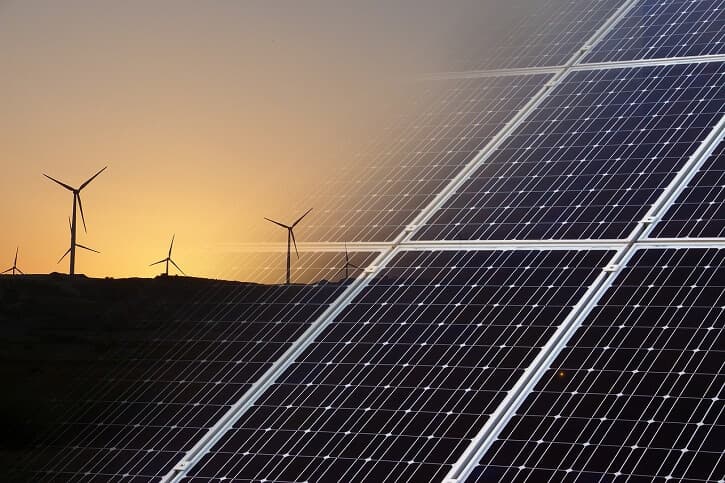
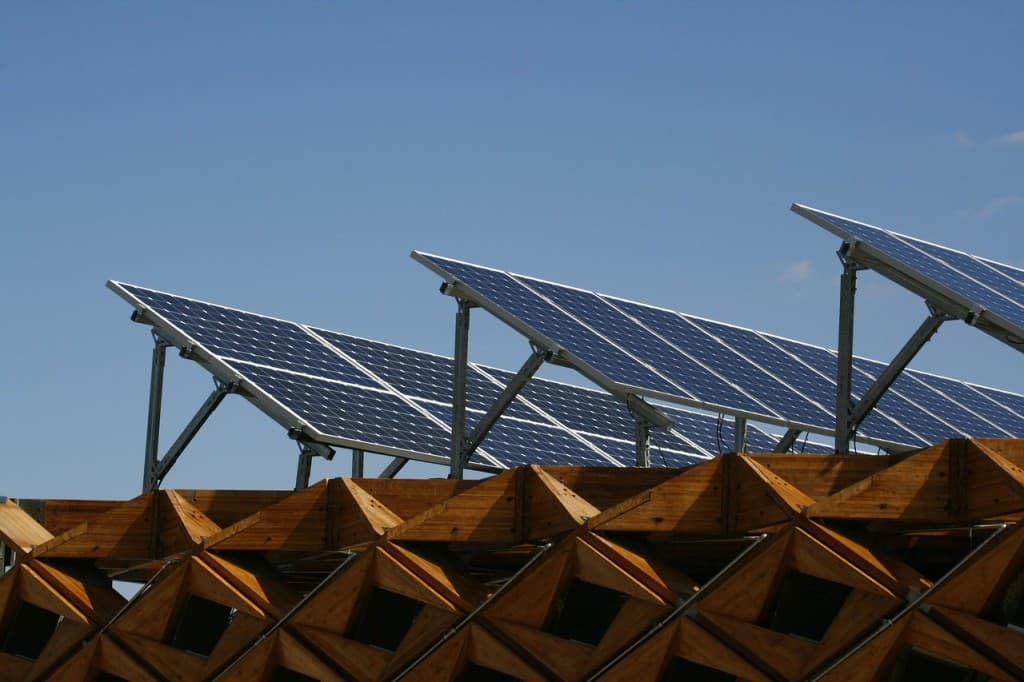
The limited potential of renewable sources is a cliché that ministers of industry, now long forgotten, liked to repeat. The Smart Energy study, whose preparation I coordinated in 2010, already confirmed that renewables could eventually cover 49 % of Czech energy consumption. Biogas plants, wind power plants, solar panels and other renewable sources could eventually cover two-thirds of current Czech electricity demand. I am five years older, and renewable technologies have become more economically accessible and more efficient. Their potential will continue to grow. According to this year’s study by Hnutí DUHA, wind could eventually generate more electricity than Czech households consume. We also have updated data for solar energy: in autumn, the Czech Photovoltaic Industry Association published a new analysis of the potential for rooftop solar. Photovoltaic panels on homes and factories could eventually generate as much electricity as one unit at Temelín. Further opportunities for photovoltaics lie in using brownfields and other industrially contaminated sites.
A key source for Czech energy is biomass, which can make use of fallow land. Even while maintaining a food-security scenario, there are ample opportunities to obtain crops and woody plants for energy use in electricity and heat generation.
Introducing decentralised generation from renewables and disconnecting from distribution networks increases costs for other users, who cannot afford to acquire still relatively expensive „self-sufficient“ systems. How do you propose ensuring that the poorest do not bear the cost of being unable to disconnect from the grid and generate their own power?
The first key measure on the government side should be support for energy savings in both heat and electricity. High-quality building insulation, the construction of new passive houses, and an emphasis on energy-efficient appliances and lighting are the simplest way to help families avoid falling into the energy poverty trap. However, future governments will have to address how they will meet the guaranteed support conditions that spurred investment in renewable sources. They could supplement consumer-funded support, for example, with a carbon tax or revenues from the sale of emissions credits. In Czechia, half of the revenue from auctions of emissions allowances goes to environmental projects, but the other half disappears into the state budget.
We can also take another example, again from the United States. As part of his strategy, Barack Obama also supported access to renewable sources for lower-income families. His plan can be understood as a tool to address energy poverty, or even to prevent it through households’ own clean energy sources. The Obama administration’s proposal includes support for installations on subsidised housing and increased availability of federally guaranteed loans for the purchase of solar panels. One possible use of this support is community projects, which allow several families to use electricity from a single photovoltaic installation on a building’s roof. Through these measures, the US federal government intends to increase solar capacity on subsidised homes to 300 megawatts by 2020.
Unfortunately, the aforementioned new tariff structure (mentioned in Part 1 of the interview, editor’s note) could reduce the economic attractiveness of installing a solar power plant on a house roof in Czechia. Moreover, it is questionable whether the state, by changing the electricity payment system, is discouraging consumers from saving energy.
You take a rather negative view of completing the Dukovany and Temelín nuclear power plants. In your view, how can Czechia ensure energy self-sufficiency?
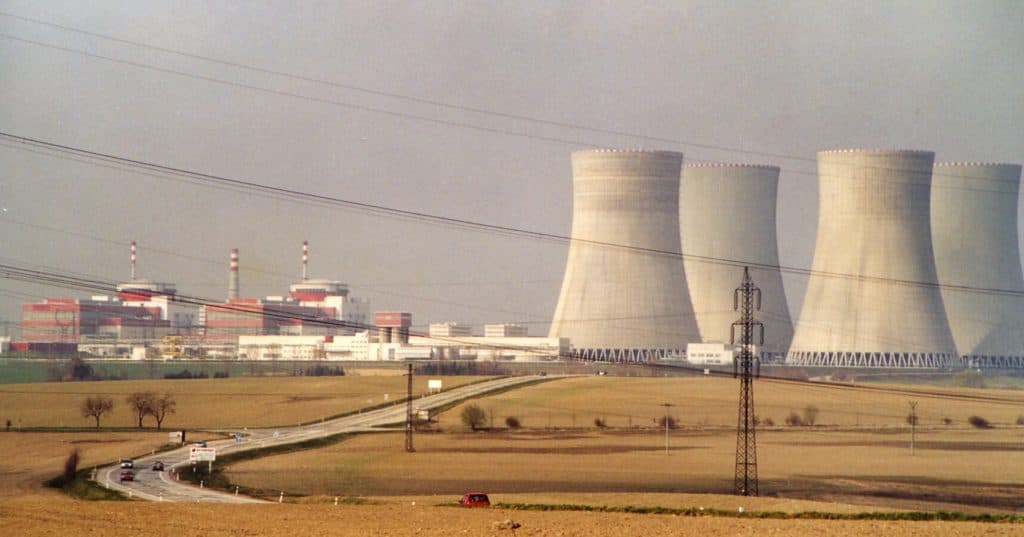
I do not think there is any reactor under construction at Temelín or Dukovany. These are entirely new projects, so why hide them behind the term completion? In any case, we do not need these additional reactors to maintain self-sufficiency. Just look at the new energy strategy adopted this year. It envisages increasing the share of nuclear power to 50 % while also increasing import dependence. According to the Ministry of Industry itself, that does not address energy self-sufficiency.
Yet the simple measures mentioned above, such as energy renovation of buildings or the use of local renewable sources, are cheaper and more accessible tools for increasing Czechia’s energy self-sufficiency. But the energy strategy does not use them sufficiently. The Ministry of Industry’s plan therefore makes no sense at all. International examples make it clear that new reactors will not be built without massive state subsidies. By 2030-35, however, renewable sources will already be competitive. We are therefore consciously rejecting the more advantageous path of clean energy. Another paradox is the Czech Ministry of Industry’s effort to become involved in legal disputes over nuclear subsidies in Britain.
The process of preparing the construction of nuclear reactors needs to be taken back to the very beginning. The environmental impact assessment was prepared poorly. The project sponsor rejected the zero option and did not compare the option of replacing reactor capacity with a mix of renewable sources and improved energy efficiency. Moreover, it uses long-outdated data on the potential and economics of renewable sources. Such a process makes no sense at all and cannot provide an objective picture.
Do you agree with the early closure of nuclear power plants in Germany? After all, they are emission-free sources located near the highly energy-intensive industrial areas of southern Germany.
Germany’s phase-out of nuclear power is not a passing whim of our neighbours, but the result of a process they have been discussing for decades. The gradual phase-out of nuclear reactors combined with a shift to renewable sources will allow them to create a new economy from which they can subsequently profit. They will free themselves from dependence on expensive technologies that would in any case gradually require major investment in refurbishment or replacement with entirely new reactors. At the same time, they will gain experience with new technologies that they can then export. But Germany’s energy transformation is not only about renewable sources. Reducing consumption is also an important part of it.
The key task for German politicians is to reduce the share of coal power. Growth in coal consumption in Germany is one of the Czech myths about the German energy sector, but for the energy transition to remain credible, Germany should not falter in meeting its emissions-reduction commitments.
In your view, what opportunities are there to increase the efficiency of energy use in the Czech Republic?
In homes dependent on coal heating, heat consumption can be cut by half through energy savings. This can be achieved through gradual insulation of homes, replacing windows with high-quality insulated glazing, and other technologies such as controlled ventilation. As early as 2008, the government’s Pačes Commission calculated that the combined potential for insulating Czech homes and generating heat from renewable sources exceeds total coal and gas consumption for heating. Gradually tightening requirements for appliances also leads to household savings. More efficient electric motors in vacuum cleaners, refrigerators and coffee makers are the right way to further reduce household energy expenditure.
Before the territorial mining limits at the Bílina mine were breached, there was debate over whether this coal, together with coal from the ČSA mine, would be needed at all in the future. Do you think Czechia could manage without it?
Czech energy does not need the coal beneath Horní Jiřetín. Building energy-efficient homes and carrying out energy renovations of existing buildings are far better stimuli for the Czech economy than digging into the ground. Insulating homes and other measures during building renovations can create up to 30 thousand jobs. Every billion invested by the state in energy savings in buildings will return in the form of the creation of one thousand jobs.
How would you propose addressing unemployment in northern Bohemia after mining ends? Can renewables offer the creation of a sufficient number of new jobs? And if so, how many?
In 2012, together with colleagues from EkoWATT, we prepared a study for the Ústí Region mapping the potential of renewable sources in the region. The calculations confirmed that a very conservative gradual expansion of renewable sources and energy modernisation of buildings in the Ústí Region could create 2300 new jobs, while further jobs would arise in related service-sector segments, supplier companies and agriculture. The region therefore has clear opportunities that it can use for its renewal and to free itself from dependence on opencast mines.
What do you think Czech energy will look like in 10 or perhaps 20 years?
The energy sector will change radically. Smart grids and energy storage systems are a major challenge associated with the use of solar energy. Today’s solar installations on family homes generate the most electricity when most owners are working away from home. Intelligent demand management will make it possible to set appliances so that they use the maximum amount of their own electricity from the solar plant on the roof of a family home. The current trend, which is likely to dominate the use of solar energy in Czechia in the coming years, is using solar electricity to heat hot water with a boiler or to power heat pumps. New types of more efficient solar cells will also gain ground, again advancing the use of energy from the sun.
The importance of local energy sources will therefore gradually grow, while the share of conventional energy will decline. It can also be predicted that in ten years the government will cancel the tender for the construction of additional reactors at Temelín, having finally understood that it will never be able to justify such an astronomically expensive project to the public. Horní Jiřetín will be a developing town in the next decade, remembering the coal era only in a museum.
Translation disclaimer
This article is a machine translation of the Czech original and has not yet been fully reviewed. In case of any doubt, please refer to the Czech version.