
23 October 2026, 14:38
Loading...
Selling solar surplus is becoming increasingly worthwhile in Czechia. Households can earn up to CZK 1,200 a month
Ekonews.cz
5 June 2023, 13:31
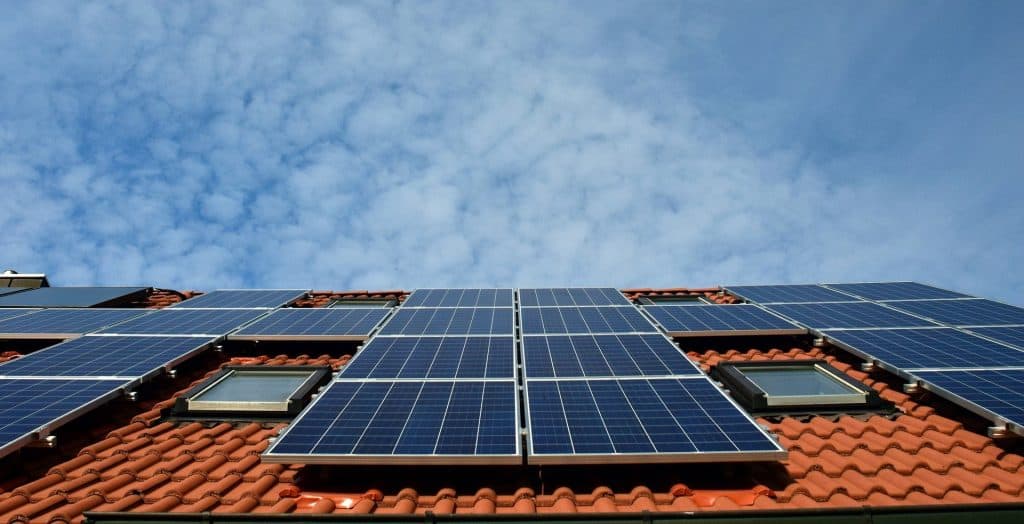
Rather than mere hellers, distributors are now offering as much as four korunas per kilowatt-hour to those who feed surplus electricity from their power plants back into the grid. An average family with panels on its roof can earn up to CZK 14,000 a year, reducing its electricity bill by that amount. Distributors report enormous interest in residential solar power plants.
Owning a small solar power plant is becoming increasingly worthwhile. While just a few years ago the purchase price for surplus electricity amounted to a few hellers, it can now make a noticeable contribution to the family budget at the end of the month. Let us consider a model example: a power plant with a capacity of 10 kWp, with annual generation of around 10 megawatt-hours.
“In the summer months, such a family has a surplus significantly higher than its consumption. It also depends greatly on the type of technology used for water heating, heating and so on,” Lukáš Papež, head of photovoltaic installations at Woltair, describes the example.
For the family in question, the surplus would amount to roughly 4,000 kilowatt-hours a year. “For every such kWh, I receive CZK 3.5 on average. That is CZK 14,000 a year, or just under CZK 1,200 a month,” Papež calculates.
There are more ways to earn than in the past
The situation has changed because electricity purchase prices offered by suppliers that buy surplus energy from small-scale solar producers have risen significantly. This is confirmed, for example, by Pražská energetika (PRE). For every megawatt-hour of surplus electricity, a customer using the PRE PROUD SOLAR product can receive CZK 3,500, or rather a discount of that value on electricity taken from the distribution grid. ČEZ quotes even higher purchase prices.
“We buy electricity from customers at the same price at which they purchase wholesale electricity from us, currently CZK 4,750 per MWh excluding VAT,” says Ladislav Kříž, spokesperson for the ČEZ energy group.“This applies to customers who have only one EAN code (used to identify an electricity supply point, editor’s note), through which they both purchase electricity and feed surplus electricity into the grid. We therefore reduce the commodity component of the price of their consumption on the invoice by the value of their surplus electricity, Kříž explains.
During last year’s turbulent period, it was even possible, according to Papež, to sell surplus electricity on the spot market for as much as CZK 12 per kilowatt-hour for a short time. “The situation has now begun to stabilise and, on average, we can say we are talking about around CZK 3 to 4 per kilowatt-hour. There are many options, which is, among other things, the main reason why surplus electricity has started to be valued more significantly in this way,” Papež says.
The situation also differs radically from the past in that it is now possible to have a second EAN code for the same electricity meter. This allows people to keep their existing electricity supplier while also arranging with another supplier that only purchases surplus electricity on the spot market and is more financially attractive.
Power plants are increasing rapidly
Czechs’ interest in residential solar power plants is growing year by year. For example, E.ON last year purchased electricity from more than 12,000 renewable energy sources, roughly 12 percent more than in 2021. “Photovoltaic power plants account for the largest share of this number, representing more than 90 percent of all sources. Small sources of up to 10 kWp account for the largest share by number,” says E.ON spokesperson Roman Šperňák.
ČEZ Prodej installed a record 4,102 rooftop photovoltaic systems last year, with their installed capacity quadrupling compared with 2021. PRE reports a similar trend. “It can be said that in the past only individuals in Prague were interested in selling surplus electricity, whereas now there are hundreds. In April alone this year, we recorded interest that was 76 percent higher,” says PRE spokesperson Petr Holubec.
A virtual power plant can help with surplus electricity
One disadvantage of direct sales to the grid is that selling surplus electricity is fairly volatile and develops relatively quickly. It can be sold on the spot market, where the electricity price is set one day ahead. However, it can vary significantly depending on current demand and, for example, generation from renewable sources. If the sun is shining during the day and photovoltaic power plants are creating surpluses, the purchase price on the spot market is lower. A virtual battery is a more stable and, for many households, more advantageous alternative to selling electricity.
“It works on a simple principle. We measure the wholesale electricity that the customer generates at home but cannot use and which flows into the grid. We then deduct the same volume of wholesale electricity for the customer when, due to insufficient generation, their system draws energy from the grid,” Šperňák explains.“For example, the customer generates significantly more unused energy in the summer months, and in the winter months, when they draw from the grid, the amount is reduced accordingly,” he says.
The only charges the customer pays at that point are distribution fees and a fee for using the Virtual Battery. “This product is very popular with us and is used by 90 percent of customers who purchase a solar system from us,” Šperňák says.
A second EAN code is the route to higher earnings
Aleš Hradecký, chairman of the Association for Energy Storage and Photovoltaics, recommends that every small-scale solar producer apply for a second, generation EAN code. This will give them more favourable electricity purchase terms.
“With a generation EAN code, you can decide yourself to whom you sell your electricity. And above all, not only at fixed prices as in the past, but also at spot market prices. Sometimes, for example, it pays to sell electricity in the morning and charge the battery only after lunch. It depends on how the electricity price is set that day,” Hradecký says.
It is also of interest to owners of photovoltaic power plants that MPs may still approve the LEX OZE II law this year (an amendment to the Energy Act, editor’s note). “It will make it possible to share electricity, for example from your own cottage in the countryside to your flat in the city. Or within a community in a given locality,” Hradecký notes.
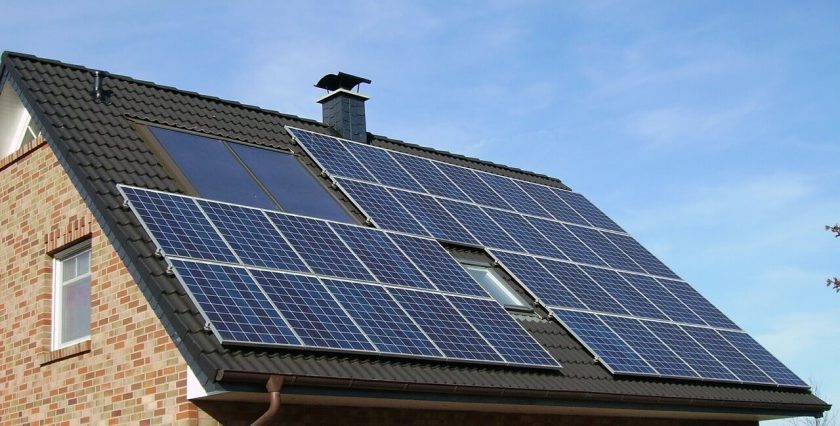
Another way to use surplus electricity is to heat water with it. This solution is particularly suitable for solar producers whose distributor has not allowed a full connection to the grid until its capacity is reinforced.
“What options are available to you if you need to use surplus energy and do not have a heat pump or an electric vehicle? Start storing it in hot water,” says Luboš Vrbata, head of the DZD Solar division at DZ Dražice, a Czech manufacturer of water heaters. There are now a number of water heaters on the market designed specifically to consume surplus electricity from photovoltaic power plants.
The minimum capacity should be 200 litres so that the heat remains stored even on days when the sun does not shine. If these water heaters are part of a system with a storage tank, the photovoltaic power plant first heats the water in the boiler, and surplus energy is subsequently stored in the heating storage tank.
Taken from the online portal EkoNews.cz, a website covering business and sustainability.
Translation disclaimer
This article is a machine translation of the Czech original and has not yet been fully reviewed. In case of any doubt, please refer to the Czech version.
Sdílejte článek prostřednictvím:
You might also like
23 October 2026, 11:01


23 October 2026, 06:34