
23 October 2026, 14:38
Loading...
Slow approval of legislation hampers rooftop solar on Czech apartment blocks and the resulting savings
Ekonews.cz
8 December 2022, 12:13
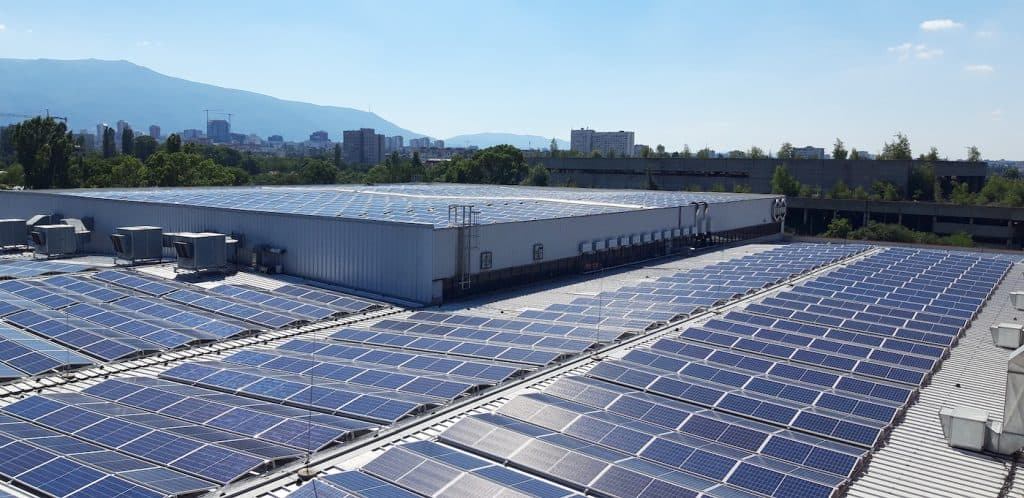
Solar panels on roofs help bring down energy prices. Once an amendment to the Energy Act is approved, apartment buildings, including prefabricated blocks, could also install photovoltaic systems more easily. However, the efforts of apartment owners’ associations are being held back by the slow approval of the necessary legislation.
Even today, if an energy source has a capacity of less than ten kilowatts, a unit owners’ association (SVJ) can operate it without a licence issued by the Energy Regulatory Office (ERÚ). However, plants of this size are not suitable for supplying multiple apartments and would not be worthwhile for an SVJ or housing cooperative. The planned amendment is set to raise the threshold to 50 kilowatts.
The Ministry of Industry and Trade submitted the amendment to the Chamber of Deputies at the end of September this year. However, the opposition ANO and SPD parliamentary groups did not agree to fast-track consideration of the bill. The amendment has already passed its second reading and will next be discussed by the Chamber at the beginning of December. It is therefore highly unlikely that it will complete the entire legislative process by the new year. In addition to the Chamber of Deputies, it must also be approved by the Senate and then signed by the president.
Industry and Trade Minister Jozef Síkela said on his Twitter account that the amendment would help Czech citizens during the energy crisis. However, he conceded that it might not take effect from 1 January. “The opposition rejected it and has probably deprived citizens of the opportunity to cost-effectively produce more of their own electricity from the start of next year,” Síkela wrote.
“The Ministry of Industry and Trade is trying to secure consideration of the bill at third reading next week,” Miluše Trefancová from the ministry’s press department tells Ekonews.cz. “We believe it is not impossible for the amendment to take effect from the beginning of next year. If not, it will take effect immediately after approval and publication in the Collection of Laws,” Trefancová adds.
The ministry has been promising the amendment for several months. As early as May, the department included changes to the conditions for generating energy without a licence in an amendment to the Energy Act concerning gas storage facilities and shortening the period with a supplier of last resort. However, the proposal ultimately reached the Chamber of Deputies without the capacity increase.
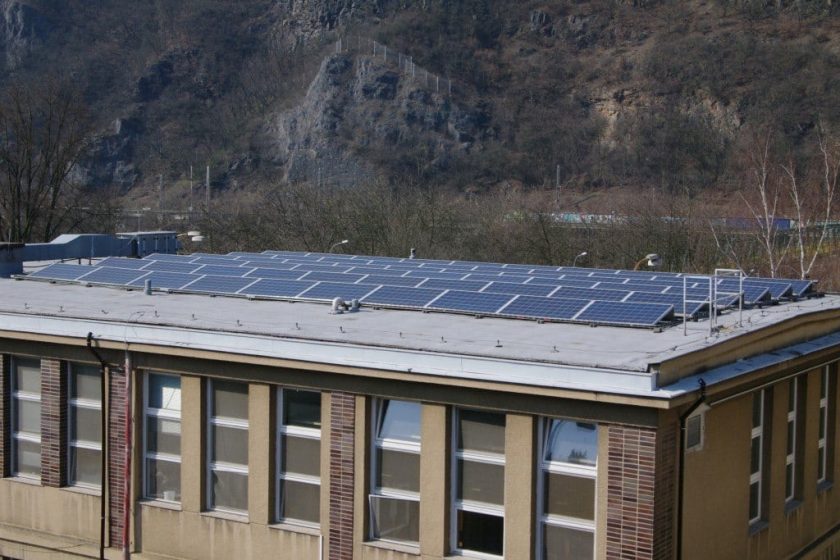
Once the amendment passes, solar panels could begin appearing increasingly often not only on family homes but also on apartment buildings and prefabricated blocks. Until now, obtaining the necessary licence has not been difficult, but the issue has been the requirement to report generation regularly to the Electricity Market Operator (OTE). The licence therefore creates additional paperwork for cooperatives and may discourage them from installing photovoltaics.
The planned legislation also amends the Building Act. Under the new rules, small renewable energy installations of up to 50 kilowatts will not require planning permission, a building permit or notification of construction.
“The new amendment to the Building Act is meant to simplify photovoltaic installations, but it will probably initially create complications because it refers to certain safety standards that nobody has yet seen,” Vladimír Matajs of Solární experti tells Ekonews.cz. The ministry will subsequently set the safety requirements by decree, but it is not yet clear what form they will take.
They will either obtain a licence or not connect the plants at all
Vladimír Matajs helps people install photovoltaic power plants at Solární experti. “We currently have around three hundred power plant projects for apartment buildings under development, but only a handful have so far reached implementation,” he says.
According to Matajs, SVJs and housing cooperatives currently have two options. They can apply for an ERÚ licence, which entails the aforementioned administrative burden. Once the expected amendment takes effect, they can then cancel the licence and operate without it. The other option is to wait until the new legislation takes effect and not generate electricity in the meantime – either leaving the photovoltaic system unconnected or not installing it at all.
“For SVJs and housing cooperatives that have yet to decide on the investment, this creates considerable uncertainty,” Matajs adds. Solární experti is currently planning to connect completed projects to the grid only in February. “We therefore hope that the amendment to the Energy Act will already be in force,” he says.
In his view, a delay of several weeks will cause minimal complications. However, if the adoption date continues to be pushed back, SVJs and cooperatives will face increasing losses. “They will not be generating electricity while also having to repay loans,” Matajs concludes.
The amendment will help, but it is only the first step
However, the aforementioned amendment raising the threshold for licence-free photovoltaic installations is not the main obstacle preventing the rollout of photovoltaics on apartment buildings.
“While the option to acquire photovoltaics without a licence is beneficial for SVJs and housing cooperatives, the main current barrier is that electricity from rooftop photovoltaics cannot be supplied to multiple apartment units. This issue is not addressed by the amendment, but by a decree of the Energy Regulatory Office,” Laura Otýpková, a lawyer at the Frank Bold expert group, tells Ekonews.cz.
According to Otýpková, the planned decree on Electricity Market Rules is already prepared and is currently being considered by the government’s Legislative Council. “It should take effect from 1 January 2023, so the main barrier will probably be removed on the expected date,” the lawyer adds.
The Ministry of Industry and Trade is also working on another amendment to the Energy Act that is intended to establish community energy as such in Czech law. It is currently under consultation.
Republished from EkoNews.cz, a website covering business and sustainability.Translation disclaimer
This article is a machine translation of the Czech original and has not yet been fully reviewed. In case of any doubt, please refer to the Czech version.
Sdílejte článek prostřednictvím:
You might also like
23 October 2026, 11:01

23 October 2026, 06:34