Solar cell production begins in Georgia, US, as America's first fully integrated solar factory takes shape

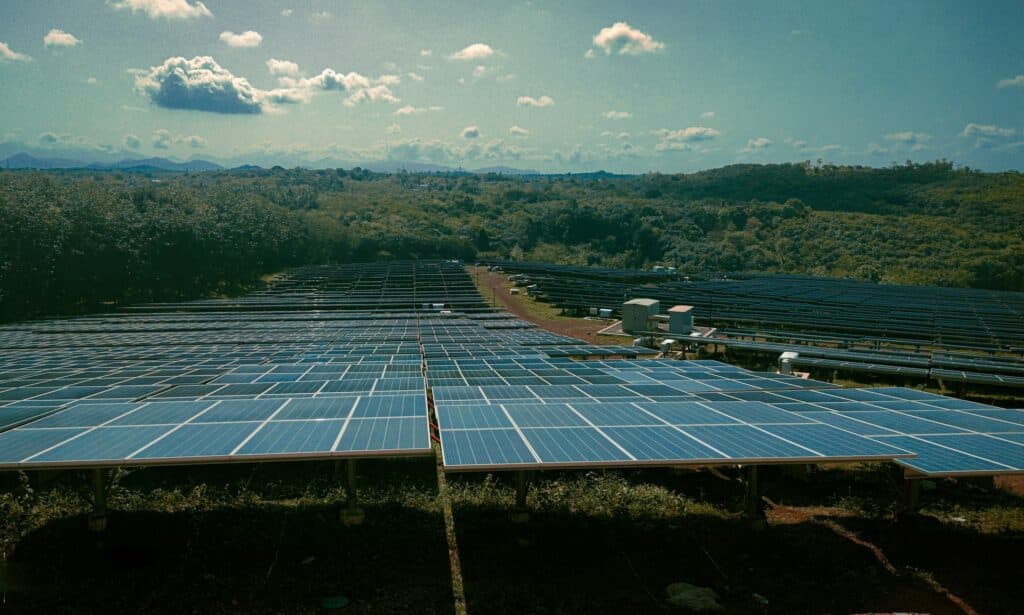
Solar manufacturer Qcells, part of South Korea’s Hanwha Group, has begun producing solar cells at its factory in Cartersville, Georgia. This is a key step toward completing the only fully vertically integrated solar facility in the United States—a plant where all the main components of a solar panel, from ingot to wafer and cell to finished panel, are made under one roof. Once fully operational, which the company plans for the third quarter of 2026, it will be the largest operating solar cell factory in US history.
The company announced the start of cell production on June 9, 2026. Panel assembly in Cartersville is already running at full capacity, it said, with around 16,700 units rolling off the lines each day. Once it reaches full capacity, the plant is expected to produce 3.3 GW of ingots, wafers and cells and 3.5 GW of panels per year. Qcells has invested around $2.5 billion in the Cartersville site.
Vertical integration as a key advantage
Together with another factory in Dalton, Georgia, which tripled its production capacity to 5.1 GW of panels per year at the end of 2023, Qcells’ total US manufacturing capacity will reach 8.6 GW a year, or around 47,000 panels a day. According to the company, that is enough energy to cover the annual consumption of around 1.3 million American households. The two facilities are expected to employ nearly 4,000 people by the end of 2026.
Crucially, this entire chain, from ingot to finished panel, is now being produced on US soil. The United States has long sought to restore cell manufacturing, as this part of the supply chain has so far been largely missing. The launch of production in Cartersville is expected to nearly double existing US cell manufacturing capacity. For comparison, ES Foundry operates a 3 GW cell factory in South Carolina, while Suniva runs a 1 GW facility in Georgia. According to the US Solar Energy Industries Association (SEIA), a further 22 GW of cell manufacturing capacity is also under construction across the country.
Domestic supply chain, tax incentives and tariffs
A fully domestic manufacturing platform has practical benefits for Qcells customers. Panels made in Cartersville can more easily meet the requirements for the domestic content tax credit, while also offering greater certainty around prices, deliveries and the impact of tariffs. Restoring domestic production is all the more urgent as trade tensions and restrictions targeting suppliers linked to China have disrupted imports.
Qcells, which began as a German solar cell manufacturer and is now a subsidiary of Hanwha Group, announced the Cartersville project in early 2023. It began assembling panels there in 2024, but completion of the fully integrated facility was delayed somewhat by the more complex commissioning of the ingot, wafer and cell production lines.
For Hanwha, completing the facility marks the culmination of its effort to build a US “solar hub.” The company has long dominated the US panel market. According to analytics firm Wood Mackenzie, it held 38.5% of the residential panel market last year, retaining the top spot for the eighth consecutive year. It also led the commercial panel segment with a 15.5% share for the seventh year in a row.
Qcells is also moving beyond panel manufacturing. In Cartersville, it operates its first recycling line, with capacity of around 250 MW, or approximately 500,000 panels a year. Under the “Qcells New Homes” brand, it is also launching a division that offers turnkey solutions to homebuilders, integrating solar power and battery storage into new homes.
Comparison with Europe: a continent that has almost lost its manufacturing base
What is happening in the US now stands out particularly in comparison with Europe. The European Union remains almost entirely dependent on imports from China for solar panels. China accounted for around 98% of all solar panels imported into the EU in both 2023 and 2024, according to Energy Intelligence, and is home to more than 90% of global manufacturing capacity. European manufacturers have long struggled to compete with cheap Chinese panels, which are often sold below production costs because of excess capacity, leading to bankruptcies and putting pressure on the entire sector.
The gap is most apparent in the parts of the supply chain targeted by the Cartersville plant. According to a European solar industry monitoring report cited by pv magazine at the end of 2025, the EU has around 12 GW of panel manufacturing capacity, only around 2 GW of cell capacity and virtually no capacity for producing ingots and wafers. To meet the target set by its Net-Zero Industry Act—covering 40% of its annual installed capacity through domestic manufacturing by 2030—the bloc would need around 76 GW in each of these segments. Observers say it remains a long way from meeting those targets.
While the US is building a complete supply chain from ingot to panel under one roof through a combination of tax incentives and tariffs, Europe has virtually no comparable ingot or wafer production and is only beginning to look for ways to develop it. The Qcells project, whose manufacturer has European roots as a company originally founded in Germany to produce solar cells, shows one possible way forward while also highlighting how costly and time-consuming it is to rebuild a domestic manufacturing base.
Translation disclaimer
This article is a machine translation of the Czech original and has not yet been fully reviewed. In case of any doubt, please refer to the Czech version.