Solar plants are so far losing money in May. The day-ahead market shows an average capture price of -8,5 EUR/MWh

Martin Voříšek
Martin Voříšek
9 May 2026, 13:46
solarni-elektrarny-v-kvetnu-zatim-prodelavaji-denni-trh-ukazuje-prumernou-realizacni-cenu-85-eur-mwh

The data available for May so far point to a new reality for solar power plants, at least until electricity storage expands. Their average capture price is currently in negative territory, at around -8,5 EUR/MWh. This is the result of the rapid growth in installed photovoltaic capacity, insufficient system flexibility and frequent price drops into negative territory during midday hours.

Although solar power plants in Czechia began May with high output, the market value of the electricity generated was exceptionally low. According to the May data available so far, the capture price for solar power plants stands at -8,56 EUR/MWh. If solar power plants sold their output solely on the day-ahead market and without support, they would so far be operating at a loss. This is because photovoltaic generation is, on average, concentrated in hours when day-ahead market prices are very low or even negative. May has been exceptional in this respect.

Such a low capture price has occurred for the first time under Czech conditions. In May 2024, the capture price for solar power plants was still approximately 34 EUR/MWh, while in May 2025 it was around 28 EUR/MWh.

This was particularly evident during the first days of May. During midday hours, solar power plant generation repeatedly exceeded 3 GW, while system load remained relatively low due to the public holiday and weekend. As a result, the electricity price fell as low as -500 EUR/MWh on 1 May, with negative prices also appearing during midday hours on subsequent days.

Compared with previous months, this represents a significant shift. In January, the capture price for solar power plants stood at around 134 EUR/MWh (quite logically), in March at roughly 63 EUR/MWh, and in April at only around 20 EUR/MWh. May's decline into negative territory thus shows that the problem of photovoltaic revenue cannibalisation is worsening further in Czechia.

What the capture price actually means

The capture price for solar power plants represents the average electricity price weighted by the current volume of photovoltaic generation. It is therefore not a simple average of day-ahead market prices, but the price that a solar asset would achieve given when it actually generates.

This indicator is more important for investors than the average spot price itself. If solar power plants generate most during the hours with the lowest prices, their actual market revenues are lower than the market average.

In the extreme case seen so far this May, the capture price can even be negative, even though prices remain high during morning and evening hours. This affects not only generators that currently sell part of their output on the spot market, but may also affect generators seeking to conclude PPAs, as counterparties will be willing to offer lower purchase prices. At the same time, Czech legislation limits entitlement to support during periods when market prices are negative.

Rapid capacity growth is running into market conditions

The current development is a direct consequence of the rapid increase in installed capacity. Solar power plant generation in Czechia rose year on year last year by 20,5 %, from 3,9 TWh to 4,7 TWh. Solar sources accounted for 6,6 % of total electricity generation.

solar, photovoltaics, power plant, renewable energy sources
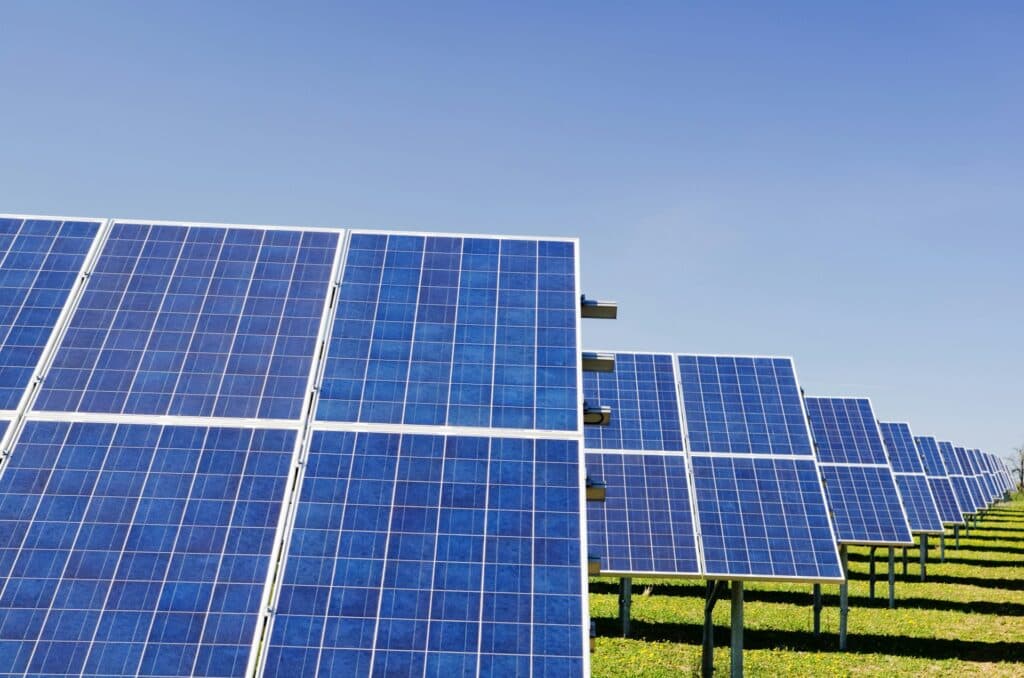
Solar power plant. Source: Pexels

However, the pace of construction is beginning to slow. According to distributor data, 696,8 MW of new solar power plant capacity was commissioned in 2025, around one-fifth less year on year. The largest amount of new capacity was added in the ČEZ Distribuce distribution area, specifically 491,6 MW. EG.D's network added 184 MW and Prague added 21,2 MW.

Total installed solar capacity thus approached the 5 GW mark last year. However, Czechia is still only around halfway towards the target in its National Energy and Climate Plan, which envisages 10,1 GW of solar capacity by 2030. Without storage, demand management and new business models, every additional gigawatt of installed capacity increases pressure on midday prices.

Translation disclaimer

This article is a machine translation of the Czech original and has not yet been fully reviewed. In case of any doubt, please refer to the Czech version.