
23 October 2026, 14:38
Loading...
Spain's blackout revives debate over solar, wind and nuclear power plants

oEnergetice.cz, ČTK
30 April 2025, 10:43
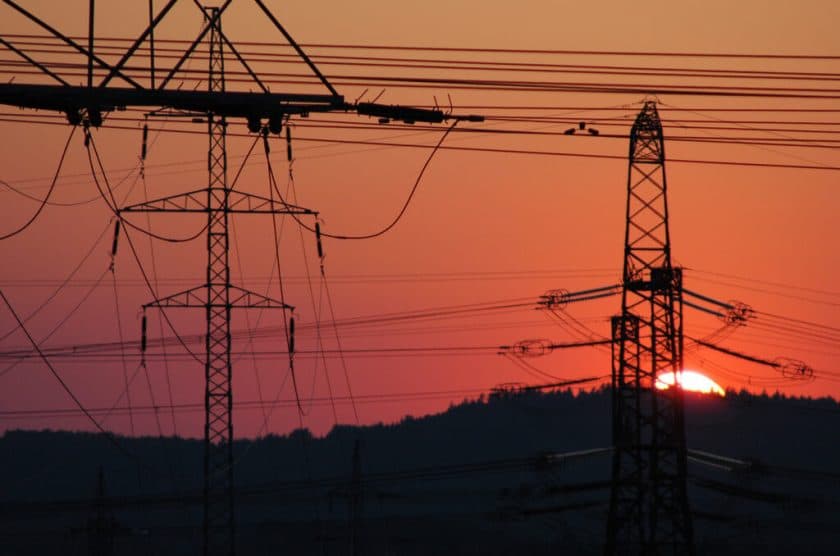
Two days after the worst power outage in Spain’s history, its cause is still unclear. The extraordinary event has, however, sparked a debate in the country about renewable energy sources. Spanish power company Red Eléctrica (REE) itself pointed to a problem with a loss of photovoltaic generation in the southwest of the country shortly before Monday’s blackout. The incident also fuelled calls by the local opposition not to shut down nuclear power plants, the newspaper El País reported today.
REE, whose main shareholder is the Spanish state, said on Tuesday that it had recorded two incidents involving a loss of power generation in the southwest of the country around midday on Monday, probably at solar power plants. This caused the system to disconnect from the European grid and may also have triggered the blackout, REE said, according to Spanish television, adding that the cause of the incidents is unclear. REE ruled out a cyberattack, while the Spanish government, which also convened a meeting of the State Security Council for today, has refused to speculate about the cause. The government has also pledged to do everything it can to prevent the situation from happening again.
„We have a lot of renewable energy, and that is good, but this source is intermittent. Our energy system is subject to an enormous ideological burden,“ said Alberto Núñez Feijóo, leader of Spain’s main opposition party, on Tuesday.
It is true that renewable energy sources (solar and wind) are not always available, since they only work when the sun is shining or the wind is blowing. Some therefore criticise them on the grounds that they pose a greater risk to the security of a system that must meet certain technical requirements (voltage and frequency) within a very short time, the newspaper El País reported. It also said that REE had warned of these risks in its 2024 annual report.
Environmentalists also acknowledge that renewable energy sources need to be adapted to achieve the same reliability as conventional power plants. „It is Red Eléctrica, however, that must set the requirements renewable energy technologies need to meet if they are to improve system security,“ stressed photovoltaic expert Xavier Cugat.
Cugat also stressed that solar power plants, on the contrary, helped restore power more quickly after Monday’s blackout. In northern Spain, however, where power was restored fastest, nuclear power plants in France also helped.
Experts quoted by the newspaper El País also described the advantages of thermal power plants, which, they said, are „like a car whose accelerator you can press harder or ease off“ to solve a problem. This does not apply to wind and photovoltaic power, because they operate at the maximum output allowed by the wind or sun at any given moment.
José Luis Domínguez of the Catalan Institute for Energy Research (IREC) said, however, that the rotation of a wind turbine, for example, can be used to achieve increased output. In his view, the issue could be addressed at a photovoltaic power plant by running it below full capacity, leaving a reserve to compensate for any fluctuations.
Spain is a world leader in renewable energy. According to the newspaper El País, its power system has even run entirely on these sources for several hours on a number of occasions—for example, on 16 April this year and in May 2023. Renewable generation also predominated on Monday, the day of the power outage across mainland Spain. At 12:32, renewables accounted for around 70 per cent of electricity consumption at that moment, according to Cugat. At the time, only four of the seven nuclear reactors were also supplying electricity.
At 12:33 on Monday, Spain’s power grids recorded „very strong fluctuations in energy flows“, caused by a 15-gigawatt drop in electricity generation over five seconds, equivalent at the time to around 60 per cent of consumption. The fluctuations triggered by this drop, whose causes are still being investigated, led to the Spanish power system disconnecting from the European grid via its interconnector with France.
Spain has five active nuclear power plants, with a total of seven reactors in operation. Nuclear power’s share in the system is also declining because Spanish nuclear plants cannot compete with solar and wind power plants on the prices at which they offer electricity, the newspaper El País reported today.
Translation disclaimer
This article is a machine translation of the Czech original and has not yet been fully reviewed. In case of any doubt, please refer to the Czech version.
Sdílejte článek prostřednictvím:
You might also like


23 October 2026, 11:01


23 October 2026, 06:34