ČEZ: Not enough legal arguments to sue over Czech windfall tax

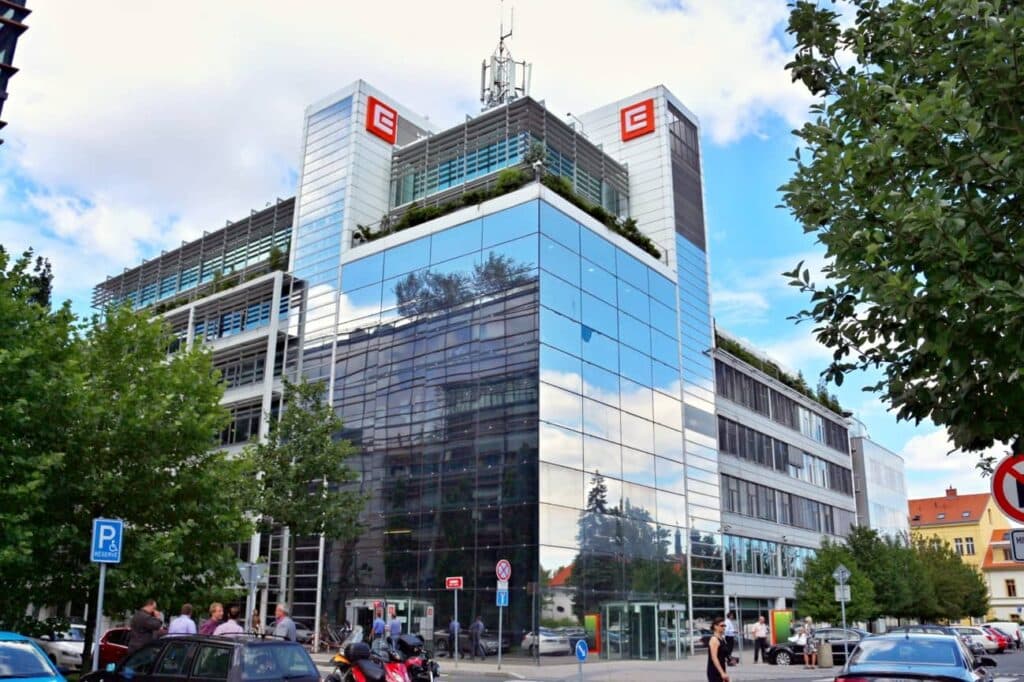
Based on its own legal analyses, the ČEZ Group does not have enough legal arguments to file a lawsuit challenging the windfall tax. In its view, the tax does not violate the constitutional order of the Czech Republic. ČEZ board member Martin Novák said this today at the energy group’s annual general meeting. The windfall tax is 60 percent on top of the standard rate. ČEZ has been paying it since 2023. Some shareholders disagreed with ČEZ’s decision not to file a lawsuit, including minority shareholder and group critic Michal Šnobr. He said the question of the tax’s legality should be decided by a court and that the group should therefore file a lawsuit.
Last year, the ČEZ Group paid the state CZK 30 billion in windfall tax, the same amount as in 2023, Novák said. It set aside CZK 32.1 billion for the payment and therefore expects to pay an additional CZK 2.1 billion. ČEZ paid CZK 15 billion in advance tax instalments for the first two quarters of this year and expects to pay CZK 16 billion for the second half of the year.
"At present, there are not enough compelling legal arguments on which ČEZ could successfully challenge the compatibility of the legislation governing the tax and levy, or a combination of these measures, with the constitutional order of the Czech Republic. Since we concluded that there were not enough compelling arguments for us to mount a well-founded challenge to the tax, we have seen no relevant change in the legal circumstances that would lead us to reconsider our position," Novák said.

Šnobr said the group is legally obliged to file a lawsuit. He also said that the legal analyses commissioned by ČEZ were irrelevant. "We live in a state governed by the rule of law and are waiting to see how independent courts in the Czech Republic resolve the matter. Whether this is unconstitutional or whether minority shareholders are being discriminated against is not for you, as board members, to decide. You are effectively colluding here with a 70-percent shareholder (the state), with whom you share an interest in discriminating against minority shareholders," Šnobr said in a protest against Novák’s statement.
ČEZ is the largest energy company in the Czech Republic. The state is its majority shareholder, holding roughly 70 percent of its shares through the Ministry of Finance. The company made CZK 30.5 billion last year. Its net profit thus rose by almost three percent year on year. Earnings before interest, taxes, depreciation and amortisation (EBITDA) also increased, reaching CZK 137.5 billion. By contrast, adjusted net profit, which is key to determining the dividend, fell compared with the previous year. It stood at CZK 31.8 billion last year, down CZK 3 billion year on year.
ČEZ’s annual general meeting will decide today on the dividend payment from the company’s adjusted profit for last year. In the spring, the company’s board proposed paying out 80 percent of profit, equivalent to CZK 47 per share and a total dividend of CZK 25.3 billion. If the proposal is approved, the state, as majority shareholder, would receive more than CZK 17.6 billion. The final decision rests with the annual general meeting.
Translation disclaimer
This article is a machine translation of the Czech original and has not yet been fully reviewed. In case of any doubt, please refer to the Czech version.