23 October 2026, 14:38
Loading...
Poland enters the offshore energy era. First electricity from the sea is already flowing into the grid
Adam Sosna
16 July 2026, 10:17
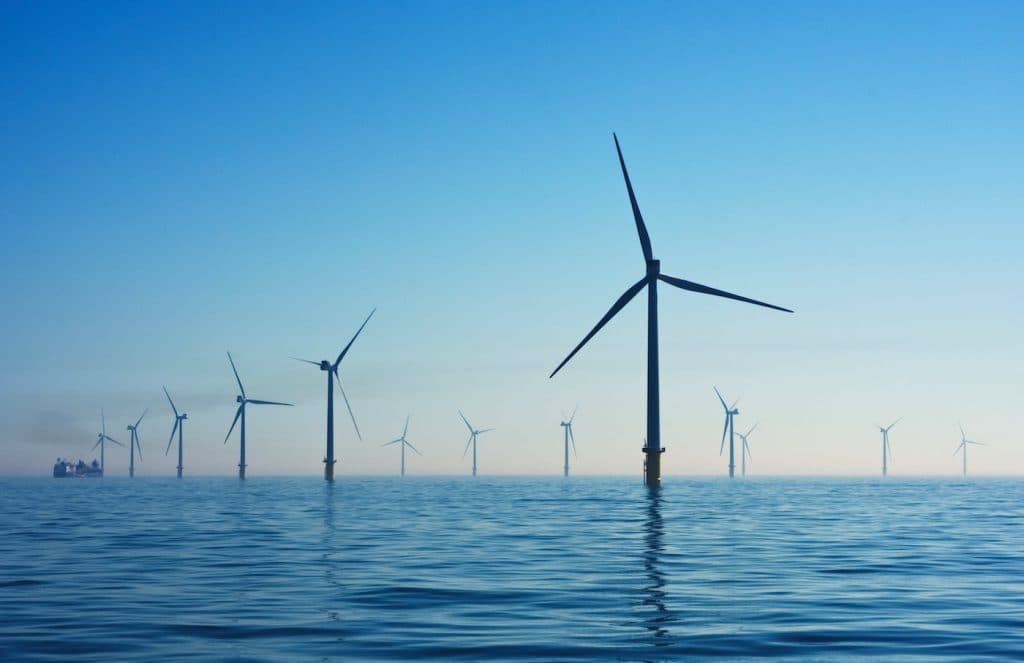
Poland is entering a new energy era. For the first time this week, electricity from offshore wind farms is flowing into the transmission grid of Czechia’s northern neighbour. The Baltic Power project, backed by Poland’s Orlen and Canada’s Northland Power, is making this possible. The Baltic Sea farm is Poland’s first offshore facility in commercial operation and, once completed in autumn, is set to reach an installed capacity of 1.2 GW. Its launch is not only a technological milestone, but also a symbol of Poland’s rapidly developing offshore market. This market is expected to reach a total capacity of 6 GW by 2030.
Polish refining and energy giant Orlen and Canadian company Northland Power commissioned Poland’s first-ever offshore wind farm this week. The Baltic Power project, located 23 kilometres off the coast of the Polish seaside resort of Łeba, is the first sign of Poland’s rapidly developing offshore sector. So far, 54 out of a total of 76 Vestas turbines, each with a capacity of 15 MW, have been installed at the wind farm. They will generate around 4 TWh of electricity annually, equivalent to 3% of current Polish demand.
"We are building a domestic supply chain and developing capabilities that will remain in Poland long after the completion of this wind farm. Its contribution cannot be measured solely in megawatts. It will also provide a lasting boost to the growth of the entire country," Orlen CEO Ireneusz Fąfara said of the project, also highlighting its role in building a new sector of the Polish economy.
The Polish Baltic attracts investors
Poland’s offshore sector has so far developed in two phases. In the first wave, which took place under a support scheme without a conventional auction, the state awarded contracts for projects with a total capacity of 5.9 GW. Baltic Power is one of them, while the remaining farms are to be commissioned gradually by 2030.
In the second wave, Poland switched to a competitive model. In December 2025, the first offshore auction took place, in which the state allocated support for 3.4 GW out of the 4 GW of capacity offered. Prices in the winning bids ranged from 476.88 to 492.32 PLN (111.0 to 114.6 EUR) per MWh. Support operates on the basis of contracts for difference (CfDs), which compensate for the difference between the market electricity price and the price needed to ensure a project’s economic viability.
For investors, Poland is attractive thanks to 25-year CfDs, the shallow Baltic Sea, proximity to the coast and connections to infrastructure, all of which improve project economics.
December’s Polish auction was also Europe’s largest offshore wind tender last year. Following unfavourable results in some auctions in other countries, it showed that Poland’s offshore sector is among the most dynamically developing markets.
Three more Polish auctions are set to follow, with 2 GW of new capacity to be awarded in each of 2027, 2029 and 2031. The long-term framework for Poland’s offshore sector envisages around 18 GW of installed capacity by 2040.
Translation disclaimer
This article is a machine translation of the Czech original and has not yet been fully reviewed. In case of any doubt, please refer to the Czech version.
Sdílejte článek prostřednictvím:
You might also like
23 October 2026, 11:01

23 October 2026, 06:34