23 October 2026, 14:38
Loading...
Wind power in Czechia: Will obstacles block it, or will change come?

Lukáš Lepič
23 September 2024, 11:20
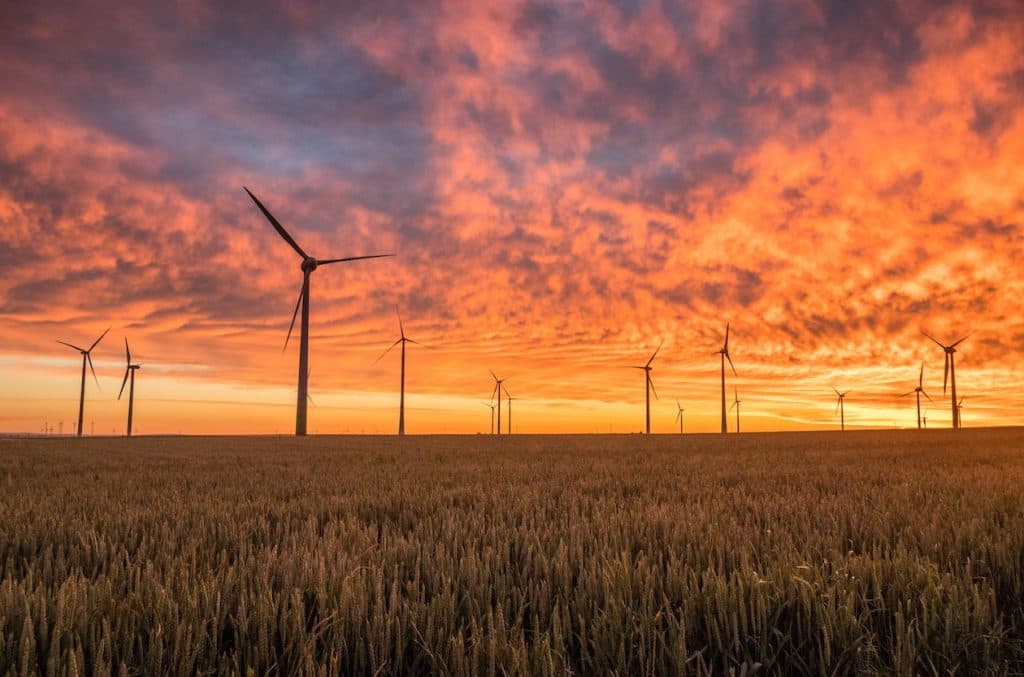
Following the energy crisis in 2022, greater attention began to be paid in the Czech Republic to the development of renewable energy sources and the energy transition. Solar PV has received the most media attention. However, many companies, energy communities and developers are also placing their hopes on a revival of wind power, which has long stagnated in the Czech Republic. The new Building Act may offer hope for change, but a shift in public attitudes will play the key role.
By the end of 2023, a total of 352 MW of wind power capacity had been installed across the country's regions, with only 236 MW installed since 2007, when construction saw its greatest expansion. By comparison, neighbouring Austria alone installed 331 MW last year and now has approximately ten times the installed capacity of the Czech Republic.
A strong upward trend can also be seen in Poland, where wind power had likewise stagnated until recently. However, more than 1,150 MW was added last year and, judging by the steps taken by the government there, development appears set to continue. Slovakia is the exception, where wind power is virtually non-existent.
These figures show that, apart from Slovakia, the Czech Republic lags not only behind its neighbours but also behind European trends. Europe installed 18.3 GW of wind power capacity in 2022 and, according to WindEurope's expectations, 260 GW of new wind capacity should be installed in Europe between 2024 and 2030.
Today, renewed interest in renewable energy sources suggests that better times may also be ahead for wind power. According to data from the Czech Wind Energy Association, wind projects totalling more than 1.5 GW have received favourable EIA assessments in the past. It appears that developers still have many projects sitting in drawers that could be implemented. The question remains to what extent various restrictions will allow the full potential, estimated at around 2.5 GW, to be approached.
It does not blow like Denmark, but...
It is true that the Czech Republic can only quietly envy coastal countries such as Denmark and the Netherlands, which rank among Europe's wind power leaders. After all, windmills have a long tradition in the Netherlands, so it is no surprise that wind power is thriving there today.
The Czech Republic has no such tradition, nor does it have a sea or extensive lowlands with ideal wind speeds. Nevertheless, many locations with untapped potential exist. The best known are probably the wind farms in the Krušné hory and Jeseníky mountains. In addition to these regions, the Vysočina Region also has relatively good conditions. There are several locations where wind speeds at heights above 100 metres average around 6 m/s. This is the threshold that enables the economically efficient operation of power plants.
However, technical potential is significantly constrained by other factors that prevent projects from being built. The most frequently cited include protected areas, which often offer ideal wind speeds. By 2016, 26 protected landscape areas covering a total of 10,761.11 km² had been designated in the Czech Republic, accounting for 13.6 % of its area. The Krušné hory Protected Landscape Area, which could become the largest at up to 1,200 km², is also due to be added to the list. This would certainly not help investors and developers preparing projects.
If these constraints are combined with the inability to build in mining areas (just under 1,259 km²), military training areas (823 km²), airspace zones or within the range of military radars, the amount of land suitable for wind power plants quickly declines.
Last but not least, there is an obstacle frequently discussed in the Czech Republic: the distance from homes. This condition often results in projects remaining only on paper. Yet population density is very similar to Austria, where wind power is thriving, and approximately three times lower than in the Netherlands, where wind power plants generated 29 TWh of electricity last year. This is approximately the same volume of electricity that Czech nuclear power plants supplied to the grid in 2023.
New legislation could improve the situation, but public opinion is key
The new Building Act, an amendment to the linear infrastructure act, an amendment to the Environmental Impact Assessment (EIA) Act, and a combination with the so-called Lex RES 1 amendment: these are the laws intended to help develop renewable energy construction in the Czech Republic. One expected change, for example, is the possibility of building renewable energy facilities under certain conditions in built-up areas without amending the spatial plan, or without mandatory EIA assessments for smaller wind farms of up to three turbines.
At first glance, the changes appear capable of setting wind power development in motion. The problem is that this is possible only provided that the plants are not located in protected areas or less than three kilometres from other plants. Given that protected landscape areas often contain considerable potential, the question is how effective these measures will be in practice. Moreover, the rule requiring a distance of more than three kilometres from other plants limits the development of larger wind farms in locations offering ideal conditions.
Some progress could come from the introduction of so-called acceleration zones, which operate in a number of European countries. However, more information about their introduction is not expected to be published until the next two years.
"To accelerate development, municipalities – across the entire Czech Republic, not only in the planned acceleration areas – need to be given a greater degree of autonomy. Municipalities should be able to overcome the obstacle of blanket bans imposed ‘from above’ and should be assured of a share of the revenues from operators even where they do not reach an agreement directly with them,"said Štěpán Chalupa, chairman of the Chamber of Renewable Energy Sources.“We also need specific, clear rules for building renewable energy facilities, especially wind power plants, in forests, as well as transparent, non-discriminatory access to the use of state forest land. The new act on accelerating renewables is sometimes incorrectly understood as an act on acceleration areas, but such an interpretation is inaccurate and focusing on only a few percent of Czechia's territory would slow down energy development,” Štěpán Chalupa added.
Even changing all the laws does not address the main reason why wind power has struggled in the Czech Republic: the persistent opposition of the public and municipalities. This trend was also confirmed by recent referendums, in which residents of municipalities in most cases rejected the construction of power plants near them. The question is therefore how increased activity by major players such as the ČEZ Group or Prague Energy will help move public perceptions of wind power forward.
Translation disclaimer
This article is a machine translation of the Czech original and has not yet been fully reviewed. In case of any doubt, please refer to the Czech version.
Sdílejte článek prostřednictvím:
You might also like
23 October 2026, 11:01

23 October 2026, 06:34