
23 October 2026, 14:38
Loading...
Windstorm drives Czech wind farms to record output, PST transformers also used

Martin Voříšek
31 October 2017, 08:56
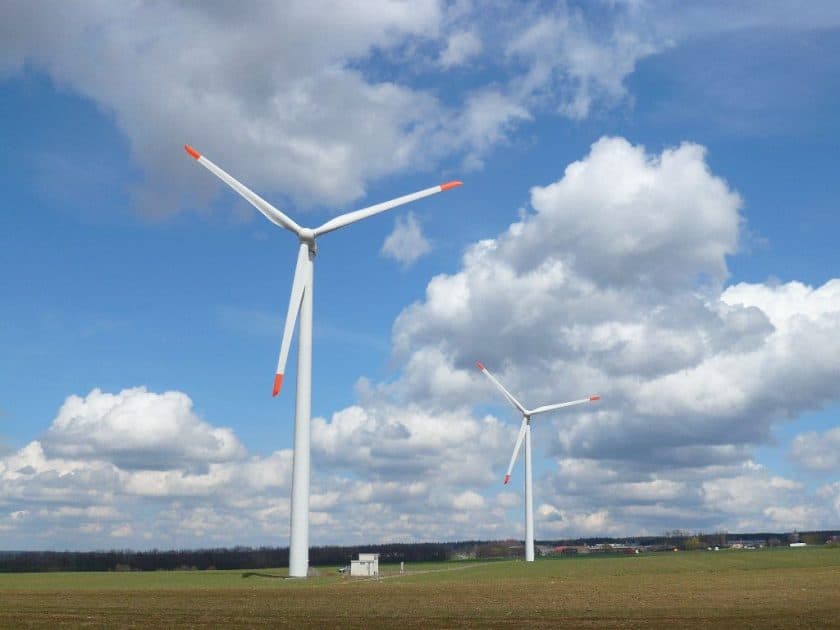
In addition to damage worth hundreds of millions, the weekend windstorm also resulted in a record for the highest output achieved by wind farms in Czechia, at least since the start of 2016. According to Energostat data, they supplied up to 237 MW of power to the grid overnight from Saturday to Sunday.
Exceptionally windy weather in Europe also had a major impact on the operation of the Czech power system. Not only did the windstorm cause damage worth hundreds of millions, but the system also had to cope with higher-than-usual output from wind farms in Czechia and neighbouring countries.
Czechia even saw a record for wind power generation. Overnight into Sunday, wind farms supplied up to 237 MW of electrical power, using around 84 % of their installed capacity. At the end of the second quarter, Czechia had a total of 282 MW of wind capacity.
{„type“:“AREA“,“country“:“CZE“,“sources“:“wind_onshore“,“from“:“2017-10-27″,“to“:“2017-10-30″,“caption“:“Wind power generation in the Czech Republic during Storm Herwart.“,“url“:“https://energodock.cz/energodock/get_online_generation_data.php“,“source“:“shortcode“,“start_date“:“2017-10-27″,“end_date“:“2017-10-30″}
However, output in Czechia remains relatively „small“ compared with neighbouring Poland, where wind farm output reached more than 5 GW. This also helped reduce the output of coal-fired power plants over the weekend, which generated approximately one-third less than during the previous weekend.
Wind generation in Germany also approached record levels, exceeding 39 GW at its peak. Unlike in earlier periods, when high output from German wind farms burdened the Czech system, phase-shifting transformers are now used to reduce cross-border flows.
„Phase-shifting transformers were also used over the weekend to regulate flows from Germany. We used approximately half of the available regulating capability, with the fifteenth tap out of 32 set at most to reduce flows.“
Miroslav Šula, Director of the Dispatch Control Section.
{„type“:“AREA“,“country“:“PL“,“from“:“2017-10-20″,“to“:“2017-10-30″,“caption“:“Electricity generation in Poland is mainly dependent on coal, but wind farms occasionally also make their mark on the mix.“,“url“:“https://energodock.cz/energodock/get_online_generation_data.php“,“source“:“shortcode“,“start_date“:“2017-10-20″,“end_date“:“2017-10-30″}
In addition to electricity flows, high wind generation is often accompanied by a fall in prices on the day-ahead market. This occurs when electricity generation exceeds demand and is caused by high renewable generation combined with insufficient downward flexibility of conventional sources.
Negative prices this time affected both Germany and the Czech Republic, where electricity could be „bought“ for around – 50 EUR/MWh overnight into Sunday. In Germany, prices reached as low as -80 EUR/MWh.
{„type“:“PRICE“,“country“:“CZE“,“from“:“2017-10-20″,“to“:“2017-10-30″,“caption“:“The consequences of the windstorm were also reflected in electricity prices.“,“url“:“https://energodock.cz/energodock/get_day_ahead_prices.php“,“source“:“shortcode“,“start_date“:“2017-10-20″,“end_date“:“2017-10-30″}
ČEPS faced power surpluses from the distribution system
According to ČEPS, the transmission system handled the challenging situation without major problems. Ultimately, the issue was not large power flows, but above all outages in consumption on the distribution side.
„Sunday's windy weather caused no damage to transmission system equipment. However, we faced balancing problems caused by power outages on the distribution side. The Czech transmission system registered a power surplus. The maximum value – approximately 850 MW – was reached on Sunday shortly after noon.“
Miroslav Šula, Director of the Dispatch Control Section.
Czech nuclear power plants also adjusted to the power surplus in the grid. Records from ČEZ in the REMIT system show that, although all remaining units except Dukovany's third unit were in operation, nuclear plants generated only approximately 3.2 GW from midnight on Sunday until the afternoon (usual generation with one Dukovany unit offline is around 3.5 GW).
„For down-regulation, we used contracted downward ancillary services, extraordinary output reductions at power plants, or unit shutdowns. On Sunday afternoon, an export of balancing energy abroad was agreed for 3 hours at 300 MW. These measures were used operationally according to immediate needs, because it is almost impossible to estimate in advance the consumption outages caused by the windstorm.“
Miroslav Šula, Director of the Dispatch Control Section.
Translation disclaimer
This article is a machine translation of the Czech original and has not yet been fully reviewed. In case of any doubt, please refer to the Czech version.
The article continues for subscribers
Premium content
The rest of this article is available to premium subscribers only. Get access to all premium articles on oEnergetice.cz.
Best value: annual subscription
Monthly option 4 € / month
3.25 €/ month
You might also like

23 October 2026, 11:01

23 October 2026, 06:34