First in Czechia: GasNet launches bioLNG sales

GasNet, the country’s largest gas distributor and a Czech leader in LNG for road freight transport, has launched sales of low-emission liquefied biomethane (bioLNG). This is the first time in Czechia that truck drivers will be able to refuel with this unique renewable fuel. Compared with a diesel engine, bioLNG produces up to 95 % lower carbon dioxide emissions. There are currently around 70 thousand heavy-duty vehicles with conventional engines registered in Czechia. BioLNG offers the only truly accessible and effective solution for reducing the sector’s carbon footprint and related emissions allowance costs, which are due to apply to transport from 2027. BioLNG will be available at a total of six GasNet filling stations. Today, the company’s latest completed station, in Klecany near Prague, was officially opened alongside company representatives by Petr Hladík (KDU-ČSL), Minister of the Environment of the Czech Republic.
GasNet has been successfully promoting the development of liquefied natural gas (LNG) in road freight transport for several years. The company has now strengthened its position as a leader with another step, becoming the first in Czechia to launch sales of a renewable version of this fuel—liquefied biomethane (known as bioLNG).
“By launching sales of low-emission bioLNG, we are opening a new chapter for green road freight transport in the domestic market. This unique fuel represents the pinnacle of clean truck mobility,” says Martin Gebauer, CEO of the GasNet Group.
BioLNG is produced from food waste, agricultural waste or even wastewater sludge. Liquefied biomethane can be obtained from virtually any biodegradable waste. It is a highly advanced circular-economy fuel. Compared with diesel, an engine running on liquefied gas emits no particulate matter or sulphur oxides. Nitrogen oxide emissions are up to 70 % lower with liquefied gas, and gas-powered trucks are up to 9 dB quieter, a major advantage when operating in populated areas.

“Demand for green and sustainable transport is already growing. BioLNG is currently the only available fuel that can effectively meet this demand. This is not just a matter for logistics companies, but above all for those who commission them to transport their goods. In view of their ESG strategies and responsible business goals, they want to reduce the carbon footprint not only of their production but, of course, also of the distribution of their products. Alongside the environmental impact, the Czech Republic also has the opportunity to build a supply chain that delivers Czech biomethane to Czech trucks, thereby strengthening the energy self-sufficiency of the Czech economy,“ explains Thomas Merker, CFO of the GasNet Group.
BioLNG: an environmental and economic solution for trucking and all of Czechia
Through the European Renewable Energy Directive, the Czech Republic has committed to meeting the EU’s climate targets. The goal is to reduce greenhouse gas emissions from transport by 14,5 % or achieve a 29 % share of renewable energy by 2030.
“Biomethane is currently one of the few available ways to meet these ambitious targets. That is why the Ministry of the Environment, together with the Ministry of Agriculture and the Ministry of Industry and Trade, is taking measures to help expand biomethane production in the Czech Republic. I consider the recent approval by the European Commission of a programme to support biomethane production a key measure, as it will allow us to provide state aid for the construction and operation of new or converted biomethane production facilities. This is the start of realising our vision of a transition to zero-emission sources,“ explains Petr Hladík (KDU-ČSL), Minister of the Environment.
To enable Europe as a whole, including Czechia, to meet its emissions targets, a range of measures are being introduced to accelerate decarbonisation. From 2027, for example, emissions allowances will be introduced in transport (EU ETS2). The initial price of an emissions allowance has been set at 45 euros per tonne of CO2. According to GasNet’s calculations, this measure will add around 8 billion crowns a year in costs for road freight transport in the Czech Republic.
“These are additional costs that the Czech economy will have to bear and that will undermine its competitiveness. If we start systematically renewing the truck fleet in heavy road transport now, we can significantly reduce these extra costs,“ adds Thomas Merker.
In spring 2024, toll rates will also rise with the addition of a new emissions-based component. Germany, for example, will introduce higher emissions-related tolls from 1 December this year, and toll costs for diesel trucks are expected to rise by up to 84 % under the current proposal.

“The price of liquefied gas has long been lower than that of diesel. Switching to LNG or renewable bioLNG therefore makes good sense when planning investments in a vehicle fleet, too. We have extensive experience operating LNG filling stations. We were the first in Czechia to adopt this technology and are the market leader. We are ready to lend a hand to Czech transport operators, their clients and companies themselves, and to continue developing this unique fuel in Czechia together with them,“ adds Filip Dostál, Head of Business Development at GasNet.
BioLNG at six locations in Czechia
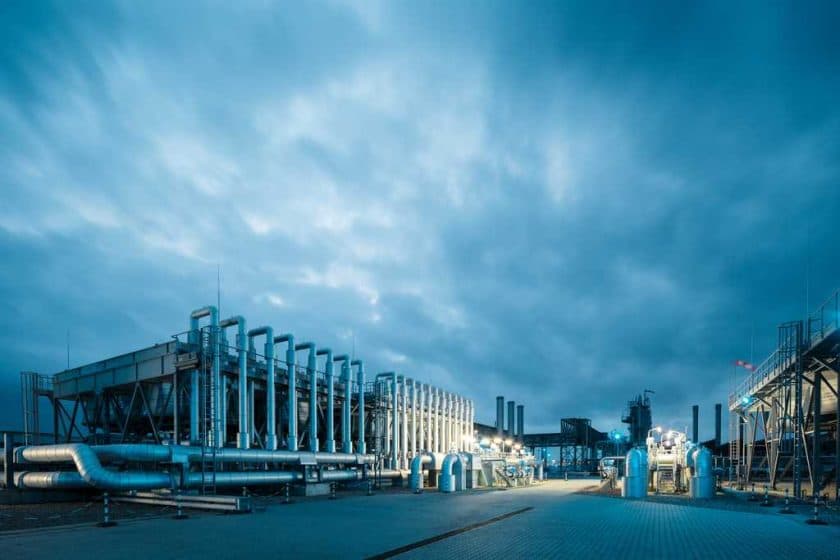
GasNet’s bioLNG infrastructure is located near the Czech Republic’s key transport routes. Five LNG filling stations are fully operational, in Mladá Boleslav (D10 motorway), Nýřany (D5 motorway), Jažlovice (D1 motorway), Kaplice (future D3 motorway) and Klecany (D8). GasNet has built a sixth station in Hradec Králové. The company will announce its official opening shortly.
Refuelling is easy
The fuel dispensers at the stations are self-service and available 24/7. Each station can refuel up to six trucks per hour. Refuelling itself is not complicated. Drivers who have not yet used liquefied gas can receive training from GasNet’s technical specialists. Operational safety is the top priority.
Bank cards, as well as Eurowag and DKV fuel cards, which are familiar to operators of diesel trucks, can be used at all filling stations.
Translation disclaimer
This article is a machine translation of the Czech original and has not yet been fully reviewed. In case of any doubt, please refer to the Czech version.