
23 October 2026, 14:38
Loading...
Average annual temperature in 2024 was 1.5 degrees higher than before the Industrial Revolution
Klára Čeperová
20 March 2025, 10:03
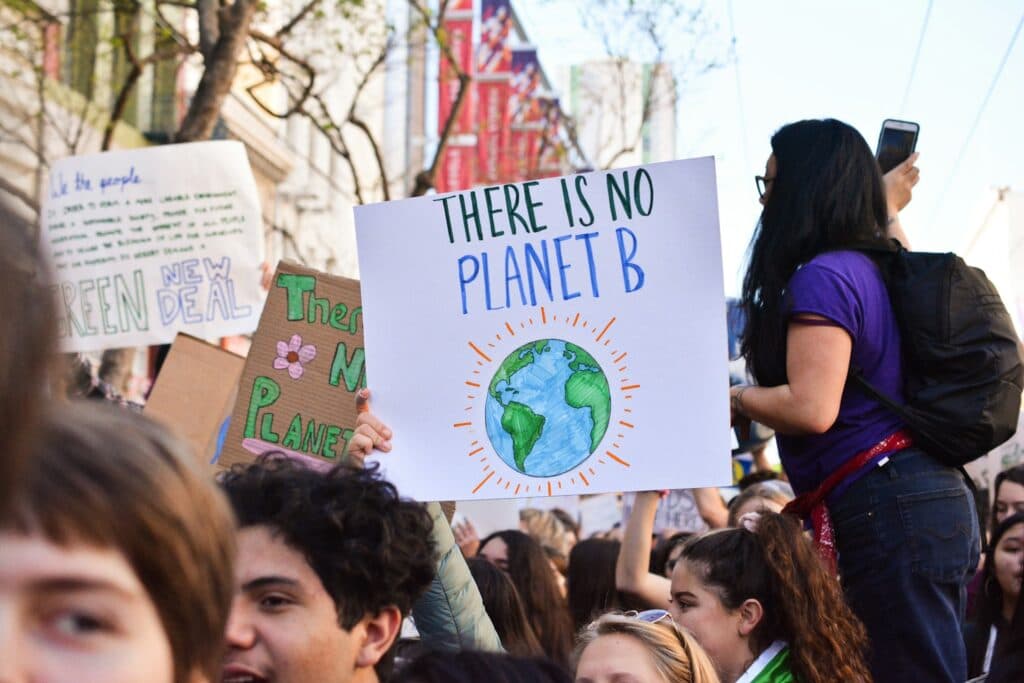
Ongoing climate change contributed to temperatures reaching new historic highs in 2024, now confirmed by the UN. The situation is accelerating the loss of glaciers and sea ice, raising sea levels and bringing the world closer to a key warming threshold.
2024 was officially the warmest year on record, capping an extraordinary run of temperature records: the last ten years, 2015-2024, were the ten warmest on record.
The annual average temperature last year reached 1.55 degrees Celsius above pre-industrial levels, beating the previous record set in 2023 by 0.1 °C, the World Meteorological Organization (WMO) said in its annual climate report. Reuters reports, confirming information released by the European Commission earlier this year.
"High temperatures in 2024 call for groundbreaking climate action in 2025," UN Secretary-General António Guterres said.
The world has not yet exceeded the warming limit set by the Paris Agreement
In the 2015 Paris Agreement, countries agreed to pursue efforts to limit the temperature increase to no more than 1.5 °C above the 1850-1900 average.
According to preliminary estimates, the current long-term average increase is in the range of 1.34-1.41 °C, close to but not yet exceeding the Paris threshold, the WMO said.
"One thing needs to be made very clear: a single year above 1.5 °C does not mean that the level set out in the Paris Agreement has been formally exceeded," said John Kennedy, WMO scientific coordinator and lead author of the report.
However, the uncertainty ranges in the data mean that this cannot be ruled out, he said during a briefing.
The report says that other factors may also have contributed to last year's rise in global temperatures, including changes in the solar cycle, a massive volcanic eruption and a decline in cooling aerosols.
Displacement caused by climate change
While temperatures fell in a small number of regions, extreme weather wreaked havoc around the world: droughts caused food shortages, while floods and wildfires forced 800,000 people to flee their homes, the highest number since records began in 2008.
Ocean warming also reached its highest level on record and is accelerating, while rising concentrations of CO2 in the oceans are also increasing acidification.
Sea levels reach a new high
Glaciers and sea ice continued to melt rapidly, pushing sea levels to a new high. From 2015 to 2024, sea levels rose by an average of 4.7 millimetres per year, compared with 2.1 mm between 1993 and 2002, WMO data showed.
Kennedy also warned of the long-term consequences of melting ice in the Arctic and Antarctic regions.
"Changes in these areas could potentially affect the type of ocean circulation that influences the climate around the world. What happens at the poles does not necessarily stay at the poles," he said.
Against this backdrop, the UN Secretary-General is calling for action. “We still have time to avoid the worst climate catastrophe. But leaders must act—and they must act now,” Guterres said.
Translation disclaimer
This article is a machine translation of the Czech original and has not yet been fully reviewed. In case of any doubt, please refer to the Czech version.
Sdílejte článek prostřednictvím:
You might also like


23 October 2026, 11:01


23 October 2026, 06:34