
14 October 2026, 09:58
Loading...
Crossing the threshold: 2024 was the warmest year on record, including in the Czech Republic

Libor Láník
15 January 2025, 06:49
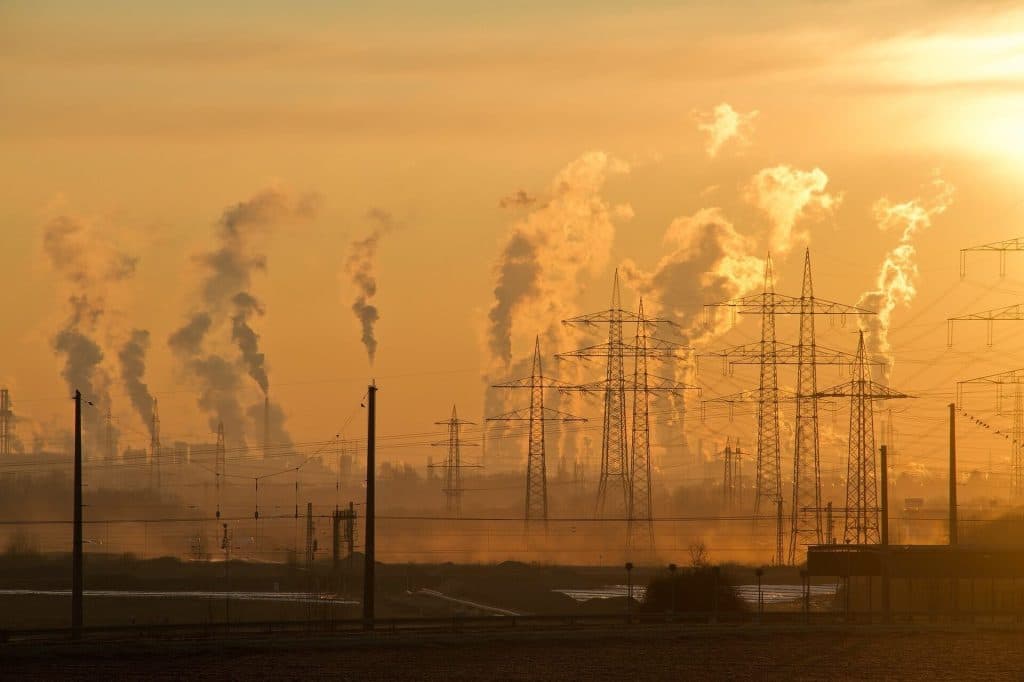
As expected, the past year, 2024, became the warmest on record. At the same time, global temperature surpassed the much-discussed 1,5 °C threshold compared with the pre-industrial era. The European climate service Copernicus, one of the main providers of global data, published its meteorological summary of last year.
Exceeding 1,5 °C compared with the pre-industrial era is in direct conflict with the limit set by the Paris Agreement, which aims to significantly reduce the risks and impacts of climate change. However, given unprecedented records in greenhouse gas concentrations, as well as air and sea surface temperatures, this outcome was expected.
"One or two years that exceed 1,5 °C above the pre-industrial level do not mean that the Paris Agreement has been breached. However, with the current rate of warming, which is above 0,2 °C per decade, the likelihood of exceeding the 1,5 °C target set by the Paris Agreement by 2030 is very high," Copernicus said in its annual assessment.
Other institutions, including NASA and the Met Office, also presented their measurement results at the beginning of this year. Their findings are then subject to discussion within the global academic community. “It’s not that 1,49 °C is fine and 1,51 °C is the apocalypse – every tenth of a degree matters, and climate impacts progressively worsen the greater the warming,” commented climatologist Zeke Hausfather of the US research group Berkeley Earth on the current situation.
In specific terms, 2024 claimed its top position thanks to an average global temperature of 15,1 °C, surpassing the previous record from 2023 by 0,12 °C. It was also 0,72 °C warmer than the 1991-2020 average and 1,60 °C warmer than the pre-industrial period, making it the first calendar year to exceed 1,5 °C above that level.
2024 in the Czech Republic
2024 was also a record year in the Czech Republic. The Czech Hydrometeorological Institute recorded an average annual temperature of 13,3 °C, making it the warmest year in the entire 250-year history of measurements at Prague’s Klementinum. The gap from the second-warmest year was significant, at 0,5 °C.
Also concerning is the finding that nine of the ten warmest years since 1775 have occurred this century. Moreover, no fewer than thirteen of the fifteen warmest years in this time series fall within the 21st century.
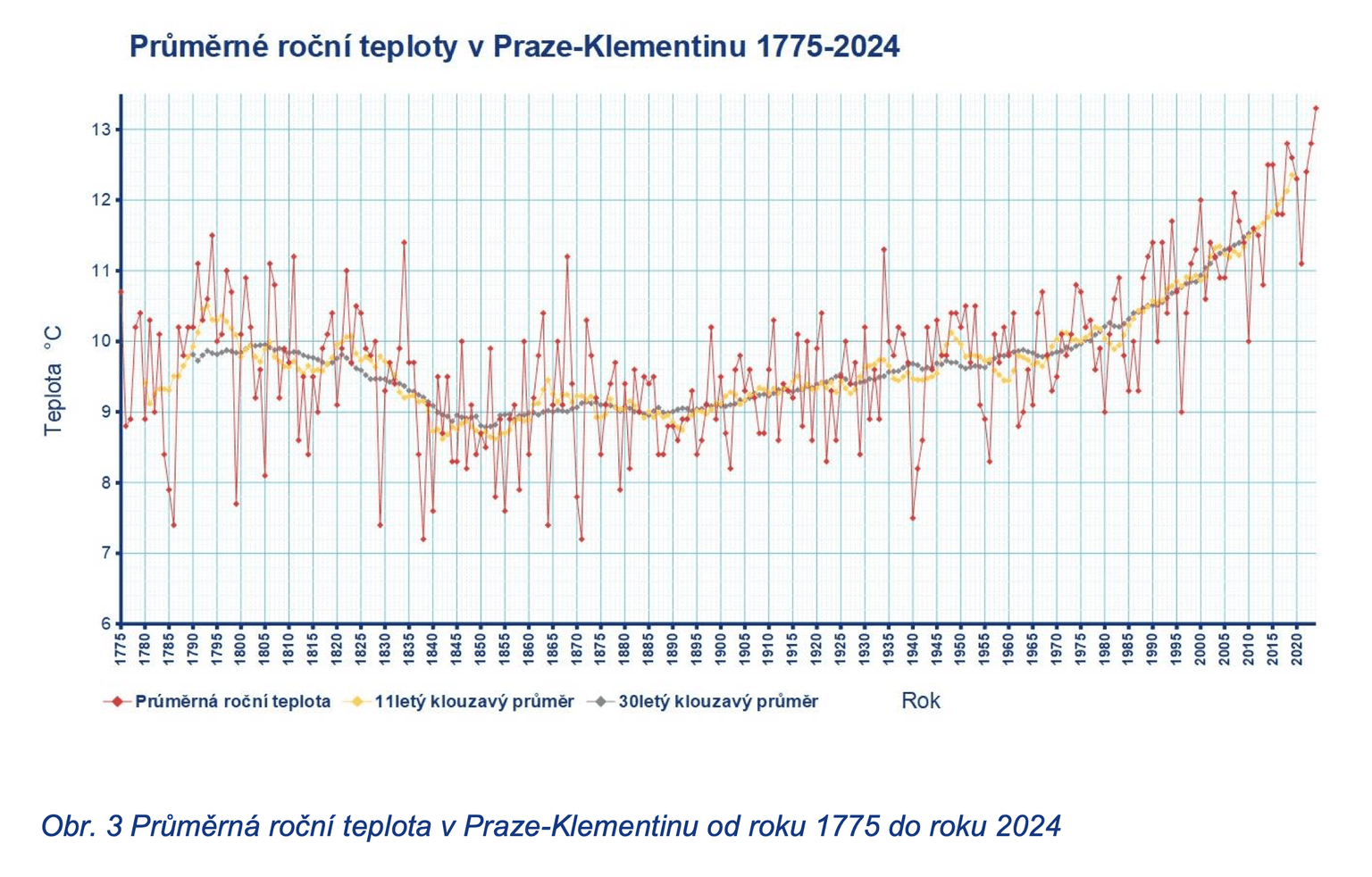
Source: Czech Hydrometeorological Institute
Translation disclaimer
This article is a machine translation of the Czech original and has not yet been fully reviewed. In case of any doubt, please refer to the Czech version.
Sdílejte článek prostřednictvím:
You might also like

13 October 2026, 20:19

13 October 2026, 16:07
13 October 2026, 15:54