24 September 2026, 11:23
Loading...
Analysts: ETS 2 delay gives more time to prepare but does not change rising costs

oEnergetice.cz, ČTK
10 December 2025, 15:28
While the delay to the new ETS 2 emissions allowance system will give households and the state more time to prepare, it does not change the subsequent rise in energy prices. Analysts approached by ČTK said this. Further investment will be needed, as well as targeted state support and compensation schemes, they said. The EU's climate targets are very ambitious, according to the analysts.
The Presidency of the Council of the EU and representatives of the European Parliament on Tuesday reached a provisional agreement on changes to EU climate rules. These will include a target to cut greenhouse gas emissions by 90 percent by 2040 compared with 1990 levels. Representatives of the two institutions also agreed to postpone the introduction of ETS 2 emissions allowances by one year, from 2027 to 2028. The changes must still be formally approved by the European Parliament and EU member states.
According to XTB analyst Jiří Tyleček, the delay in launching the ETS 2 system is more of a cosmetic adjustment than a major concession from the original plan. "For households and companies, this means an extra year without an additional carbon surcharge in the prices of petrol, diesel or gas. But the underlying principle that these sectors will be included in the allowance system remains unchanged," Tyleček explained. Existing analyses, he said, show that the overall impact on household budgets does not change significantly. "The key question will be whether governments use this time to establish targeted compensation and provide more intensive support for energy savings and insulation," Tyleček noted.
From the perspective of energy markets, however, the trend does not change at all, he said. "The path to carbon neutrality has slowed, but the targets remain ambitious," Tyleček warned. Although the slowdown is a step in the right direction, he doubts it will be sufficient to preserve social cohesion in Europe and maintain satisfactory economic growth.
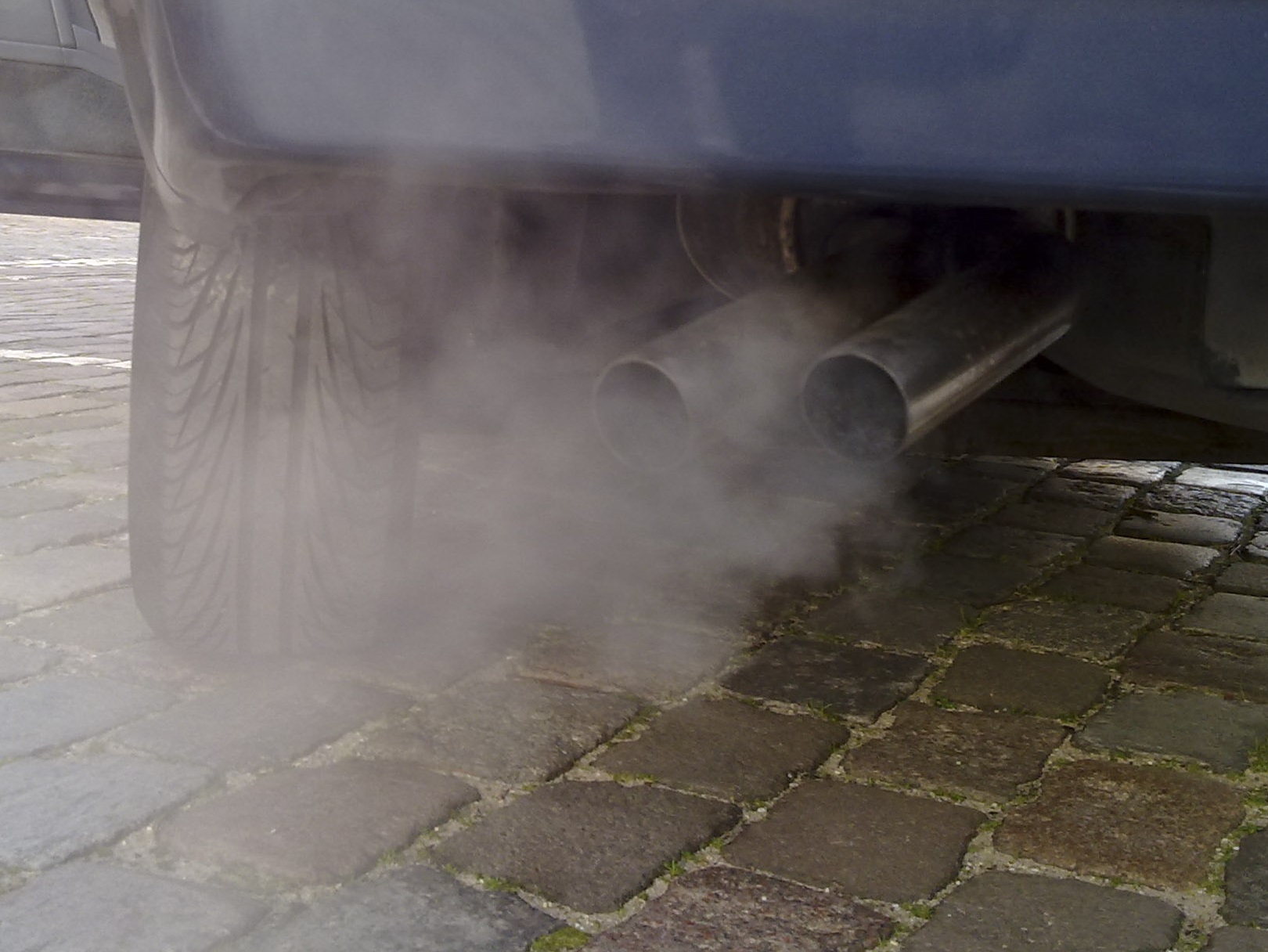
Car exhaust emissions. Source: Ruben de Rijcke / Wikimedia Commons / CC-BY-SA-3.0
"It is good that the EU has heeded calls from individual states to postpone the introduction of emissions allowances by one year. This is a reason for some relief, as it means that gas, coal, petrol and diesel will not become significantly more expensive for households in 2027 – at least not because of emissions allowances," said Lukáš Kaňok of Kalkulátor.cz.
However, he also warned that there will be only one additional year to resolve the transition away from coal, and no further delay can be expected, according to Kaňok. "Insulating a house, switching to gas or installing a heat pump are not steps that can be arranged within a few weeks. People should therefore make the best possible use of this additional time and ideally start addressing everything immediately," Kaňok stressed.
Ruben Marada of Electree welcomed the delay to the emissions allowance system, saying it gives households more time to prepare and reduces the risk of immediate price increases. "The shift may help implement the system more sensitively and fairly," he said. At the same time, however, he hopes the entire process will not come to a halt. "It is crucial for modernising the energy sector and integrating the technologies we have long focused on," Marada added.
Translation disclaimer
This article is a machine translation of the Czech original and has not yet been fully reviewed. In case of any doubt, please refer to the Czech version.
Sdílejte článek prostřednictvím:
You might also like
24 September 2026, 10:30
24 September 2026, 06:56
23 September 2026, 17:27