9 November 2026, 10:35
Loading...
Wind turbines: myths versus reality: What Czech municipalities’ experience has shown

Marek Kršák
9 November 2026, 10:35
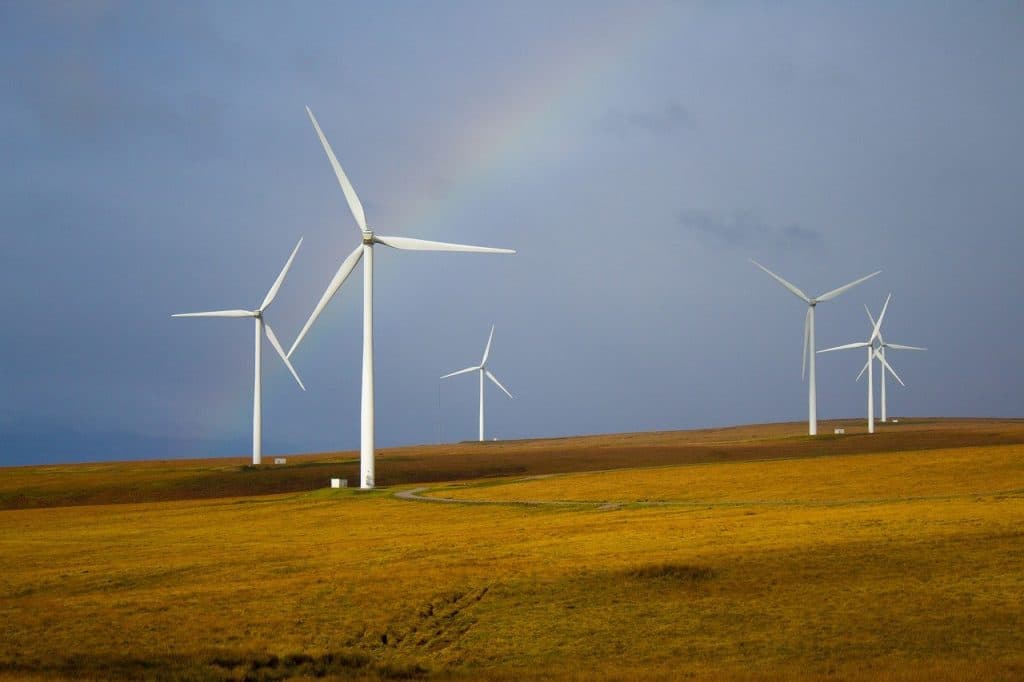
Debates about building wind farms often raise concerns about noise, health impacts or a decline in quality of life. But how do municipalities with years of experience assess their operation? We contacted three Czech municipalities that have had direct experience with wind farms for many years. Their answers show which concerns proved justified, what operating the wind farms has brought to the municipalities and where their assessments remain cautious.
Wind farms (WFs) prompt mixed reactions in Czechia. While their supporters point to electricity generation from renewable sources, residents of areas where wind farms are being planned have raised questions, primarily about noise, health, impacts on the landscape and quality of life. The experiences of places where wind farms are no longer just plans on paper but part of everyday life therefore offer valuable insight for the debate.
We therefore contacted the municipalities of Gruna, Věžnice and Anenská Studánka, which have many years of experience with wind farm operations. Four wind turbines have been operating in Gruna since 2006, two have been operating in Věžnice since 2009, and six turbines have stood in Anenská Studánka for almost two decades.
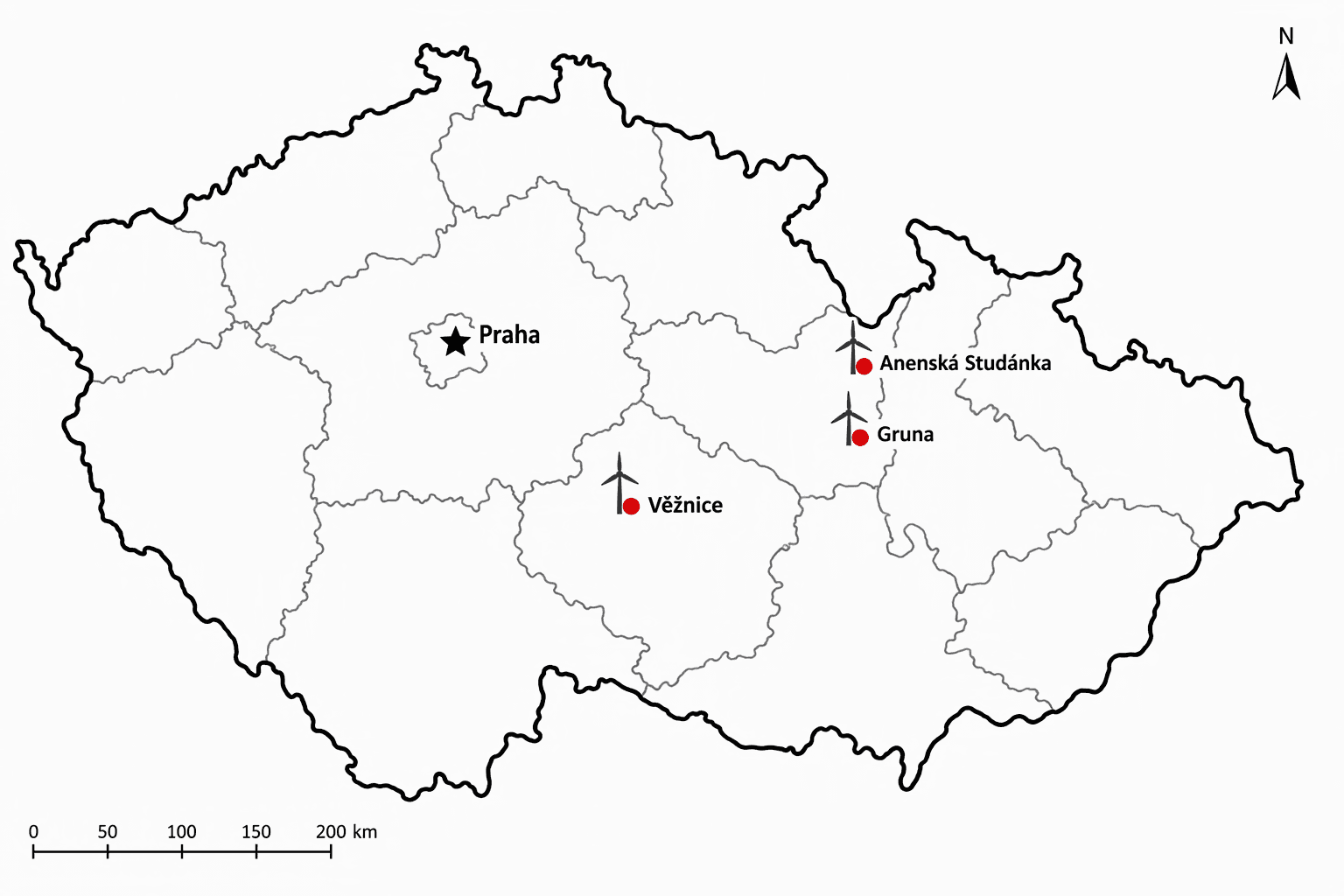
Wind farm questionnaire (Věžnice, Anenská Studánka, Gruna)
Concerns before construction
The concerns surrounding debate about wind farms are nothing new. More than twenty years ago, when the first “windmills” were being built, residents feared noise, potential health problems and negative impacts on the landscape. The municipalities of Gruna and Anenská Studánka described such concerns, including noise, possible interference with television signals and impacts on wildlife and birds.
But after years of operation, the experience in these two municipalities is clear. Residents’ initial concerns have not been borne out, and the municipalities have not recorded any complaints. Asked directly whether concerns about noise, health impacts, property prices or quality of life had proved justified, they answered no. According to municipal representatives, residents gradually got used to the wind farms, and no significant negative attitudes are now apparent.
“Residents have got used to the wind turbines just fine. I don’t see any significant negative attitudes.” said David Drahoš, mayor of Věžnice.
One reservation remains
However, the municipalities’ largely positive experiences do not automatically mean that local residents have no reservations about wind farms. In Anenská Studánka, they noted that some residents remain opposed to wind farms, mainly because of their impact on the appearance of the landscape. This is different from noise or concerns about health risks. It is not simply a measurable factor, but a subjective assessment of changes to the surrounding environment.
Věžnice also takes a cautious view. Although its experience has not shown negative impacts on quality of life, the municipality does not automatically consider wind farms a factor that improves its “image”. This experience shows that the debate need not be divided simply into “for” and “against”. Some practical concerns may fade over time, while the appearance of the landscape may remain a matter of individual opinion.
The key is the terms the municipality negotiates
The municipalities’ experiences also vary considerably in terms of economic impacts on everyday life. In Gruna, wind farms generate revenue for the municipal budget. They have also enabled the municipality to abolish the municipal waste fee, and the wind farm operator supports community events. The municipality is now also considering ways to involve residents in community energy.
Věžnice receives annual funding under a cooperation agreement with ČEZ Obnovitelné zdroje. It has also received support through the ČEZ Foundation for cultural events, planting an avenue of trees and modernising a children’s playground. The municipality also reports a slight increase in tourist interest, with visitors coming to see the wind farms.
Anenská Studánka, by contrast, offers an important counterpoint. According to the questionnaire, the municipality received only a one-off contribution for the original wind farms, set at approximately 150 thousand crowns per turbine, and receives no long-term benefits from them today. However, the municipality says different benefits for the municipal budget and residents have been agreed for four additional turbines currently under construction.
Communication with residents is essential
The responses from all the municipalities surveyed agree on one point: transparent communication with residents about a proposed project before construction is important.
Gruna recommends discussing the proposal with residents, including its specific potential risks, and gauging their views, for example through a survey. It also considers the choice of investor essential, as the investor becomes a partner of the municipality for decades if the project goes ahead. Anenská Studánka also stresses the importance of choosing the investor and communicating openly with residents.
“Communication and keeping people informed are probably the most important things.” Růžena Motlová, mayor of Anenská Studánka.
Years of experience and recommendations
The three municipalities contacted naturally do not represent the experience of every Czech community with wind energy. Their experiences and observations nevertheless offer an interesting insight into communities that live with the impacts of wind farms every day. One important benefit is the opportunity to compare the expectations of communities where projects are being considered before construction with conclusions drawn from the actual operation of wind farms in municipalities with many years of experience.
Representatives of none of the three municipalities said that concerns about noise, health impacts or quality of life had been borne out in practice. At the same time, their answers show that some questions remain relevant even after several years. These relate above all to changes to the landscape, which some members of the public may view negatively. In terms of the economic benefits for affected areas, the most important factor is getting the terms of cooperation with the investor right so they take local needs into account.
Věžnice sums up its experience most succinctly:
“Use common sense and follow the facts,” says the mayor.
The experiences of Gruna, Věžnice and Anenská Studánka cannot therefore be reduced to a simple argument “for” or “against” wind farms. Instead, they point to a much more complex picture: before deciding on a new project, it is worth listening not only to expectations and concerns, but also to municipalities that have actually lived with wind farms for many years.
Translation disclaimer
This article is a machine translation of the Czech original and has not yet been fully reviewed. In case of any doubt, please refer to the Czech version.
Sdílejte článek prostřednictvím:
You might also like


9 November 2026, 06:13

8 November 2026, 20:02

8 November 2026, 13:59