Five years of permitting, nine months of construction. We are afraid to make decisions in Czechia, says Jan Srna of Enery


Building a large solar power plant in Czechia can take many years. The construction itself takes only a fraction of that time. According to Jan Srna of Enery, complex permitting processes, inconsistent interpretations of legislation and a reluctance to take responsibility for decisions on new projects remain among the main obstacles to the development of renewable energy sources. In the second part of his interview with oEnergetice.cz, he also discusses the future of wind power, financing for new sources and the possibility of reinstating operating support. You can read the first part of the interview HERE.
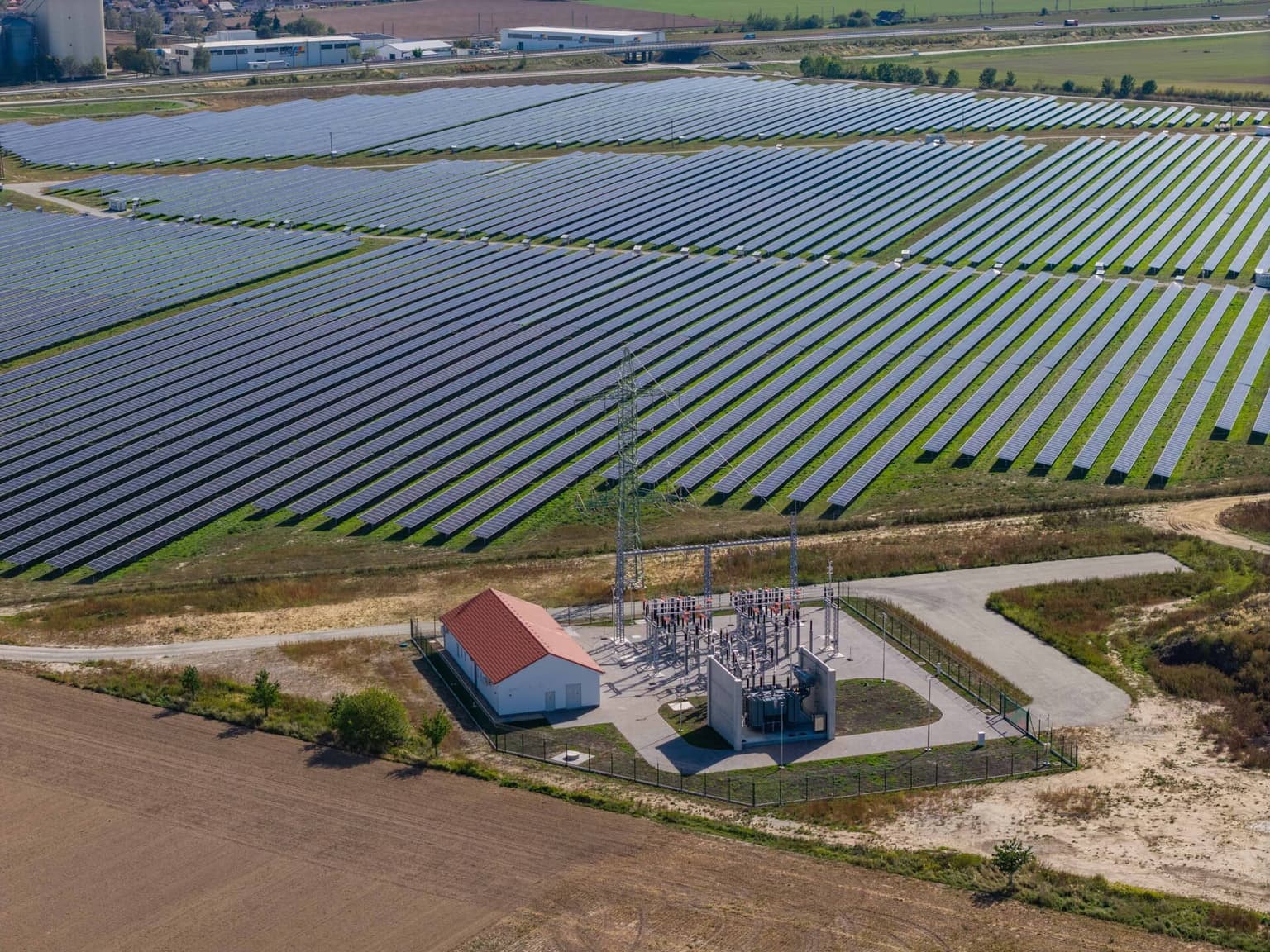
When Enery completed the 37 MWp Stella photovoltaic power plant in Dynín, South Bohemia, it had spent around five and a half years preparing and delivering the project. The construction itself took just nine months. The remaining almost five years were taken up mainly by project development and permitting. This imbalance clearly illustrates one of the main obstacles faced by investors in large-scale renewables in the Czech Republic.
Although the legislative framework for building renewable energy sources has gradually improved in recent years, new projects in Czechia are still being developed more slowly than in many other European countries. While the lack of operating support is holding back the construction of solar parks, wind power development is hampered by opposition from some local residents and municipalities. Yet, according to Srna, wind power is sorely lacking in the Czech energy mix, partly because its generation can be combined with solar power.
The interview therefore explores why legislative changes have so far failed to significantly speed up the permitting of new power plants, what the results of local referendums on wind projects show, and why banks are unwilling to take on all the market risk of solar investments. They also discuss the possible resumption of auctions and contracts for difference (CfDs), the prices at which new solar power plants could be built, and experience abroad, where, according to Srna, municipalities are much more welcoming towards renewables.
The Stella power plant took several years to complete. What was the biggest obstacle?
I would divide Stella into two parts. We came into the project when it already had an older building permit, which we essentially had to overhaul completely and adapt to the situation at the time. The process from the beginning—let’s say, from the second phase—to completion took around five and a half years. The biggest obstacles are project development and the permitting process. Things are a little better now, but construction itself took only three quarters of a year, while the remaining five years were spent on permitting.
Have permitting conditions improved in recent years thanks to legislative changes?
Generally speaking, legislation has helped renewable energy sources in recent years. Some terms in the Building Act, such as “technical infrastructure”, have been clarified, which has benefited renewables. But the enforcement of the law in the Czech Republic is still not optimal. Even when a particular provision is written as clearly as possible, not all institutions interpret it in the same way. We see different interpretations from ministries and courts, and this is something we still need to work on and raise awareness about across the sector—not only in our field, but in others as well.
The changes were intended to help wind power, among other things. What are its prospects in Czechia? And what do you think the results of local referendums show?
It is a little absurd. We recently read that three out of four Czechs support wind power. And then only one of 21 referendums comes out in favour—and that one by just a few votes.
I think Czechia needs wind power. It is not true that the wind does not blow here—it may not blow like it does in the North Sea, but electricity from wind farms is sorely lacking in the Czech Republic. One reason is that we could combine it with electricity from solar power plants. But the prospects are very limited for now, and when it comes to the NIMBY effect, things get difficult.
Generally speaking, across all groups and sectors in the Czech Republic, there is a lack of courage to take responsibility for a project—whether you are a mayor, an official or a developer—and say that this is how it will be, the power plant will be built there and it will be this high. I get the impression that projects are marked by buck-passing—“someone else will sort it out for us”, or “let’s ask someone else”. Referendums are a case in point. They absolve individuals of responsibility for decisions about wind farms.
Yet large solar power plants are not being built in Czechia either. They face a different problem, though. According to some in the market, banks are unwilling to finance solar projects without long-term revenue certainty. Is a PPA an alternative?
A bank today will not be willing to take on 100% of the merchant risk of investing in a solar development project. So you will need a PPA contract, or some other form of support, if one becomes available.
What is your view on the possible reinstatement of operating support and auctions for renewable energy sources?
In principle, no form of support or subsidy is entirely ideal, because it distorts the market somewhat. But we need to look across sectors, for example at the food industry.
At the same time, we know that future nuclear power plants—the ones that are due to be built—have been promised support, even if this is not talked about very much. Some form of support would of course help the development of solar power plants, but we would rather see conditions in the sector that make it possible to build without it.
One option could be a two-way contract for difference, under which you continue to sell electricity on the wholesale market but have a guarantee that the contract for difference will help if the market does not provide a sufficient price. However, I would not base support solely on photovoltaics, but across all generation sources. Electricity is a commodity needed by industry, households and others, and it is not good to focus on just one source.
If Czechia launched solar auctions, what winning prices would you expect?
I would look at the results of solar auctions in Germany, where prices were extremely low, below 40 EUR/MWh. In our view, however, that would not even cover costs. The price could certainly be below the current wholesale baseload price.
Operating support or another long-term contract gives you access to favourable financing terms from a bank. Without it, financing—and therefore the project—becomes more expensive. If there were guarantees for a long-term contract for difference, say, projects could bid in auctions at very attractive prices.
Of course, it depends on the specific parameters of the support, including whether the price is indexed or not—these are all important factors. But I think auction prices would be significantly lower than the current baseload price on the market.
ENERY also operates in other European markets. How do conditions in Czechia differ, and what could we learn from other countries?
There are typically Czech problems that are difficult to solve, such as the fragmented ownership of land. This is significantly worse than in Romania or Estonia, and we cannot change it—we simply have to work with the Czech land registry as it is.
Generally, it would help to change Czechia’s approach somewhat. We need to communicate better that we need renewable energy sources, and that building them is a way to stabilise prices and avoid having to depend on the Middle East, Russian gas and the like.
Compared with other countries, municipalities in Romania and Bulgaria want these projects because they receive financial compensation or some form of benefit, whether shared electricity or support. That is probably how it should be: local residents should also benefit from renewable energy projects.
The situation in Estonia is extreme: there is full support for renewable energy sources. Everything works there, building a wind farm is relatively easy, and 100% of municipalities support it. So it would help to adopt that overall approach.
And one last thing: once we have laws, developers must be able to rely on them and trust that everyone will interpret them in the same way, without obstruction just because someone in some department says, “I don’t want it here”, after which we end up in court unnecessarily.
Translation disclaimer
This article is a machine translation of the Czech original and has not yet been fully reviewed. In case of any doubt, please refer to the Czech version.



