
22 September 2026, 14:20
Loading...
Babiš asks EU to delay ETS 2 in letter and criticises allowance prices

oEnergetice.cz, ČTK
2 February 2026, 15:36
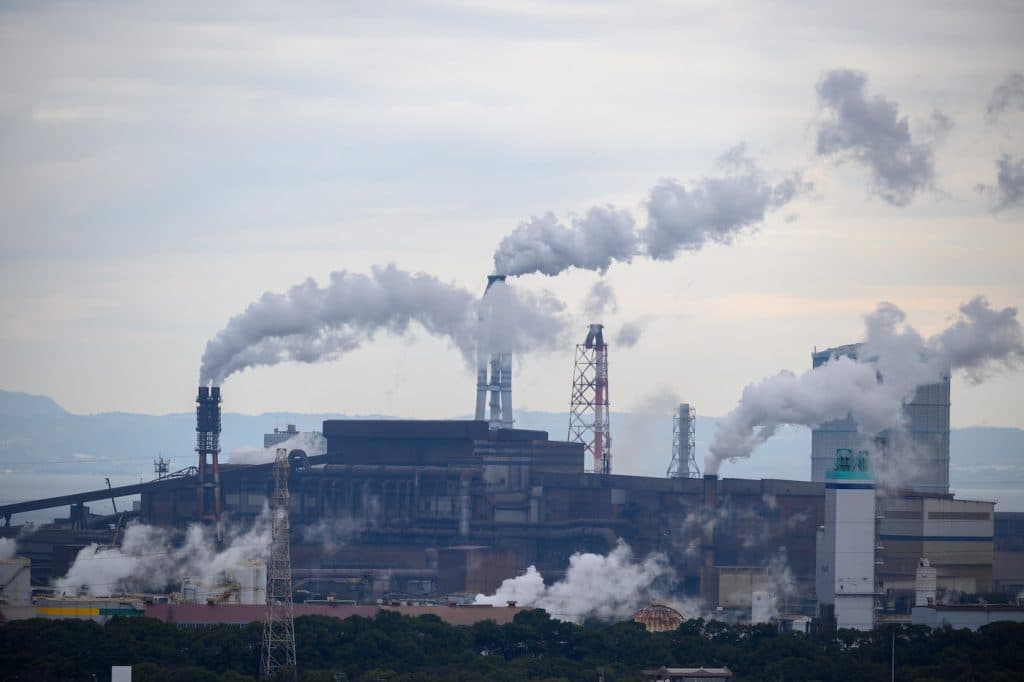
Prime Minister Andrej Babiš (ANO), in a letter to European Union politicians ahead of a competitiveness summit, called for a pragmatic approach to the green transition. Among other things, he criticises developments in ETS 1 emission allowance prices and calls for a delay to the launch of ETS 2, which would extend the scheme to road transport and building heating. ČTK has seen the letter.
At a press conference today following a government meeting, Babiš said that emission allowances are currently destroying European industry. The government approved the Environment Ministry's framework position and revised the Czech position on the ETS 2 system. According to him, Czechia recognises that EU colleagues are putting forward various proposals, but the Czech proposal is concrete.
The letter also mentions simplifying the public procurement system, accelerating all approval and permitting processes, supporting the construction of further cross-border electricity and gas interconnections, and strengthening the EU's raw-material independence.
Priorities also include setting just one EU target: reducing carbon dioxide emissions. Setting additional sub-targets limits member states' scope to make their own energy decisions and may be less efficient and more financially demanding than individual approaches, the letter says.
Industry and Trade Minister Karel Havlíček (ANO) said the competitiveness summit would focus on impacts on industry, which is a crucial issue for the Czech Republic given that it is an industry-oriented country. He described the Czech approach as a "return to common sense". According to him, Czechia holds a rational position within Europe and wants to be among the leaders advancing these issues.
The document concerns not only ETS 1, which according to Havlíček is destroying industrial production and the traditional energy sector at too rapid a pace, but also ETS 2. On ETS 2, Czechia warns against repeating the ETS 1 scenario, which led to industry relocating, for example, to the United States and products subsequently being imported back into Europe. In the case of ETS 2, it says, there would also be a risk of widening the gap between low-income and high-income households.
The European Union introduced the emissions trading system (ETS 1) in 2005. It applies primarily to the power sector, energy-intensive industry and aviation. It sets an overall cap on carbon dioxide emissions, while companies must surrender a corresponding allowance for every tonne of carbon dioxide emitted.
ETS 2 envisages extending the system to other sectors, particularly road transport and building heating. Its launch is planned from 2027, and critics say it would also indirectly affect households and small businesses through higher fuel and energy prices. The introduction of ETS 2 is also to include a Social Climate Fund, intended to mitigate the impact on low-income households. The EU Council and the European Parliament agreed in December to postpone the introduction of ETS 2 by one year, to 2028.
Czechia also rejects emissions targets for passenger cars and proposes decisive steps to strengthen raw-material self-sufficiency. According to Havlíček, these steps are fully in line with the economic strategy, which is now undergoing interministerial consultation. According to him, allies are also emerging across the EU, with Germany potentially being a fairly significant partner.
Translation disclaimer
This article is a machine translation of the Czech original and has not yet been fully reviewed. In case of any doubt, please refer to the Czech version.
Sdílejte článek prostřednictvím:
You might also like
22 September 2026, 12:50
22 September 2026, 06:09
21 September 2026, 15:25