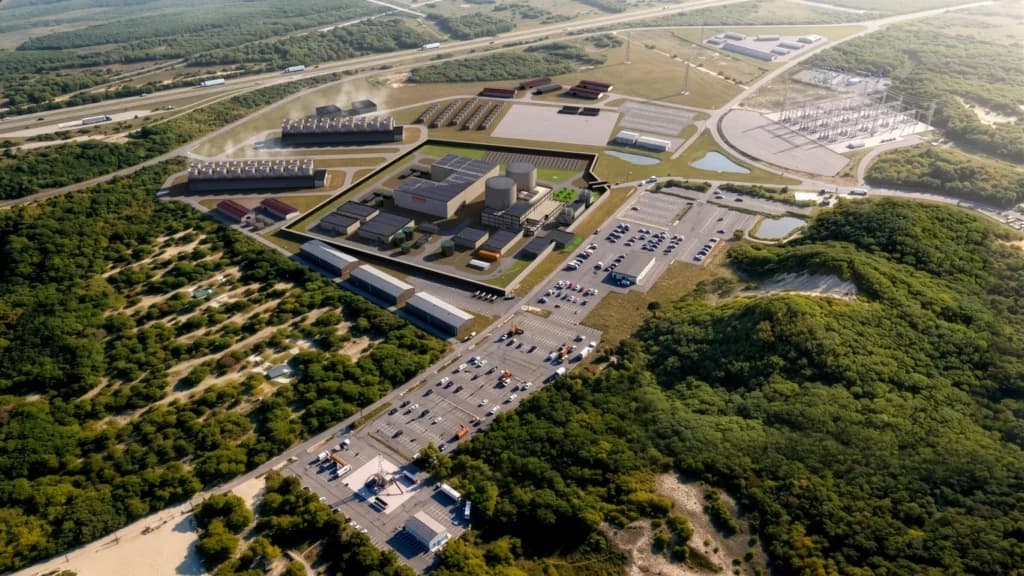
Czech EPH is Europe’s second-largest CO2 emitter

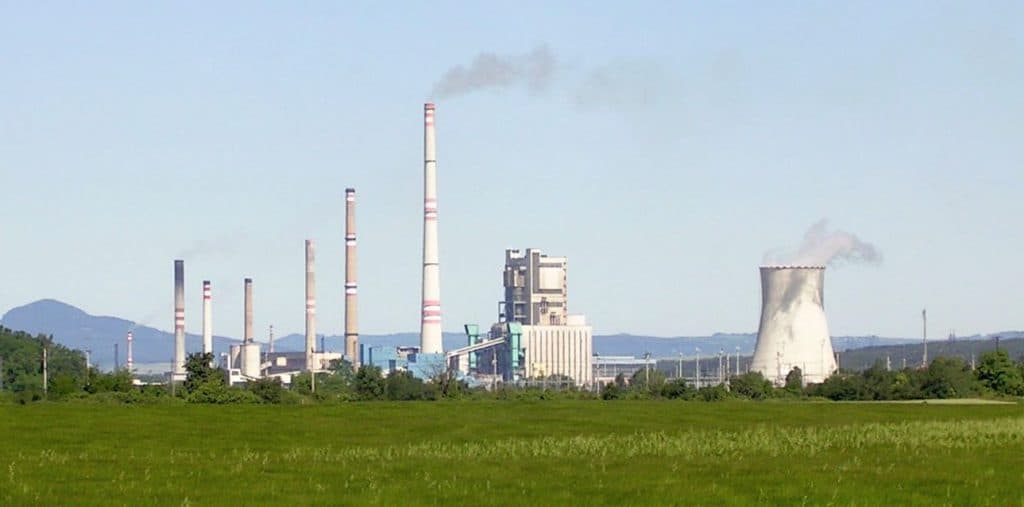
Energetický a průmyslový holding (EPH) is closing in on Germany’s RWE for the top spot as the largest emitter in the European EU ETS emissions trading system. Emissions released by the EPH group last year totalled 88.5 million tonnes (Mt) of CO2 equivalent. The report was published by Carbon Market Data, a company specialising in research into emissions trading.
The report was published after EPH released its financial results, according to which costs related to emissions allowances rose by 73%. Despite this, EPH was the only company among the EU’s three largest emitters whose emissions rose compared with the previous year. The largest polluter was the aforementioned RWE, with 129 Mt of CO2, followed by Italy’s Enel with 58.4 Mt. In 2016, RWE was responsible for 142 Mt, representing a year-on-year decline of 9%, while Enel accounted for 62 Mt. EPH’s emissions, meanwhile, rose from 82 Mt to 88.5 Mt, or by 7.5%. The company itself, however, reports figures of 16 Mt for 2017 and 14.3 Mt for 2016, an increase of 12%. Carbon Market Data’s figures are based on the EU ETS registry and take into account both minority and majority stakes in every part of the EPH group.
EPH invests mainly in conventional sources
According to the Carbon Market Data report, EPH continues to build its portfolio through investments in thermal power sources across Europe – apparently betting that it will remain profitable despite rising allowance prices, due to the need to balance supply shortfalls from renewable energy sources. RWE, on the other hand, is seeking to diversify its activities in order to reduce its dependence on lignite-fired assets in Germany.
EPH rose into the top three polluters after its acquisition of Swedish company Vattenfall’s lignite assets, which also pushed Vattenfall out of Europe’s top ten polluters. RWE, EPH and Enel also had the largest allowance shortfalls, owing to only minimal free allocations. In its financial report, EPH said that emissions-related costs rose to EUR 104 million in 2017, representing an increase of 73% compared with 2016. The price of an allowance has risen almost fourfold over the past twelve months.
Nevertheless, EPH has succeeded in reducing the emissions intensity of its activities – it stood at 767 tonnes of CO2 per GWh in 2015, 651 in 2016 and 567 in 2017. The decline was driven by a higher share of facilities burning natural gas and biomass. According to company representatives, the EPH group is very active in environmental protection, although it acknowledges that it has no climate strategy.
Steelmakers over-allocated
The Carbon Market Data report also identifies companies with the largest surplus of allowances, known as „over-allocation“, compared with the volume of verified emissions. The situation is recurring – as last year, these are steelmakers, specifically ArcelorMittal, Ilva and Tata Steel, with surpluses equivalent to 8.5, 7 and 2.9 Mt respectively. The companies argue that the calculation is inadequate, saying it does not take into account the fact that producers supply their waste gases to electricity generators and transfer the corresponding number of allowances along with them.


Source of data and charts: Carbon Market Data
Translation disclaimer
This article is a machine translation of the Czech original and has not yet been fully reviewed. In case of any doubt, please refer to the Czech version.