25 October 2026, 21:21
Loading...
European Parliament committee wants to continue cancelling emissions allowances, raise threshold to 650 million

oEnergetice.cz, ČTK
10 September 2026, 11:19
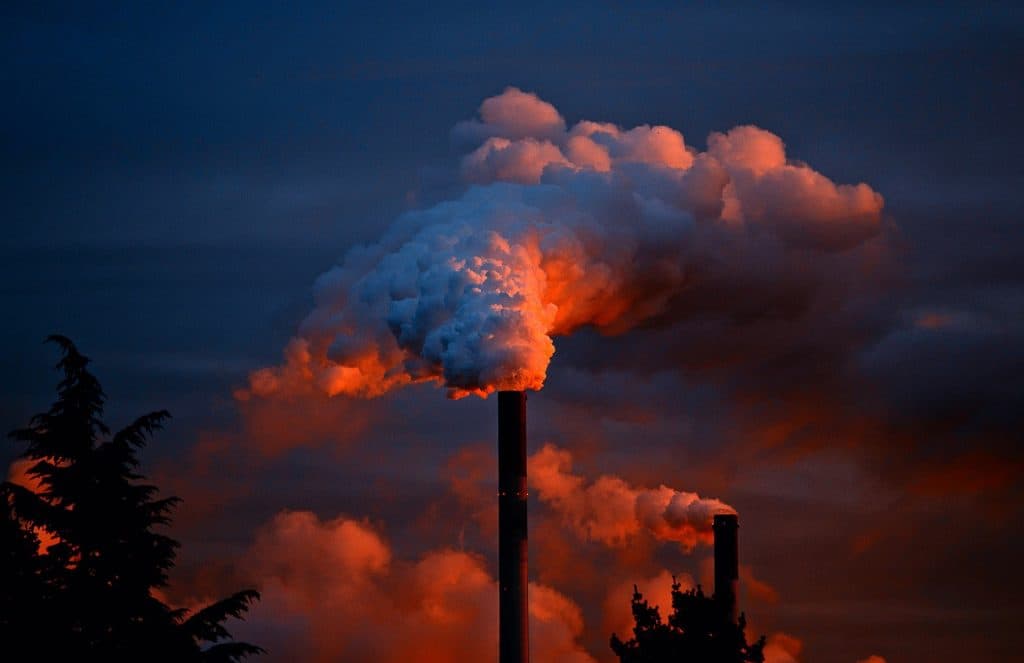
Brussels, 10 September (ČTK correspondent) - The European Parliament's Committee on the Environment (ENVI) today approved a significant change to the European Commission's April proposal concerning the emissions trading system. The Commission proposed adjusting the so-called Market Stability Reserve (MSR), which regulates the supply of allowances on the market. Under the new rules, allowances should no longer be invalidated if more than 400 million of them are held in the reserve. Instead, they should remain in the reserve as a future запас. However, MEPs on the ENVI committee want to retain the invalidation mechanism and, from 1 March 2027, raise its threshold from 400 million to 650 million allowances. The move was immediately condemned by Czech MEP Alexandr Vondra (ODS), who is the shadow rapporteur for the conservative ECR group on the proposal.
The Market Stability Reserve reduces the supply of emission allowances on the market when there is a surplus, and releases them when there is a shortage. According to the EU executive, the change strengthens the MSR mechanism's role as a buffer and improves its ability to respond to future developments, including market stress or excessive price volatility. The aim is therefore to increase stability and predictability, the Commission said. A change to the emissions allowance system has also been requested by Czech Prime Minister Andrej Babiš.
The ENVI committee today voted on its position on the Commission proposal. Forty-three MEPs supported the change, 21 voted against and six abstained. The full European Parliament is expected to vote on the proposal as early as next week during its plenary session in Strasbourg. Once the EU Council, representing the member states, has also adopted its position, so-called trilogue negotiations on the final wording of the text can begin.
"MEPs want to maintain the allowance cancellation mechanism to ensure the proper functioning of the emissions market and the Market Stability Reserve, to enhance long-term market predictability and thereby contribute to the EU's 2040 and 2050 climate targets," the European Parliament said in a statement.
However, they propose raising the threshold from 400 million to 650 million allowances. "This would maintain a sufficiently large buffer to balance supply and demand imbalances, without risking an excessive accumulation of allowances in the reserve, which they believe could occur under the Commission's proposal," the text adds.
"Today's vote strikes the right balance between climate ambition and industrial competitiveness," said the proposal's rapporteur, Italian MEP Pierfrancesco Maran of the Socialists and Democrats (S&D) group.
According to him, ambitious climate policy and industrial policy can go hand in hand.
Alexandr Vondra takes the opposite view. "It is a deeply unfortunate decision. The Market Stability Reserve was created to stabilise the emissions allowance market, not to create an artificial shortage and push prices even higher," the Czech MEP said. In his view, Europe is already grappling with high energy prices, declining industrial competitiveness and fierce international competition, yet the European Parliament has decided to remove hundreds of millions of allowances from the system rather than keep them in the reserve as protection against future shortages and price shocks.
"Industry needs more time for its ambitious decarbonisation efforts. This time, the Commission understood that circumstances have changed. An allowance kept in the reserve is an insurance policy. A cancelled allowance is gone forever," Vondra added, saying that the centre-left majority in the European Parliament had now decided to be greener and, above all, more expensive than the European Commission itself.
The ETS emissions allowance system is intended to motivate companies to reduce emissions. Companies must buy allowances for every tonne of CO2 they emit. The more emissions they produce, the higher their costs, which makes it worthwhile for them to invest in cleaner technologies.
The ETS 1 system is the main European emissions allowance market, covering energy, large industry and aviation in the EU. The ETS 2 system is due to be launched in 2028 after a one-year delay and should cover road transport and building heating.
Translation disclaimer
This article is a machine translation of the Czech original and has not yet been fully reviewed. In case of any doubt, please refer to the Czech version.
Sdílejte článek prostřednictvím:
You might also like
25 October 2026, 08:20