Decarbonisation, which Czech energy, industry and transport must undergo, is intended both to cut carbon dioxide emissions into the atmosphere and to highlight innovative Czech companies. If we fail to keep pace with the rest of Europe, some sectors could instead move to countries that have had more time to prepare for the “green transition” and have created attractive conditions for investors.
According to the Ministry of the Environment, investment in reducing the carbon footprint of domestic industry will amount to approximately CZK 2.8 trillion by 2030. According to calculations by consultancy Boston Consulting Group (BCG), the cumulative figure will reach CZK 3.2 trillion by 2050 (equivalent to around CZK 100 billion to 200 billion annually until 2050, and 1.5% to 3% of GDP).
Most of the total investment – around CZK 2.5 trillion of the overall CZK 3.2 trillion – will need to be used to decarbonise the three most polluting sectors: energy, industry and transport. A further CZK 400 billion will be required for the transformation of the Czech automotive industry as it shifts to producing electric vehicles.
Private investors should provide most of the money, so the state must swiftly ensure a stable investment environment for them.
According to Ondráš Přibyla, founder of the Facts about Climate platform, eliminating the largest share of emissions need not be all that difficult. The latest available data, from 2023, show that Czechia produces roughly 99 megatonnes of so-called CO2 equivalent annually (a conversion of the quantities of various greenhouse gases into the amount of CO2 that would have the same contribution to the greenhouse effect, author’s note). According to the Ministry of the Environment, emissions thus saw their largest fall since the early 1990s in 2023.
According to Přibyla, however, 60% of this burden could be addressed through electrification – moving away from burning coal and replacing it with renewable sources such as solar and wind power plants.
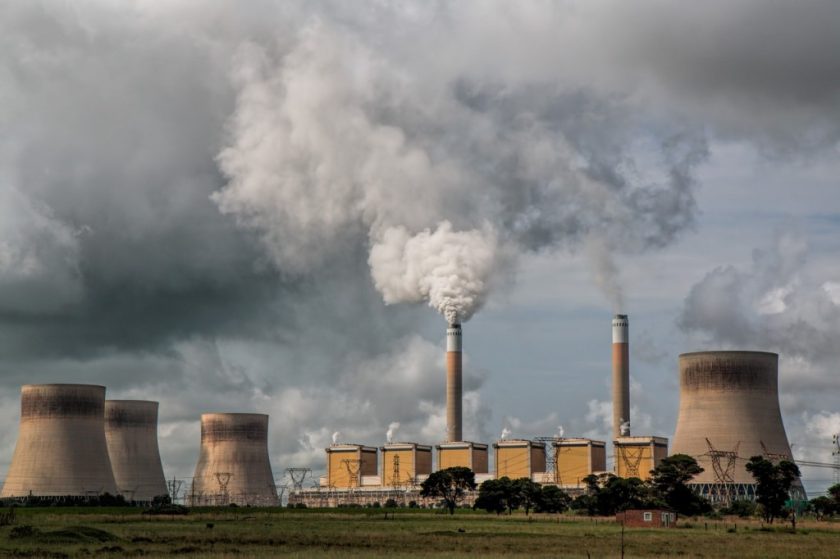
Electricity and heat generation in Czechia accounts for around 33% of emissions, with district heating plants producing roughly 8% of that. The closure of coal-fired power plants, owned alongside semi-state energy giant ČEZ by “coal barons” such as Pavel Tykač (Sev.en) and Daniel Křetínský (EPH), will be helped both by the government’s commitment to phase out coal by 2033 and by the rising price of allowances that polluters must buy in order to emit.
“If it rises to €100, it will no longer pay off for them,” Přibyla says. He estimates that closures could therefore begin in as little as three years.
Facts about Climate is currently preparing a Decarbonisation Atlas, intended to describe the starting point in Czechia and globally and show what can be done for decarbonisation, for example in the area of technology. The aim is not to sacrifice economic prosperity, but instead to benefit from the change.
The State Energy Policy, a document that should outline a more detailed vision for the entire energy sector, is currently on ice, as the government has not approved it. This contrasts with the National Energy and Climate Plan (NECP), which Czechia has finally approved in full after delays, as of December 2024.
Decarbonising industry will be harder
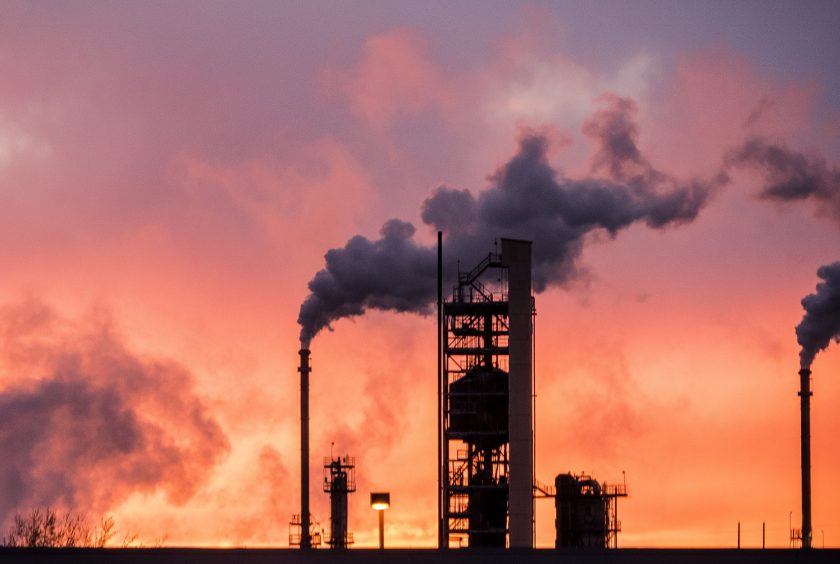
Another slice of the emissions pie is industry, accounting for 28% of total emissions, including cement plants, steelworks and other sectors. Each industrial segment involves specific processes, and electrification can only partly help with decarbonisation. Where genuinely high temperatures are essential for production, green hydrogen may help in the future, for example (that is, hydrogen produced by electrolysis using renewable sources, author’s note).
However, a large share of industrial emissions also arises from chemical reactions that are difficult to replace. Innovations may therefore come to the fore, such as “carbon capture storage”, meaning capturing and storing carbon dioxide in geological formations. This is very costly and remains at the stage of pilot projects and geological surveys in Czechia.
The transformation of industry also raises many questions that go beyond technological changes. For example, to what extent is it necessary for the country to maintain sovereignty or self-sufficiency in areas such as steelmaking? These industrial operations used to emerge where a cheap fossil resource – coal – was available. That advantage is disappearing as coal mining ends in Czechia. Would it not therefore be more appropriate to think of steel as a “Central European” commodity? Přibyla is also asking this question.
“Once the advantage of cheap fuel disappears, there is no point in subsidising steelworks. Of course, a certain degree of sovereignty is needed, but rather than distorting markets among ourselves in Europe through various national subsidies, which only leads to trade wars, it might be more appropriate to think of steel as a Central European commodity. But politicians will be afraid of that, he believes.
For now, cement plants and steelworks will rather cautiously prepare the ground, he says. “I would compare it to a chess game, which has an opening, a middlegame and an endgame. You cannot move the rooks – the steelworks and cement plants – at the beginning of the game; they only come into play in the endgame. It is not up to them now,” Přibyla is convinced.
For the time being, their competitiveness can be partly protected by the carbon border levy. It will be payable from 2026 and should ensure that imported products or intermediate products from Asia or Turkey are not cheaper than those from the EU, given that they do not pay emissions allowances.
Ideally, moreover, decarbonisation should take place across Europe so that areas do not emerge to which manufacturers relocate in order to use, for example, cheap local fossil fuels. The opposite effect is already visible, however. Companies prefer to invest in countries that can already produce “greener” energy. This is why numerous data centres are being built in Finland, for example.
An opportunity for exporters
The Second Economic Transformation (2ET), an organisation bringing together figures from the Czech business community, also sees decarbonisation as an opportunity for Czech industry. The association is behind, for example, the Opportunity Map, which examines how Czechia performs when focusing specifically on technologies needed globally for the transition to a low-carbon economy. The result is the “Green Industry Opportunity Index”, under which Czechia has the second-best combination of selected indicators measuring industry’s ability to manufacture “green” products.
Czechia excels, for example, in supplies for rail transport. The value of Czech exports of these products amounted to CZK 14 billion in 2022. They include railway bogies and brakes for rail vehicles. The country is also good at manufacturing water turbines, measuring equipment, compressors and pumps. The total value of domestic exports of these products amounted to CZK 23 billion in 2022, according to the Opportunity Map. Czechia is also the world’s ninth-largest exporter of mineral sound and thermal insulation.
The Opportunity Map also lists barriers to development. It identifies high energy prices and a shortage of zero-emission energy, a lack of skilled labour, weak links between science and research and practice, slow permitting processes and uncertainty for investors as the main constraints on industry.
Bohuslav Čížek, director of the Economic Policy Section at the Confederation of Industry of the Czech Republic, believes that domestic conditions for investment are lacking compared with growing economies.
“We have long been dealing with protracted permitting processes, a shortage of qualified workers, complex bureaucracy and excessive regulation. A current barrier for companies is uncompetitive energy prices, both globally and compared with neighbouring countries, he cites difficulties similar to those identified by the Second Economic Transformation (2ET).
He also objects to how subsidies are structured, for example from the Modernisation Fund, the European Structural and Investment Funds and the Recovery Plan.
“Our members tell us that, for various reasons, it is difficult for them to use the available support. In some cases, the application conditions already require a building permit; elsewhere, there is a condition to end the use of fossil fuels entirely; in other cases, the application window is too short. It is forgotten that genuinely transformative projects often concern the core production technologies of a given company, that such projects take years to prepare and consist of many individual investments. A company will not prepare such an investment simply because a call is available for six months now,” he explains. He also considers a “revision of the Green Deal” to be an important issue this year.
Wind turbines, heat pumps and biogas plants
The Decarbonisation Department has been established relatively recently at the Ministry of the Environment, where it is headed by Miloslav Keltner, who has previously worked at the Ministry of Education and the Ministry of Finance, among others. He has contributed, for example, to the Action Plan to Support the Development of Biomethane Use, which is currently in interministerial consultation. He has also worked on a plan for the use of large heat pumps, which he sees as a solution for decarbonising district heating plants that still use fossil fuels.
According to Keltner, it is positive that the National Energy and Climate Plan (NECP) was eventually approved, after industry representatives had long waited due to delays in the approval process. Although representatives of non-profit organisations complain about the approved NECP’s insufficient ambition, for example regarding Czechia’s carbon neutrality (the specific target for 2050 was dropped from the plan, author’s note), Keltner considers it positive that it retained a commitment to 1.5 GW of capacity for wind power plants.
Also key, in his view, is the amendment to the Energy Act known as LEX RES III (so far approved by the Chamber of Deputies), which implements the RED III directive. It addresses electricity storage and aggregation.
“I see the role of our department as creating favourable conditions for things to happen, rather than banning something. We can, for example, simplify construction in the wind energy sector. We can work out how to support battery storage, and improve communication with distribution and energy companies so that everyone has the same information. We are trying to ensure that the remaining resources in the Modernisation Fund are used as well and as efficiently as possible in line with current technological developments, Keltner describes the plans.
Other work includes cooperation on finalising the draft Act on Accelerating the Use of Renewable Energy Sources (under the responsibility of the Ministry of Industry and Trade), which is to be submitted to the government’s Legislative Council. It concerns acceleration zones, in which rules should be simplified, particularly for the construction of wind power plants.
Currently, permitting a wind power plant can take as long as ten years; the aim is to shorten the permitting process to one year. At the same time, Keltner wants to connect academics from Charles University specialising in communicating major projects with municipal and regional leaders, as turbines often encounter resistance in these areas.