
23 October 2026, 14:38
Loading...
Nature absorbs less carbon due to warming
Klára Čeperová
17 October 2024, 11:07
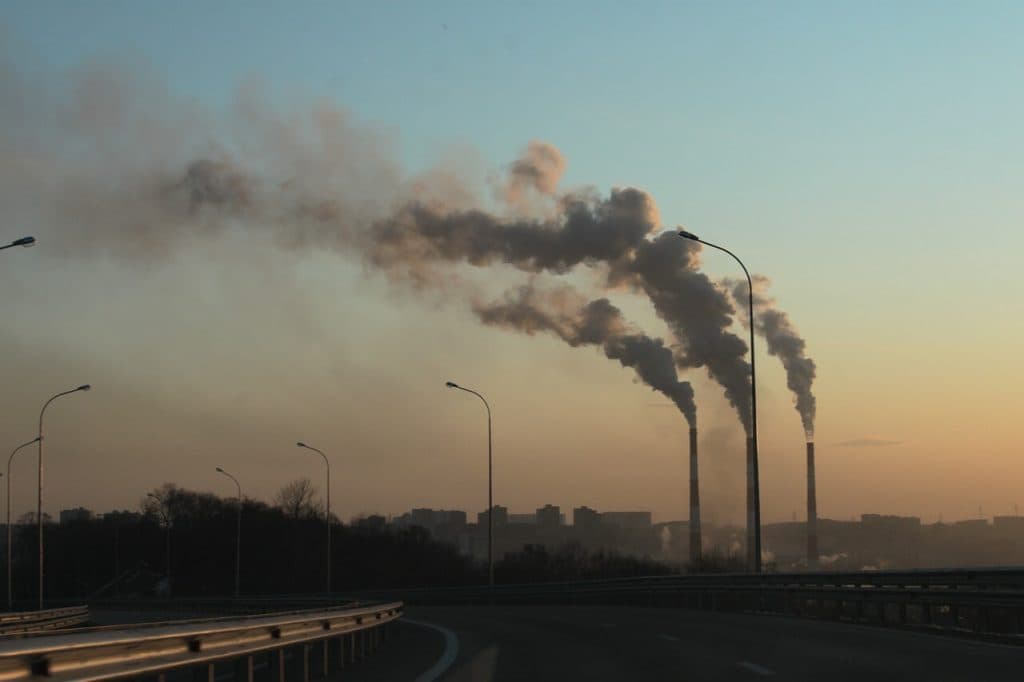
The goal of achieving net-zero carbon emissions by 2050 also assumes that forests and oceans will absorb some of the CO2 released. Scientists are concerned, however, that the natural process of capturing CO2 could collapse as a result of climate change. The fragility of ecosystems became clear last year, when the amount of carbon absorbed by land demonstrably fell.
In Europe, the amount of carbon absorbed by land fell significantly in France, Germany, the Czech Republic and Sweden as a result of bark beetle infestations, drought and increased climate-related tree mortality.
Finland, which has the most ambitious carbon neutrality target in the developed world, has seen its once-massive land carbon sink disappear in recent years. This means that despite reducing emissions across all sectors by 43%, the country's overall emissions have remained unchanged.
These changes are still regional. Some countries, such as China and the US, have not yet seen such a decline in absorption.
Offsetting won't save us
Preliminary findings from an international team of scientists show that in 2023, the hottest year on record, the amount of carbon absorbed by land temporarily plunged. The result was that forests, plants and soils, taken together, absorbed almost no carbon. The Guardian reports.
"We should not rely on natural forests to do this work. We really, really need to tackle the big problem: fossil fuel emissions across all sectors," says Professor Pierre Friedlingstein of the University of Exeter, who oversees the annual calculations of the global carbon budget.
Several estimates have been published in recent years of how the world could increase the amount of carbon absorbed by its forests and natural ecosystems. Many scientists, however, say the real task is to protect existing carbon sinks by stopping deforestation, reducing emissions and ensuring forests are as healthy as possible.
"We can't just assume that we have forests and that forests will remove some of the CO2, because that won't work in the long term."
Ocean carbon absorption
Warning signs are also emerging at sea. Greenland's glaciers and the Arctic ice sheet are melting faster than expected, disrupting the Gulf Stream and slowing the rate at which oceans absorb carbon. As sea ice melts, algae-eating zooplankton are exposed to more sunlight, which scientists say could keep them in deeper waters for longer and disrupt the vertical migration that stores carbon on the ocean floor.
"We are seeing cracks in the resilience of the Earth's systems. We are seeing huge cracks on land—terrestrial ecosystems are losing their ability to store and absorb carbon—but the oceans are also showing signs of instability," Johan Rockström, director of the Potsdam Institute for Climate Impact Research, said at an event during New York Climate Week in September.
The decline in soil carbon absorption in 2023 could be temporary; without the pressure of drought or fires, soils could return to absorbing carbon. But it highlights the fragility of these ecosystems, with significant implications for climate change.
The path to net zero
Achieving net zero is impossible without nature. Given the limited development of technologies capable of removing atmospheric carbon on a large scale and commercially, vast forests, grasslands, peatlands and oceans are the only way to absorb human-produced carbon emissions, which reached a record 37.4 billion tonnes in 2023.
At least 118 countries rely on this to meet their national climate targets. Rising temperatures, more frequent extreme weather events and drought, however, are pushing ecosystems into uncharted territory. Most climate models did not account for such a rapid collapse in land-based CO2 absorption as the one seen in 2023.
What's left?
Only one major tropical rainforest—the Congo Basin—remains a strong carbon sink, absorbing more carbon than it releases into the atmosphere. The Amazon Basin is experiencing record drought, further worsened by the El Niño climate pattern. Agricultural expansion has turned the tropical rainforests of Southeast Asia into a net source of emissions in recent years.
The oceans—the largest natural CO2 sink—have absorbed 90% of global warming in recent decades, leading to rising sea temperatures. Studies have also found signs that this is weakening the ocean carbon sink.
Blind spots
Satellite technology has improved the monitoring of forests, peatlands, permafrost and ocean cycles, but assessments and forecasts in international reports often have wide margins of error. This makes it difficult to predict how the world's natural carbon sinks will behave in the future—and means many models do not account for the sudden collapse of ecosystems.
"Overall, models agree that climate change will lead to a future decline in carbon absorption on land and in the oceans. The question is how quickly this will happen. Models tend to suggest that it will happen gradually over roughly the next 100 years," says Professor Andrew Watson, head of the Marine and Atmospheric Sciences group at the University of Exeter.
Translation disclaimer
This article is a machine translation of the Czech original and has not yet been fully reviewed. In case of any doubt, please refer to the Czech version.
Sdílejte článek prostřednictvím:
You might also like


23 October 2026, 11:01


23 October 2026, 06:34