
28 October 2026, 15:10
Loading...
Oil companies are failing to meet the targets set out in the Paris climate agreement

Jakub Malý
28 March 2024, 11:59
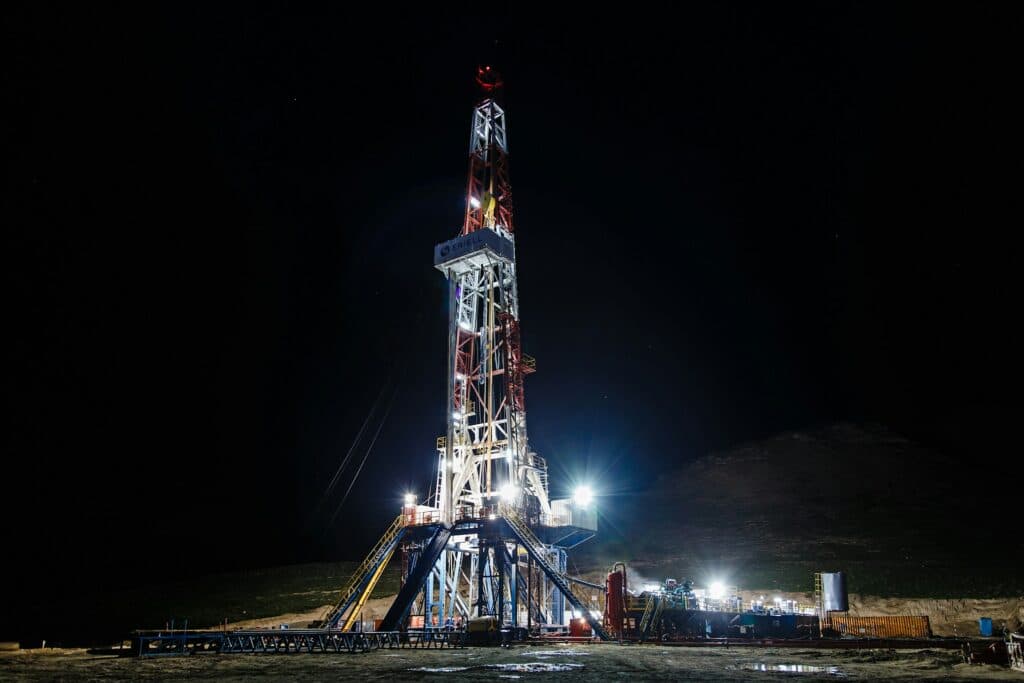
Non-profit organization Carbon Tracker reviewed the targets of the biggest oil companies and compared them with their actual development plans. It found that none of them are meeting the targets set out in the Paris climate agreement.
The report examined 25 of the largest publicly traded oil and gas companies and assessed how closely they align with the Paris climate goals. The assessment was based on Carbon Tracker’s latest evaluations of five key indicators: investment plans, recently approved projects, oil and gas production plans, emissions targets and executive remuneration.
The combined score summarizes each company’s performance across the five indicators, each of which is scored from 0-4 points. The metrics are weighted according to their importance in achieving the Paris Agreement goals. Details of the full methodology can be found in the report itself.
Each company was assigned a grade from A to H, with A indicating “potential alignment” with the Paris Agreement goals and H meaning “farthest from alignment”, with activities and strategy consistent with catastrophic warming of 2,4 °C above pre-industrial levels. According to the authors’ assessment, every company received a failing grade.
BP received the highest grade, a D, which still leaves considerable room for improvement. At the other end of the scale is ConocoPhillips, which received an H. Notably, four of the five highest-ranked companies are based in Europe (BP, Repsol, Equinor, Eni), while three of the five lowest-ranked companies are based in the United States (ExxonMobil, Pioneer, ConocoPhillips).
The vast majority of companies in the oil sector are currently focused on launching new projects and increasing production in the short term. Looking ahead, only Repsol, Equinor and Shell aim to maintain stable production levels over the long term, while BP expects production to decline.
"Companies around the world publicly say they support the goals of the Paris Agreement and claim to be part of the solution accelerating the energy transition. Unfortunately, however, we see that none of them currently align with the Paris Agreement goals, although there are clear differences between individual companies. This report provides evidence for investors and other stakeholders to hold oil companies accountable," said study author Maeve O’Connor.
Further evidence also points to a failure to meet the targets
Previous studies have also found that the climate plans of major oil companiesare not sufficient to meet the targets. This study examined the 8 largest oil companies and found that none had adequate targets aligned with the Paris goals.
According to the report, investments by these 8 companies in developing oil and gas production between 2022 and 2025, along with the subsequent output from these investments, could generate additional emissions of 8,6 gigatonnes (Gt) of carbon dioxide. This is equivalent to more than a quarter of the entire global energy sector’s output in 2020.
The point is further underscored by recent remarks from Saudi Aramco CEO Amin Nasser. Speaking at a conference in Houston, he said that the shift away from oil and natural gas is not happening and that investment in renewable energy and green technologies cannot replace existing fossil-fuel-based systems, whether in transport or the energy sector. Instead, he proposed investing in the development of oil and gas production so that production capacity reflects forecasts of higher future demand, which is expected to peak in 2030.
Translation disclaimer
This article is a machine translation of the Czech original and has not yet been fully reviewed. In case of any doubt, please refer to the Czech version.
Sdílejte článek prostřednictvím:
You might also like

28 October 2026, 13:08

28 October 2026, 11:10

28 October 2026, 09:08
