
28 October 2026, 15:10
Loading...
Rule change: Germany to pave the way for carbon capture
Klára Čeperová
29 February 2024, 06:36
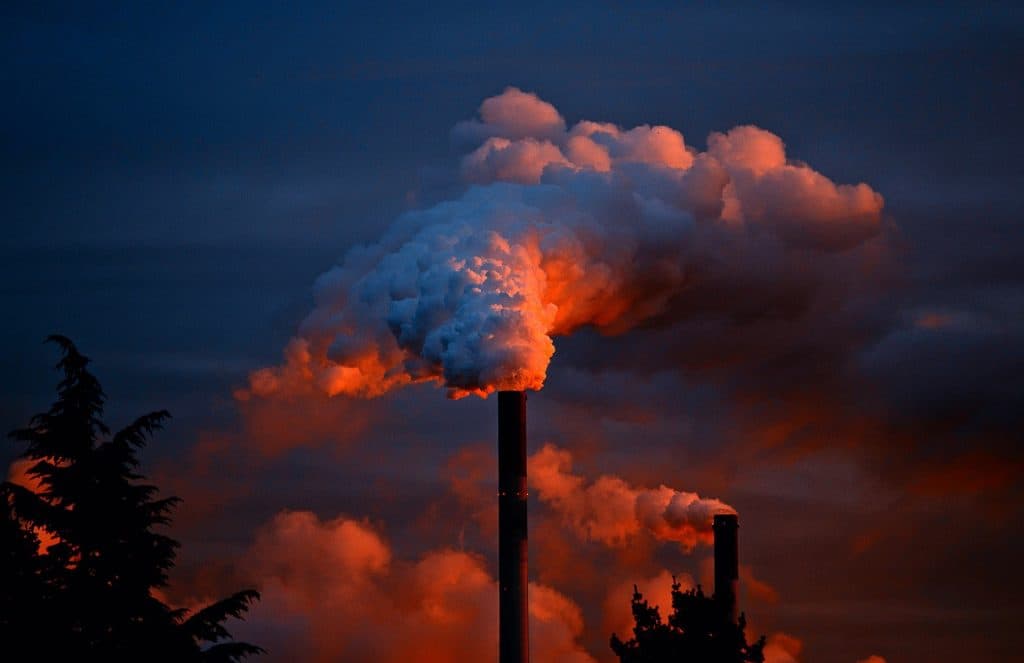
Storing CO2 indefinitely on German territory, or even simply transporting it by pipeline, has been illegal under German law since 2024. But after the European Commission put forward a strategy for hydrogen capture, Berlin plans to change the law and overcome long-standing resistance in political circles.
Germany will amend its CO2 storage law to facilitate the transport of the gas and plans to introduce carbon capture in industry and the energy sector. The country is taking steps to become a net-zero country after 2050. Euractiv reports.
"Today we are taking a pragmatic and responsible decision: carbon capture and storage, and its use, should be allowed in Germany," Robert Habeck, Minister for Economic Affairs and Climate Action, said in Berlin on Monday.
A concession to heavy industry
When heavy industry emits CO2, it can be captured and stored (CCS) or used in chemical processes (CCU). The adoption of this technology in Germany will be accompanied by a new "carbon management strategy" and enabled by an amendment to the CO2 storage law.
The technology is "mature and safe", Habeck explained, adding that industries such as cement production "have no other option".
The energy sector
The second important issue is the role CCS should play in the energy sector. While liberal politicians see gas-fired power plants with captured emissions as a cheap alternative to their hydrogen-fired counterparts, the Greens and some members of the centre-left SPD are sceptical.
However, the role of CCU/CCS in the energy sector is being criticised by environmental NGOs.
"It sends the wrong signal to include emissions from fossil-fuel power plants here," said NABU, an environmental lobby group focused on birds, although it was originally part of an industry and NGO alliance that called for a rapid proposal.
Germanwatch, an international climate justice group, said that including emissions from the energy sector "risks destroying public acceptance of any kind of CCS in Germany".
To address these concerns, CCS in the energy sector will not be eligible for state support unless it is used in bioenergy power plants.
Captured CO2 from coal-fired power plants will even be barred from access to future pipeline infrastructure, making potential "clean coal" projects more expensive. The government says this restriction amounts to a "de facto ban".
Auctions
Whether carbon capture will play a role in Germany’s reserve power generation will be decided through auctions designed to be "technology-neutral".
Technology neutrality only works "if all emissions are priced at the point of production", stressed Ottmar Edenhofer, a renowned climate economist who heads a research organisation in Potsdam.
The German government therefore "supports the ambitious implementation of the European methane regulation", the carbon management strategy says, adding that Brussels should explore "forward-looking pricing of emissions from upstream fossil fuel supply chains placed on the EU market".
Where to put it?
Since onshore CO2 storage is deeply unpopular among Germany’s federal states, storage within the country will be permitted only in a small area of the North Sea.
There is enough space in "Germany’s exclusive economic zone" in the North Sea, Habeck stressed. Nature conservation areas are not eligible for CO2 storage. He did not say whether CO2 could be stored in military zones, which occupy a large part of Germany’s North Sea area.
This brings certain problems: Germany has ratified the London Convention on marine pollution, and Berlin is now seeking to ratify an amendment to the treaty that provides exemptions for CO2 storage.
Emissions in the red
The strategy’s second milestone is Germany’s first-ever long-term negative emissions strategy.
While the country aims to achieve climate neutrality by 2045, negative emissions will be needed from 2050 to keep global temperatures in check.
"If we overshoot, we will have to bring them down after 2045," Habeck says. His Green Party has long opposed negative emissions, fearing that bets on immature technologies could slow down real change.
Together, the two strategies represent "a milestone for Germany and Europe", climate economist Edenhofer said, adding that Berlin currently expects around 50 million tonnes of additional CO2 to be stored annually from 2040.
Translation disclaimer
This article is a machine translation of the Czech original and has not yet been fully reviewed. In case of any doubt, please refer to the Czech version.
Sdílejte článek prostřednictvím:
You might also like

28 October 2026, 13:08

28 October 2026, 11:10

28 October 2026, 09:08
