
23 October 2026, 14:38
Loading...
Sustainable biofuels to be a key topic at this year's COP30 conference
Kristýna Klasová
10 November 2025, 15:26
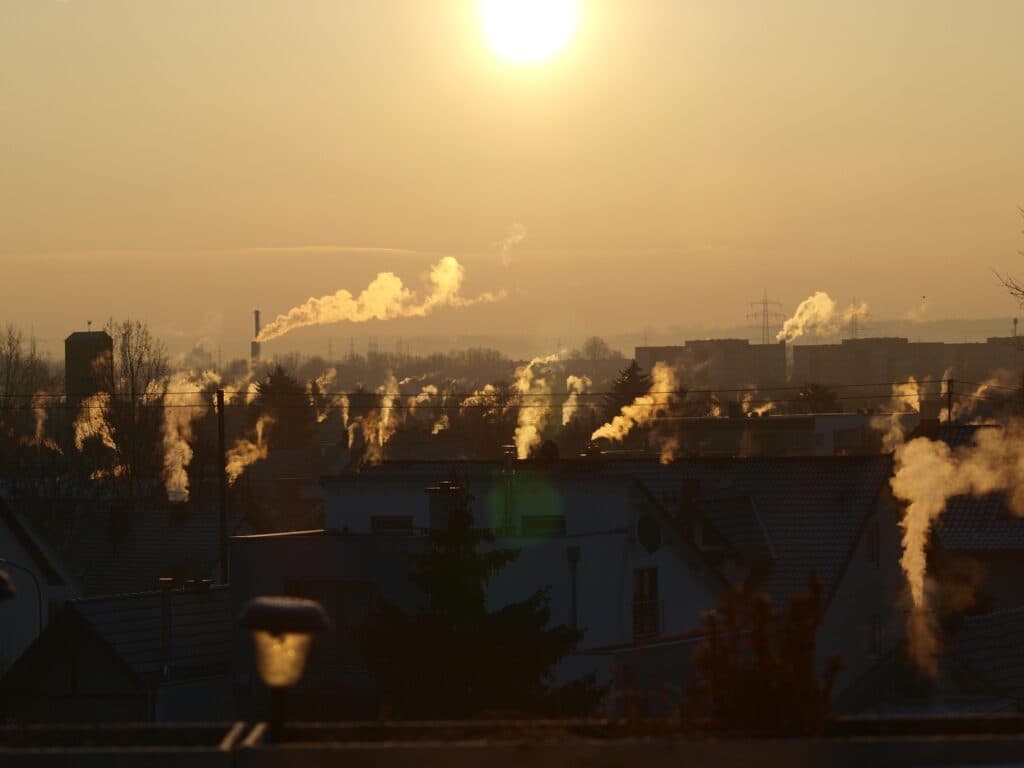
The COP30 climate conference is getting underway in Belém, Brazil. According to Francesco La Camera, head of the International Renewable Energy Agency (IRENA), sustainable biofuels should play a leading role at the conference. Discussions will also focus on the social impacts of the energy transition. Countries will also present new climate commitments and assess progress to date in developing renewable energy.
The summit will take place from 10 to 21 November 2025 in the Brazilian city of Belém. Countries are set to present updated climate commitments and assess progress in renewable energy since the previous talks.
The International Renewable Energy Agency (IRENA) has identified sustainable biofuels as one of the key tools for transitioning from fossil fuels to clean energy sources, Reuters reported. La Camera noted that the technology has the potential to decarbonize sectors that are difficult to electrify, such as transport, aviation and heavy industry.

A truck carrying biomass. Source: EP Resources
“Our goal is for the energy transition to be not just technical, but also socially just,” said the head of IRENA. The organization stresses that the transition to a low-carbon economy must be inclusive. We must take into account workers, regions and developing countries that are economically dependent on fossil fuels.
IRENA says that the world has so far achieved less than half the pace needed to triple installed renewable energy capacity by 2030, a target set at the COP28 conference in Dubai. Francesco La Camera warned that without a significant acceleration in investment in clean energy, grids and infrastructure, the world will be unable to keep warming below 1.5 °C.
The social dimension of the energy transition
According to IRENA, COP30 will focus not only on technical and investment goals, but also on the social aspects of the energy transition.
Discussions will focus on employment, community development, energy access and equality between regions. La Camera noted that without a fair distribution of the costs and benefits of climate action, the transition could face opposition and lose public support.
“A just transition is not a side issue, but a key element of success,” he added.
Brazil as host and symbol of the Amazon
The organizers deliberately chose the city of Belém in northern Brazil as the venue for COP30. The city lies on the edge of the Amazon rainforest, one of the world's most important climate regions.
Brazil wants to use its position as a leading producer of bioethanol and sugarcane biofuels at the summit. It plans to present proposals for wider use of sustainable fuels and highlight the links between climate policy and biodiversity protection.
The country is seeking to position itself as a leader in climate solutions, despite facing criticism for expanding oil exploration off the mouth of the Amazon.
Expectations for COP30
Countries are to update their climate plans. They will also discuss how to better align policies on renewable fuels, investment and technology transfer between the developed and developing worlds.
“At COP30, we must show that the energy transition is not only necessary, but also feasible—and that it can be fair for everyone,” La Camera concluded.
Translation disclaimer
This article is a machine translation of the Czech original and has not yet been fully reviewed. In case of any doubt, please refer to the Czech version.
Sdílejte článek prostřednictvím:
You might also like


23 October 2026, 11:01


23 October 2026, 06:34