24 September 2026, 11:23
Loading...
Local unemployment likely to rise slightly after coal mining ends in Karviná, Czechia

oEnergetice.cz, ČTK
9 November 2025, 09:33
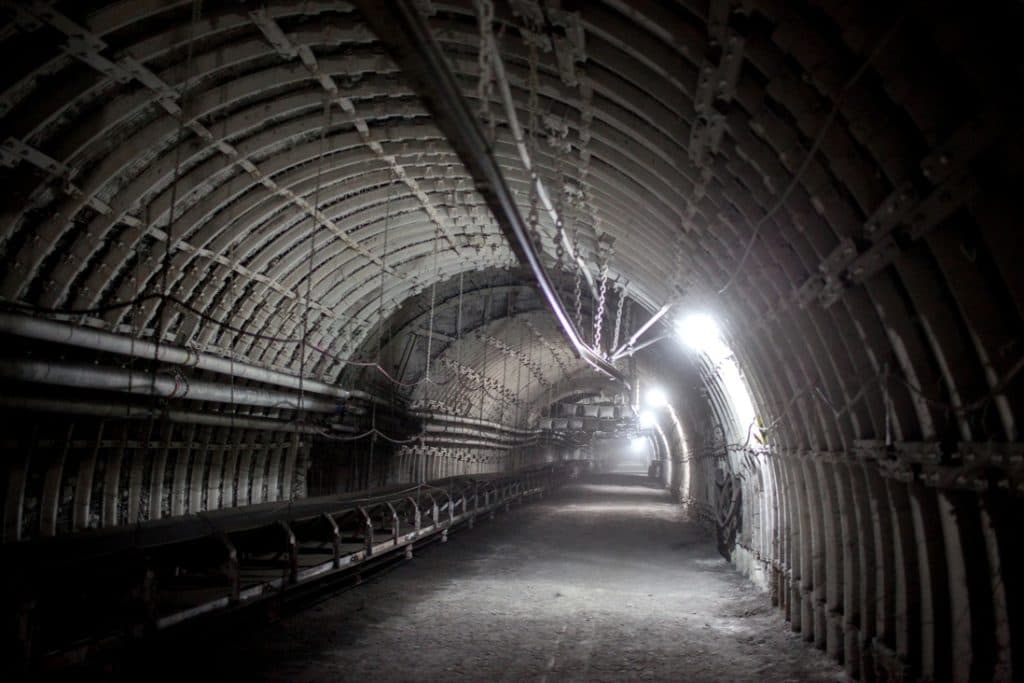
After hard coal mining ends in the Karviná region, which OKD has announced for 31 January next year, unemployment is likely to rise slightly at the local level. Labour market economist Jaromír Gottvald of the Faculty of Economics at VSB–Technical University of Ostrava (VSB-TUO) said this in a statement to the Czech News Agency. According to him, the Karviná region would benefit from the arrival of a new major employer. Moravian-Silesian Regional Governor Josef Bělica (ANO) said the region was ready to help.
Mining at ČSM Mine, the last operating hard coal mine in all of Czechia, will cease at the end of January. Some 750 employees will leave OKD, followed by another 150 by 28 February, while most workers at supplier companies will also lose their jobs.
"Those leaving who have not yet become eligible for an old-age pension will have access to OKD’s voluntary New Shift programme. It has been operating since 2014 and has since been used by more than 1,000 company employees. It helps interested applicants find employment or start their own business," said OKD spokeswoman Barbora Černá Dvořáková.
OKD will pay departing workers severance pay of up to 11 times their average monthly earnings, spending more than CZK 500 million on this.
"Although OKD has prepared accompanying social measures for the final wave of redundancies, based on experience from previous layoffs we expect unemployment to rise slightly at the local level," Gottvald said.
According to him, 900 redundancies would probably not be a problem in other regions. "But the Karviná region has high unemployment – currently 9.4 percent, which, together with the Most district, is the highest unemployment rate in the Czech Republic. The availability of jobs, or rather opportunities for workers in mining professions, is very low there," Gottvald said. He added that the employability of mining workers is often made more difficult by various health limitations.
František Bikár from the general directorate of the Czech Labour Office said the authority offers employers dealing with mass layoffs, for example, consultations on planned support programmes or advice directly at the company. The office’s specialists help laid-off workers, for example, to prepare CVs and get ready for recruitment processes, identify suitable positions and connect them with potential employers.
"The end of hard coal extraction is a fact, and it will be useful to view this change in the structure of the economy positively. The Karviná region needs a new impetus – a new major employer," Gottvald said.
Experience shows, he said, that the arrival of a new employer can also generate further jobs in related manufacturing, services or transport.
"A gigafactory or a similar major project could be such an example, helping to revive the labour market while also supporting purchasing power in the region. The benefits for the labour market outweigh the drawbacks associated with such larger projects," the economist said.
Bělica said the end of hard coal mining at ČSM Mine was a historic moment. "It is the end of an era that shaped our region, our culture and our identity. I myself started at this mine, and I know well the hard work of miners, their courage, solidarity and pride. I also understand the nostalgia that many feel. However, economic and environmental circumstances lead us to seek new paths of development. The transformation of the region is not a choice; it is a necessity," the regional governor said.
According to him, the region must open itself up to innovation, technology, education and entrepreneurship. "It is a challenge, but also an opportunity. However difficult the labour market situation may be – especially in view of the recent layoffs at Liberty – the region is ready to help. We are investing in retraining, support for entrepreneurship, infrastructure development and attracting new investors," Bělica said.
Hana Staňková, dean of VSB-TUO’s Faculty of Mining and Geology, does not see the situation as a problem either. "Our faculty has been preparing for this situation for several years, and we are also drawing on experience from abroad. Where coal mining ends, specialists in landscape restoration will be needed, and mining does not end with coal: other raw materials are also extracted – stone, sand, etc.," the dean said.
The university is responding to the situation on an ongoing basis and updating its range of study programmes according to the needs of industry and the region. "In connection with the phase-out of coal mining, we currently offer, for example, the Environmental Protection in Industry programme and the newly accredited Post-mining Landscape Revitalisation programme," Staňková said.
Translation disclaimer
This article is a machine translation of the Czech original and has not yet been fully reviewed. In case of any doubt, please refer to the Czech version.
Sdílejte článek prostřednictvím:
You might also like

24 September 2026, 10:30
24 September 2026, 06:56
23 September 2026, 17:27