Warsaw administrative court rules Turów mine may threaten the environment

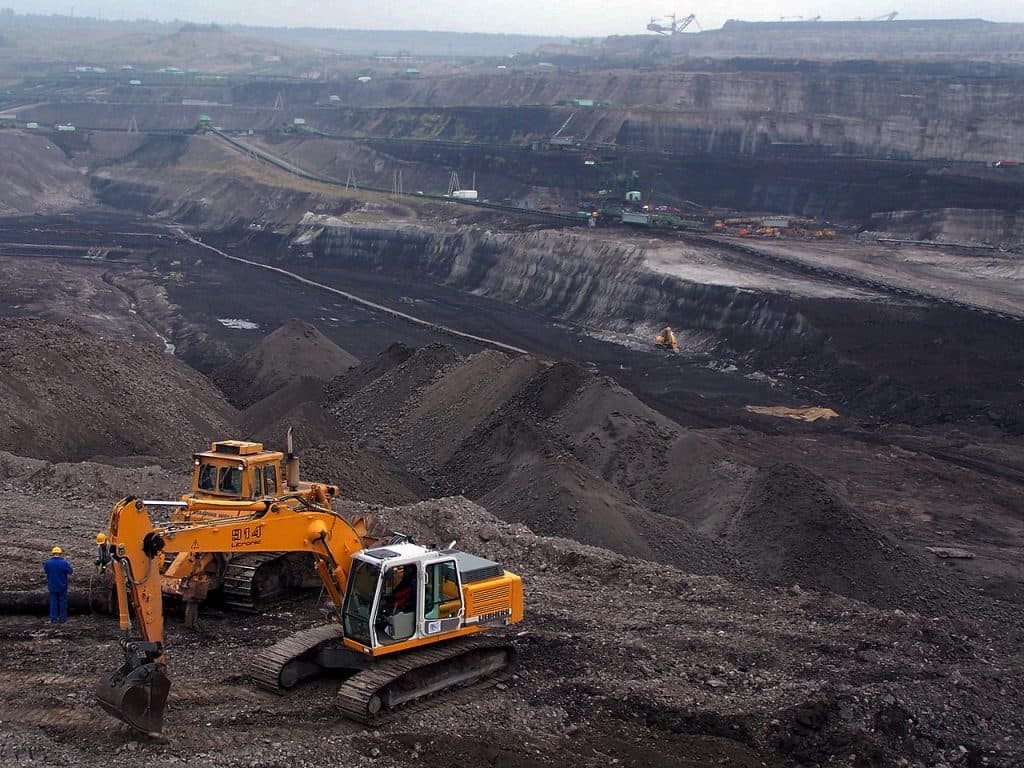
A Warsaw administrative court has ruled that operations at the Turów mine, near the border of the Liberec Region, may threaten the environment. The news website gazeta.pl reports this, citing Anna Zalewska, an MEP from the ruling Law and Justice party (PiS), who posted a photograph of the 31 May ruling on her Twitter account. Polish Deputy Prime Minister and Minister of State Assets Jacek Sasin accused the court of “pursuing foreign interests”. Liberec Region Governor Martin Půta (Mayors for the Liberec Region) told the Czech News Agency (ČTK) in response to a question that the court’s ruling is unlikely to affect the agreement between the Czech Republic and Poland.
According to Agnieszka Stupkiewicz of the legal organisation Frank Bold, the court concluded that it could not be ruled out that the decision on the environmental impact of lignite mining at Turów might be found to be flawed in the future. Poland’s Ministry of Climate and Environment authorised mining at Turów until 2044 this February.
Last autumn, the head of the General Directorate for Environmental Protection issued a positive decision allowing mining at the mine to continue until 2044, bringing the environmental impact assessment process to a close. Environmental organisations appealed the decision to the Warsaw administrative court.
“They want to close Turów again,” Zalewska wrote on Twitter.
According to Polish media, she said that power company PGE, which owns the mine and the adjacent power plant, would appeal the Warsaw administrative court’s ruling.
Polish Minister Sasin wrote on Twitter that “at the request of the city of Zittau, the Czech and German branches of Greenpeace and the Frank Bold Foundation, the judges are calling for the closure of the Turów mine”. “We will not allow that; we will defend 60,000 jobs,” Sasin said.
Polish Environment Minister Anna Moskwa wrote that mining at Turów “will continue for as long as it is possible and necessary”.
Wojciech Ilnicki, head of the Solidarity trade union at the Turów mine, called the administrative court’s decision “scandalous” and added that union members would protest if necessary. The Turów complex, he said, means “energy security and cheap energy”.
The Polish government insists on continuing mining at Turów because the power plant there accounts for about seven per cent of Poland’s electricity generation. The mine is close to the Czech and German borders, and environmentalists and local residents say mining threatens the environment in all three countries, particularly by depleting groundwater around the mine.
The prime ministers of the Czech Republic and Poland signed an agreement on 3 February last year to address the impact of mining at Turów. Poland then paid the Czech Republic 45 million euros (just under CZK 1.1 billion) in compensation for mining-related damage, and the Czech Republic withdrew its lawsuit against Poland, which it had filed with the Court of Justice of the EU over the mine. Environmental organisations say, however, that the agreement does not protect Czech citizens from losing access to water.
“I think the agreement would only be affected if someone revoked the mining permit,” Půta told ČTK yesterday evening in response to the court’s ruling, adding: “I am glad that the court in Warsaw has recognised that coal mining is not exactly an activity that is in harmony with nature, and that it affects the environment.
We’ll see; I think we’ll have to wait and see what happens next.”
The Liberec Region governor has long avoided speculating about how long coal mining will continue on the Polish side. “Poland has to resolve that on its own territory, with its own institutions, ministry or courts,” he said. According to Půta, the Czech side is continuing projects to mitigate the impact of mining. The first construction project, which will provide drinking water to border areas, is expected to begin in June. It is co-funded by the Turów Fund, to which Poland contributed 35 million euros (the equivalent of CZK 823 million) as part of the compensation; including interest, the fund currently holds almost CZK 896 million. Půta also expects the year-long testing of the sealing wall, designed to prevent water from draining away from Czech territory, to be completed before the summer holidays.
Translation disclaimer
This article is a machine translation of the Czech original and has not yet been fully reviewed. In case of any doubt, please refer to the Czech version.




