Asian LNG re-exports continue to outpace Europe in 2024

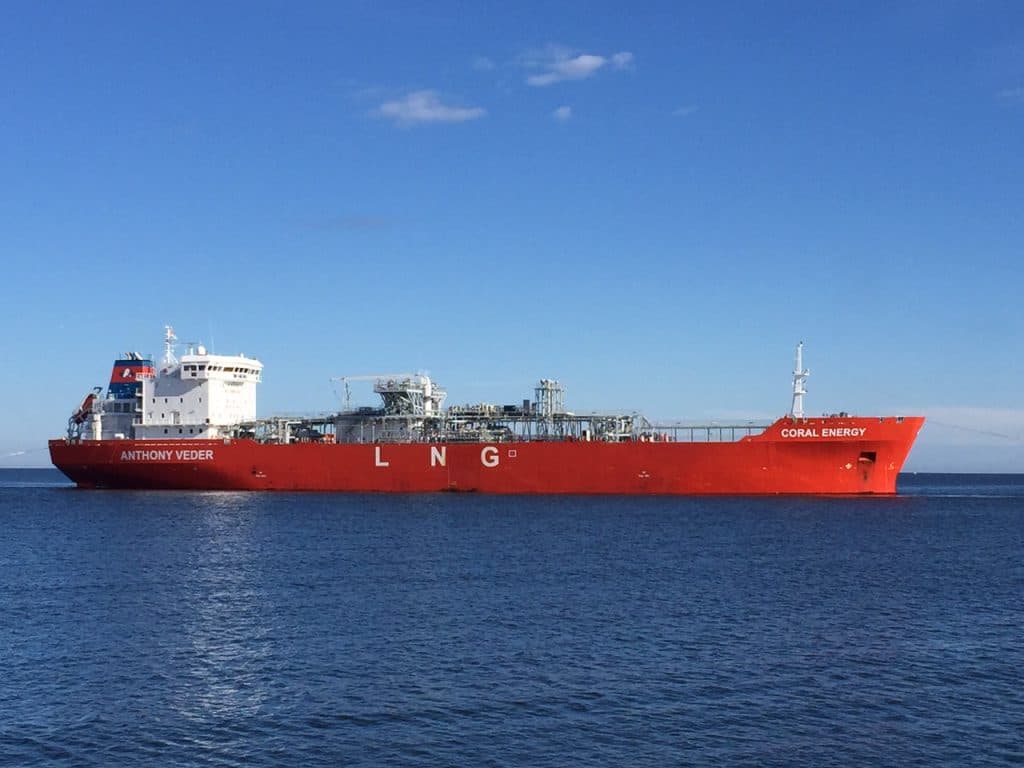
According to data from S&P Global Commodity Insights, Asian LNG re-exports continued to grow in 2024, outpacing those from Europe. This continues the strong trend of re-exporting the commodity from Asia that emerged in 2023. Europe’s share of global re-exports fell to 43% in 2023. By contrast, re-exports from mainland China nearly doubled year on year in 2023.
LNG re-exporting takes place when LNG supplies are stored in above-ground tanks in one country and subsequently transferred to tankers and delivered to another country or region. Re-exporting the commodity allows traders and suppliers to store gas and wait for price signals in markets elsewhere in the world.
The ability to re-export cargoes has provided a lifeline for a number of LNG import terminal operators when demand has fallen in selected markets. Demand can change for many reasons, with weather patterns the most common factor.
In recent years, a number of facilities in the US and Europe have installed LNG reloading capability. This allows them to take advantage not only of changes in the global LNG supply-demand balance, but also of seasonal price fluctuations between regions.
Between 2008 and 2022, volumes of gas re-exported from Europe exceeded those from Asia. In 2023, however, this trend reversed, and according to data available so far, it is continuing in 2024.

According to company data, re-exports from Asia and Europe so far totalled 530 000 tonnes in 2024. That is approximately 11% of last year’s total volumes. Approximately 200 000 tonnes were re-exported from the Atlantic. The rest was re-exported from Japan, Korea, Taiwan and other Pacific countries. Europe’s share of global re-exports fell from more than 50% in 2021 to 43% in 2023.
Of the total LNG volumes distributed in 2024, 140 000 tonnes went to Japan, 120 000 tonnes to China, 110 000 tonnes to Finland, 80 000 tonnes to Thailand, 10 000 tonnes to Italy and 10 000 tonnes to Norway. The remaining capacity is yet to be nominated.
Re-exports from China gain strength
According to the data, the trend is driven by growth in re-exported volumes in Asia.
"Asian re-exports reached 2.7 million tonnes per year, a 46% year-on-year increase. After falling in 2022 due to an unexpected increase in LNG demand, European re-exports rose by 27% in 2023 to 2.5 million tonnes per year," said Ayush Agarwal, an LNG analyst at S&P Global."Mainland China became the largest re-exporter in the Asia-Pacific region, with 1.0 million tonnes, overtaking Indonesia. Indonesia (0.9 million tonnes) continued its strong re-export activity, supported by TotalEnergies’ 2021 agreement to use the Arun regasification terminal as a trading hub," Agarwal added.
As Chinese companies become increasingly sophisticated in LNG trading, China increased its LNG re-exports to 14 cargoes in the first ten months of 2023 following geographic arbitrage last year. An increase in term supplies, combined with a slow recovery in demand from its 2022 low and a price-sensitive downstream market, led Chinese companies to rapidly increase re-exports. Their volume nearly tripled.
Analysts at S&P Global Commodity Insights expect the growing trend in re-exports from China to continue to boost trade flexibility and liquidity in the Pacific Basin.
Shipping from European and US markets complicated by Red Sea situation
European LNG re-export volumes fell following disruption to shipping in the Red Sea. The Suez Canal, which connects Europe and Asia, is located there. The longer route via the Cape of Good Hope has reduced the incentive for European volumes to head east.
Spain, historically Europe’s largest re-exporter, usually re-exports to Asia. However, shipping restrictions are keeping cargoes between the seas, reducing the arbitrage opportunity for re-exports, said David Lewis, an LNG analyst at S&P Global.
According to shipping data from S&P Global, the journey from Barcelona to Japan via the Cape of Good Hope could take 20 days longer. This would mean additional costs of USD 62 cents/MMBtu.
With costs rising, Qatari supplies could become an alternative to European re-exports. Qatari volumes have a logistical advantage over US and European cargoes because they do not need to travel to Asia via the Suez Canal. In January, Qatar supplied 12.6% of total LNG imports to the Japanese and Korean markets, according to S&P Global analysts.
Translation disclaimer
This article is a machine translation of the Czech original and has not yet been fully reviewed. In case of any doubt, please refer to the Czech version.