
28 October 2026, 15:10
Loading...
Gas supplies to Europe remained low last year, but falling demand helped

Jan Budín
5 April 2024, 12:42
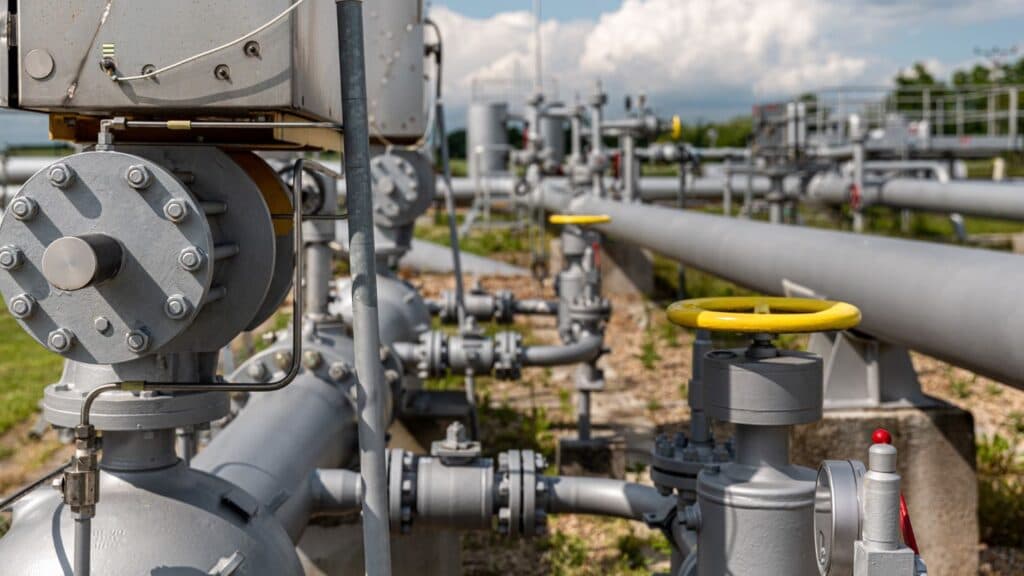
Natural gas supplies to Europe were still below the levels typical before Russia’s invasion of Ukraine in 2023. However, thanks to a significant drop in natural gas consumption, storage levels remain at historic highs, putting further downward pressure on wholesale natural gas prices. This is according to an analysis by the European Union Agency for the Cooperation of Energy Regulators (ACER).
According to ACER, EU natural gas consumption fell by 8% in last year’s record-hot year and was around 60 billion m3 lower than in 2021. Imports of liquefied natural gas into the EU increased by a comparable amount over the past two years. After accounting for other factors affecting Europe’s natural gas balance, pipeline deliveries of natural gas from Russia may therefore have fallen by almost 120 billion m3.
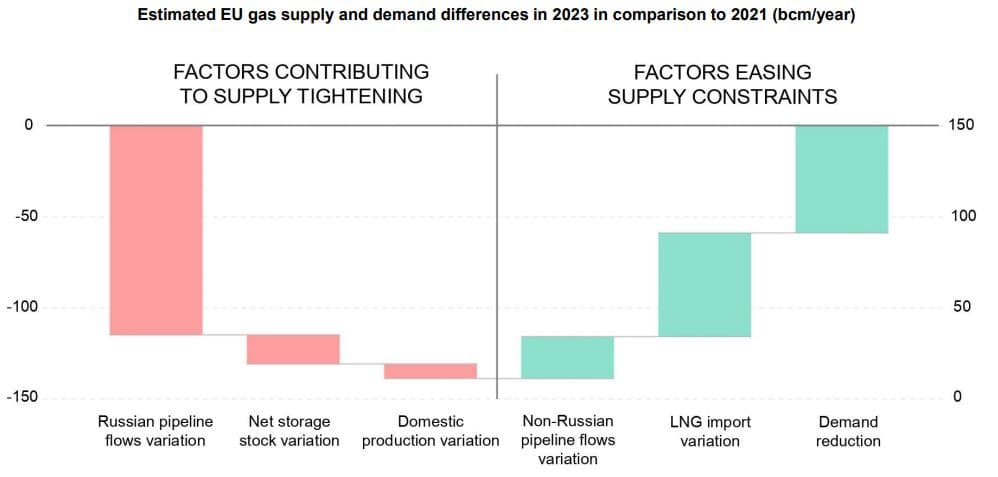
Changes in the natural gas balance in EU countries between 2021 and 2023. Source: ACER
"Mild weather conditions, stagnant economic activity and growth in electricity generation from low-carbon sources were the main factors that kept EU gas consumption below the levels observed in 2022 (down 8% year on year). The downward trend in total gas consumption continued despite falling gas prices. All three sectors—households, industry and power generation—saw year-on-year declines of between 7% and 10%," ACER said.
In 2022, low electricity generation from nuclear, wind and hydropower thwarted efforts to reduce natural gas consumption in power generation. In 2023, however, electricity generation from these sources increased, and, partly thanks to lower electricity demand, generation from coal- and gas-fired power plants fell by 22%. Specifically, electricity generation from natural gas-fired power plants fell by 69 TWh year on year.
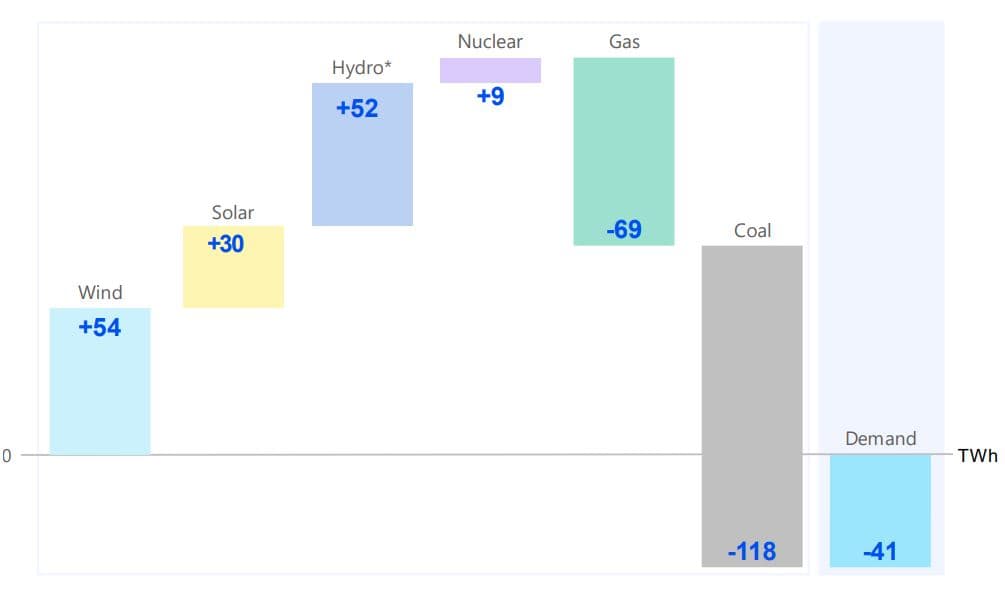
Year-on-year change in electricity generation from major sources in 2023 in the EU, Norway and Switzerland. Source: ACER
Storage levels at historic highs
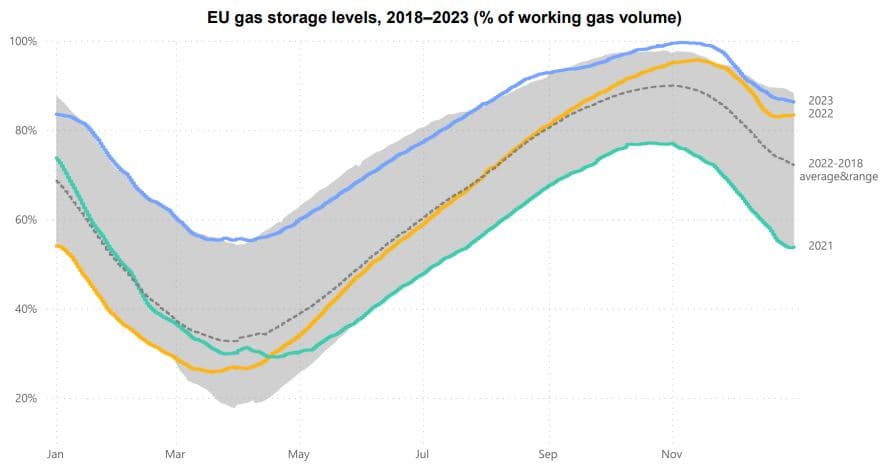
In its analysis, ACER noted that natural gas storage facilities entered this winter 99.9% full and, thanks in part to another very warm winter, were 59% full as of 15 March 2024.
"Above-average gas storage levels at the start of the year helped allay concerns about possible gas shortages in the first quarter of 2023. Relatively low use of stored gas during the winter months also significantly reduced the need for gas injections to reach the required storage levels compared with 2022,"Changes in European natural gas storage levels between 2018 and 2023. Source: ACER
Translation disclaimer
This article is a machine translation of the Czech original and has not yet been fully reviewed. In case of any doubt, please refer to the Czech version.
Sdílejte článek prostřednictvím:
You might also like

28 October 2026, 13:08

28 October 2026, 11:10
28 October 2026, 09:08