
23 October 2026, 14:38
Loading...
Gas transit from Azerbaijan via Ukraine, or just a cover for importing Russian gas?
Veronika Jurcová
2 August 2024, 13:58
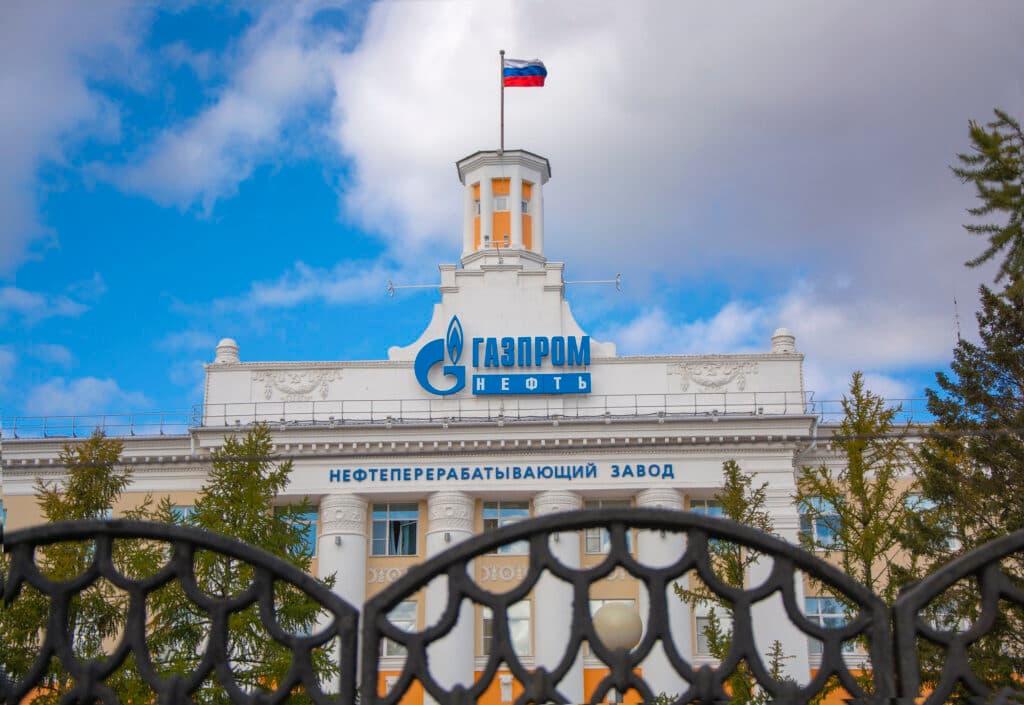
The European Union is seeking alternative energy sources following Russia’s invasion of Ukraine and is considering the possibility of importing gas from Azerbaijan via Ukrainian pipelines. But the plan carries the risk that Russian gas could be covertly exported to the European market in the form of Azerbaijani gas, the Financial Times reports.
Following Russia’s invasion of Ukraine, Europe is seeking alternative sources of natural gas. The contract for the transit of Russian gas through Ukraine to Europe is also due to expire at the end of 2024, and Ukraine does not intend to renew it. This could threaten European gas supplies and increase the risk of shortages in countries on the bloc’s eastern flank, including Slovakia, Hungary and Austria. The Czech Republic also imports some gas via this route, although it is not dependent on it.
Some European governments and companies are therefore considering the possibility of importing gas from Azerbaijan via Ukrainian pipelines. Following Russia’s invasion of Ukraine in 2022, the EU signed an agreement with Azerbaijan to double gas imports by 2027 to 20 billion cubic metres per year, up from 11.8 billion last year. But the plan is threatened by a lack of infrastructure and funding to increase production.
Azerbaijani President Ilham Aliyev believes that the target is achievable and has stressed the need to accelerate talks with new partners, such as Slovakia, and increase supplies to existing markets. Azerbaijan currently exports its gas to eight countries: Turkey, Georgia, Italy, Greece, Bulgaria, Romania, Hungary and Serbia, primarily via the so-called Southern Gas Corridor, a network of pipelines running through Turkey.
Azerbaijan needs long-term contracts
Achieving the EU’s 2027 target will require funding gas production in Azerbaijan and expanding the pipelines in the Southern Gas Corridor. The EU, however, prefers short-term contracts in line with its goal of reducing fossil fuel consumption and achieving net-zero emissions by 2050. Azerbaijan, on the other hand, needs long-term contracts to finance increased gas production in the Caspian Sea. Azerbaijan’s ambassador to the EU, Vaqif Sadiqov, said that without these contracts, it would not be possible to secure funding for deep wells.
Infrastructure funding is also a problem. The EU cannot finance projects because of rules introduced in 2021 that prohibit the use of the EU budget to fund fossil fuel infrastructure. The European Investment Bank faces similar restrictions. Expansion of the Southern Gas Corridor is also hampered by weak market interest, and it is unclear whether its capacity will be fully utilised in the future.
Political pressure is also mounting. Azerbaijan, which relies on oil and gas revenues, will host the COP climate summit this year, where it faces pressure to transition away from fossil fuels.
Transit talks and their risks
An alternative to the Southern Gas Corridor, which would also address the situation of countries directly dependent on transit through Ukraine, particularly Slovakia, is the transit of Azerbaijani gas through Ukrainian pipelines.
Naftogaz CEO Oleksiy Chernyshov told the Financial Times that replacing Russian gas with Azerbaijani gas is the main alternative Ukraine is considering. This would mean that Azerbaijan imported gas from Russia and then exported its own gas to Europe via Ukrainian pipelines—in other words, a so-called swap, exchanging gas without physically transporting it.
Mykhailo Honchar, president of the Centre for Strategic Global Studies XXI and a leading expert on Ukrainian gas, warns, however, that the agreement could turn into a scheme involving the covert export of Russian gas to the European market in the form of Azerbaijani gas.
Honchar said that Kyiv is willing to tacitly accept Russian gas passing through its pipelines under the guise of Azerbaijani imports because it believes the presence of Russian fuel would act as a kind of deterrent against attacks organised by Moscow. But this argument is not very convincing, since Russia has attacked Ukrainian compressor stations in the past.
Russia and Gazprom have not commented on whether they would be willing to accept Azerbaijan’s plan.
Russian gas routed through Ukrainian pipelines currently accounts for about five percent of total EU supplies, or around 14 billion cubic metres. Azerbaijan could supply only 2 billion cubic metres.
Azerbaijani President Ilham Aliyev confirmed that talks with Ukraine and Russia are under way, but at a conference in Azerbaijan earlier this month he rejected accusations that the country was selling Russian gas to Europe.
Ukraine’s President Volodymyr Zelenskyy also confirmed that talks are under way, but said the plan is just one of several options.
Another possibility would be for European traders to buy gas at the Russia-Ukraine border, but that would tie Ukraine even more closely to Gazprom. Keeping gas flowing through Ukraine is nevertheless crucial to the country’s future plans to export gas.
Translation disclaimer
This article is a machine translation of the Czech original and has not yet been fully reviewed. In case of any doubt, please refer to the Czech version.
Sdílejte článek prostřednictvím:
You might also like


23 October 2026, 11:01


23 October 2026, 06:34