
23 October 2026, 14:38
Loading...
Natural gas prices are at record highs. Experts fear what the coming winter will bring

Martin Voříšek
7 September 2021, 18:32
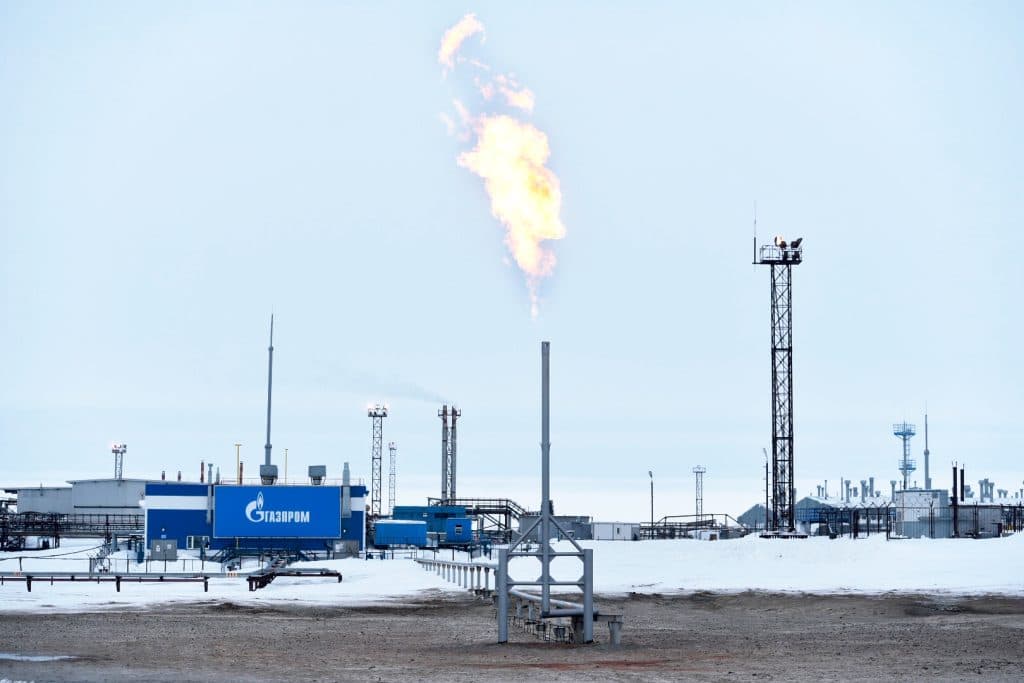
CEOs of Enel and OMV warn of high natural gas prices and relatively low storage levels . Current commodity prices in Europe are already affecting inflation, and if the winter is colder than average, gas prices could rise even further.
European households and businesses face a difficult period due to unprecedentedly high commodity prices, according to the CEOs of multinational energy companies. For some, this could pose a problem in recovering from the effects of the pandemic.
Natural gas prices are the main driver among commodities. They directly affect not only electricity prices, but experts agree that they are also behind the increase in carbon allowance prices. Due to the high price of natural gas, it is much more often economically viable to generate electricity from more emissions-intensive coal, even despite the high price of carbon allowances.
High gas prices are relatively unusual for this time of year, as consumption is usually lower. One reason is generally lower gas supplies to Europe – tankers carrying liquefied natural gas are increasingly heading to Asia rather than Europe, while domestic production cannot be relied upon either. The Netherlands, the EU’s main natural gas producer, is reducing production at the Groningen field, while production from North Sea fields is also limited.
Some analysts also point out that Europe’s main supplier, Russia’s Gazprom, is delivering less gas to Europe than it could. Gazprom may have a number of reasons for this, ranging from political pressure to complete the Nord Stream 2 pipeline to purely economic considerations.
Prices in a substantial share of Gazprom’s supply contracts are indexed to prices at trading hubs, with the final price determined by various contracts (for the following day, month or year). Any additional gas supplies to Europe could therefore lower prices at European trading hubs and thus reduce revenues from Gazprom’s existing contracts.
High gas prices are also supported by the state of storage facilities in Europe. Following last winter, which was relatively cold, they are much less full than usual. While according to Gas Infrastructure Europe data their fill level did not fall below 50 % during last spring, this year it fell below 30 %.
Storage facilities are also being filled substantially more slowly than was customary in previous years. At the beginning of September, they were around 68 % full; by the same date in 2020 and 2019, they had already been more than 90 % full.
At current high gas prices, there is also no commercial incentive to further fill storage facilities because of the difference between current day-ahead market prices and prices under contracts for the winter months. Moreover, if this winter is again colder than the long-term average, further price rises cannot be ruled out. This last happened as a result of an exceptionally cold spell in March 2018, when gas prices in Europe rose sharply.
A possible cold winter and the related gas prices could further support prices of other commodities on the European wholesale market, including electricity and carbon allowances.
Commodity prices are not only affecting inflation, which has already reached its highest level in Germany since 2008, but also the EU’s climate targets. At these gas prices, its role as a fuel for the transition to climate neutrality may be at risk. This can also be seen in the current output of ČEZ’s combined-cycle gas power plant in Počerady. Since the end of July, it has generated electricity on only two days, while in the first four months of the year its output was virtually continuous.
Translation disclaimer
This article is a machine translation of the Czech original and has not yet been fully reviewed. In case of any doubt, please refer to the Czech version.
Sdílejte článek prostřednictvím:
You might also like

23 October 2026, 11:01

23 October 2026, 06:34