Strait of Hormuz threatens Europe with energy crisis: LNG could triple in price

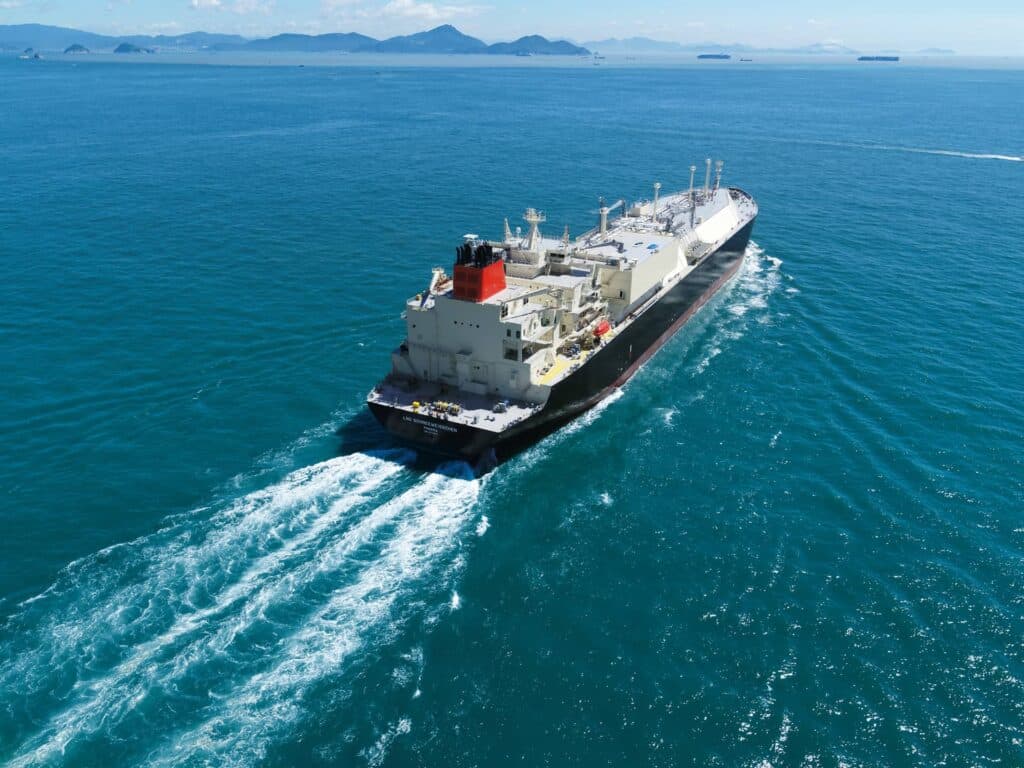
The threat of the Strait of Hormuz closing has once again revealed how fragile Europe’s energy security is. Around a fifth of global LNG trade passes through this strategic strait, and a blockade could deprive Europe of as much as 30 billion m³ of gas a year—roughly a fifth of its LNG imports. Although a complete closure is unlikely, the risks alone are already pushing prices up and forcing countries to seek ways to become more resilient.
Tensions between Iran and Israel escalated again in June. Iran’s parliament passed a resolution calling for the closure of the Strait of Hormuz , a strategic waterway between the Persian Gulf and the Indian Ocean. Although this is still largely a symbolic move, the threat alone is a major shock to markets, according to a commentary by the Oxford Institute for Energy Studies (OIES). Around 18–20% of the world’s LNG passes through the Strait of Hormuz—approximately 77 million tonnes a year, equivalent to more than 105 billion m³ of gas.
This route is crucial for Europe, mainly because of its imports from Qatar. In 2024, Qatar exported around 20 million tonnes of LNG to Europe (approximately 27 billion m³). That was roughly 13% of Europe’s LNG imports, which totalled around 150 billion m³ last year. The Oxford study estimates that a closure would leave Europe short of as much as 30 billion m³ of gas a year. For comparison, that is roughly a fifth of all European LNG imports and about 7–8% of the EU’s total gas consumption (around 350–400 billion m³ a year).
A blockade would mean not only physical constraints on flows, but also a sharp price shock. OIES models European spot prices rising from approximately 35 €/MWh to as much as 90 €/MWh. Such prices would be comparable to the peak of the 2022 energy crisis. In practice, a disruption would trigger a scramble for available tankers on the global market, with Asian countries—which now absorb more than 80% of Qatar’s exports—being the main competitors.
Europe, however, does not have an easily available alternative to Qatari LNG. The United States is increasing exports, but infrastructure constraints at terminals and strong Asian demand limit its room for manoeuvre. Algeria and Egypt offer stable supplies, but with limited capacity, while northern European terminals are already operating close to full capacity. Among European countries, Italy, Belgium and Poland are the most vulnerable, having significantly increased imports of Qatari LNG in recent years.
The British newspaper Financial Times also points out that the situation is not just about energy. Around 40% of the world’s urea exports—which is the most widely used nitrogen fertiliser globally—also pass through the Strait of Hormuz. Norway’s leading chemicals company Yara warns that even a short-term disruption to transit would drive a sharp increase in fertiliser and food prices on global markets.
“Fertiliser producers and their customers are closely monitoring the risks associated with the Strait of Hormuz, through which 40% of the world’s urea exports and 20% of global LNG supplies pass, and warn that any disruption could have a knock-on effect on food production worldwide,”said Svein Tore Holsether, CEO of Norway’s Yara.
It is not yet clear whether Iran will actually move to close the strait. Security experts say such a move would also hurt its own exports and could trigger a military response from Western powers. Shipping data show that tankers are still passing through the strait in volumes comparable to those of the previous year, despite insurance and freight rates rising sharply—the cost of chartering LNG tankers in the Atlantic has climbed to an eight-month high of more than 51 thousand dollars a day.
Translation disclaimer
This article is a machine translation of the Czech original and has not yet been fully reviewed. In case of any doubt, please refer to the Czech version.