German battery storage manufacturer Sonnen heads for insolvency. ČEZ cashed in its stake in time

German battery storage manufacturer Sonnen GmbH has filed for insolvency, just two months after being acquired from energy group Shell by investor Tiven. The company, which was among the pioneers of home battery storage and its aggregation into virtual power plants, had been grappling with a sharp decline in revenue, heavy losses and growing competition from Asian manufacturers. Czech utility ČEZ was among its first investors. However, it sold its stake back in 2019, when Sonnen was acquired by Shell.
From home battery manufacturer to virtual power plant
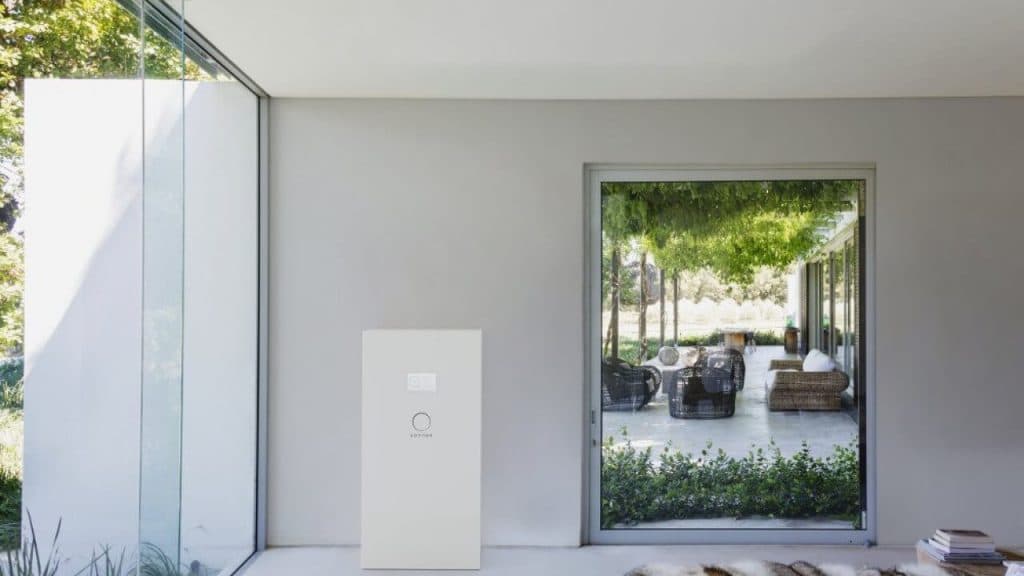
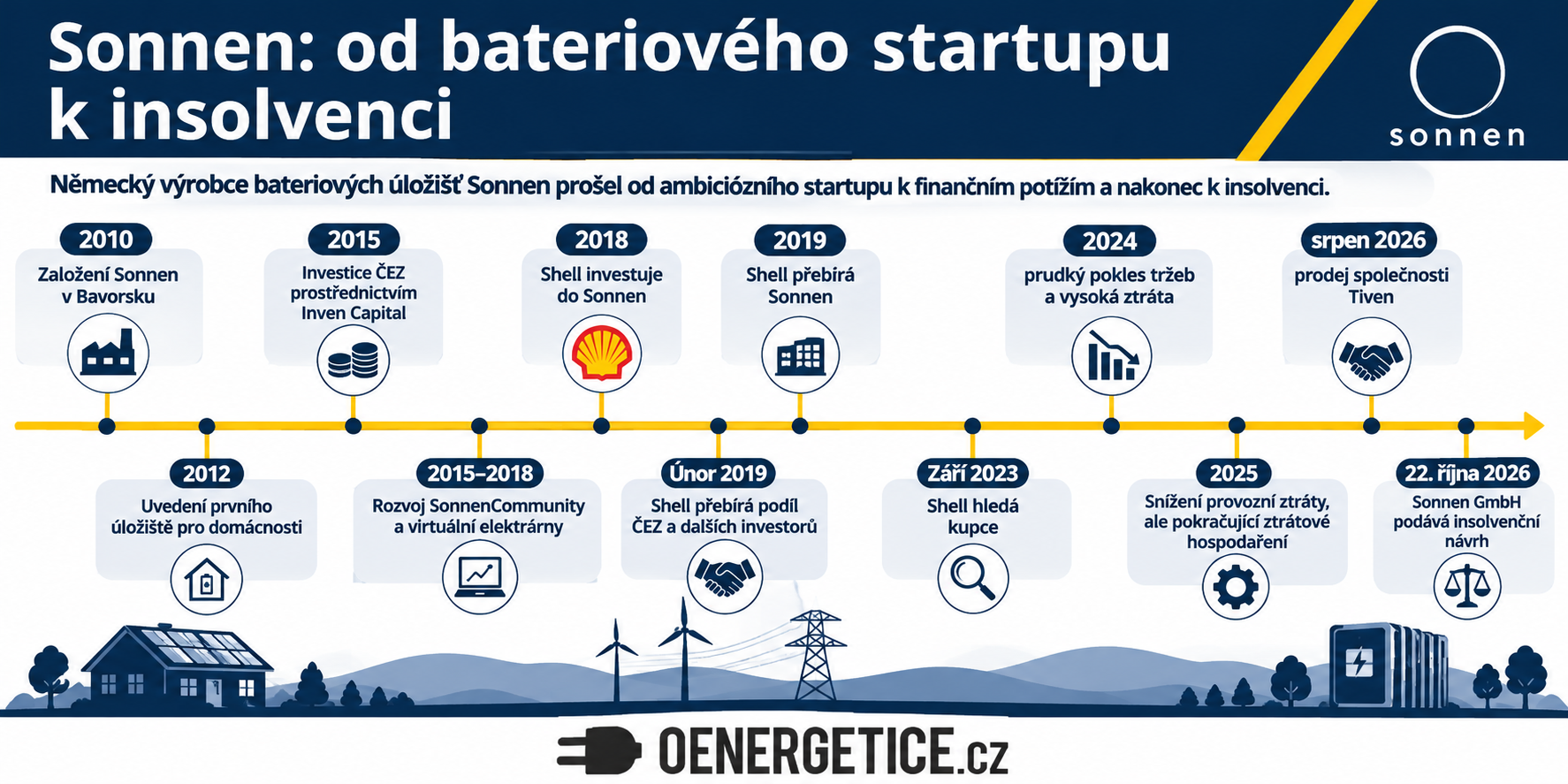
Sonnen was founded in 2010 in Wildpoldsried, Bavaria. Its founders were Christoph Ostermann and Torsten Stiefenhofer. Initially, it focused primarily on developing and manufacturing battery storage systems for homes with photovoltaic power plants. Sonnen bought battery cells from external suppliers and assembled them into storage systems at its own facilities. These enabled solar panel owners to store surplus electricity and use it when their power plants were not generating.
The company's ambitions gradually expanded beyond selling batteries. Sonnen also began developing digital energy services and created its own software to manage batteries and aggregate them into so-called virtual power plants. Through its SonnenCommunity project, it connected home battery storage systems into a single system that made it possible to coordinate their operation and harness their flexibility.
The individual storage systems could thus work together to provide services to the power grid and help balance differences between electricity generation and consumption. This made Sonnen one of the pioneers of decentralised energy and so-called flexibility provision, which, alongside generating and storing electricity, also relies on intelligently managing its consumption.
ČEZ investment and subsequent Shell takeover
Czech utility group ČEZ was among Sonnen's first major investors. It invested in the company in 2015 through its venture capital fund, Inven Capital. Sonnen became the fund's very first investment; Inven Capital focuses on technology companies operating in the modern energy sector.
The investment was in line with ČEZ's strategy at the time of seeking opportunities in decentralised energy and new energy services. The two companies also prepared pilot projects intended to link Sonnen's technologies with the activities of the Czech energy group.
In February 2019, Inven Capital sold its stake to Shell, which also bought out the other investors and took control of Sonnen. This was Inven Capital's first successful exit. According to ČEZ's half-year report for 2019, the sale price was approximately twice the stake's purchase price.
Shell wanted to strengthen its activities in decentralised energy through Sonnen and link battery storage manufacturing with energy services. In September 2023, however, it began looking for a buyer. The sale was not completed until August 2026, when the company was acquired by investor Tiven, the family office of Gert Purkert, co-founder of investment firm Aurelius.
Sharp decline in revenue and competition from Asia
From 2024, Sonnen recorded a sharp decline in revenue and heavy operating losses. According to figures cited by German media, the group's consolidated revenue fell from 443 million euros in 2023 to 198.9 million euros in 2024. EBITDA recorded a loss of 188.7 million euros in 2024. This was reduced to 52.2 million euros in 2025, but the company remained deeply in the red.
The separate financial statements of subsidiary Sonnen GmbH show an even steeper decline in its own performance. The company's revenue fell from 264 million euros in 2023 to 78.4 million euros in 2024, and it recorded a net loss of 107 million euros.
Growing competitive pressure played a significant role. The German home battery storage market has increasingly come to be dominated by Asian manufacturers, such as BYD, Huawei and Sungrow. They were able to offer products at lower prices, putting pressure on the margins of European manufacturers. Sonnen was not the only company affected; other German businesses in the segment also faced difficulties.
Costly international expansion and the development of a broad portfolio of energy services may also have contributed to the financial difficulties. Sonnen was building not only manufacturing capacity, but also digital infrastructure and overseas business operations. According to German newspaper F.A.Z., the cost of its international expansion may have been one of the factors that weighed on the company. Its US business, meanwhile, was growing and remains profitable.
New investor unable to prevent insolvency
Shell began looking for a buyer for Sonnen as early as September 2023, before the sharp deterioration in financial results reported for 2024. The decision was part of a broader strategic shift by the British group under its new CEO, Wael Sawan. At the time, Shell was withdrawing from some customer-facing activities, for example selling its retail electricity and gas businesses in Germany and the UK to Octopus Energy. The new management also emphasised performance, discipline and simplifying the business. Shell did not publicly specify why it decided to sell Sonnen in particular.
When Shell announced its intention to sell Sonnen, the company's financial results had not yet shown the decline that came the following year. Handelsblatt then estimated the company's 2023 revenue at around 450 million euros and its potential sale value at 1.35 to 1.8 billion euros. The sale process ultimately dragged on for almost three years.
Investor Tiven became the new owner in August 2026, intending to restructure the company. However, the insolvency filing came approximately two months after the transaction was completed. On 22 October 2026, German company Sonnen GmbH applied to open insolvency proceedings under self-administration. This allows the existing management to continue running the business under the supervision of an insolvency administrator. The insolvency filing does not automatically apply to other companies in the group.
According to Handelsblatt, the existing customer business and service for more than 150,000 customers are expected to continue. A number of foreign subsidiaries, by contrast, are to be wound up or may undergo their own insolvency proceedings. The planned changes were expected to affect activities in the UK and Italy, for example, while the US business is expected to continue through a newly established company. However, it is unclear how long customer service will be maintained during the insolvency proceedings. The future of the manufacturer's voluntary warranties is also uncertain, as insolvency could complicate claims under them.
Translation disclaimer
This article is a machine translation of the Czech original and has not yet been fully reviewed. In case of any doubt, please refer to the Czech version.