Texas set to become home to the largest carbon capture facility to date

Oil company Occidental Petroleum is positioning itself as a leader in atmospheric carbon capture technology. However, the company’s track record suggests that the technology’s future may not be as rosy as it seems. Despite this, several major players have already invested in the new project, called Stratos, which has also received support from the US government, where carbon capture is seen as having huge potential.
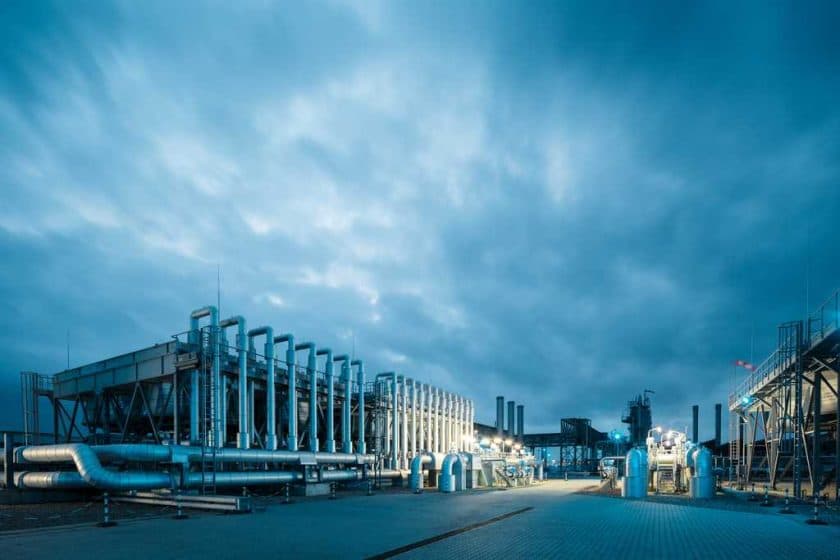
Occidental Petroleum’s large-scale technology complex is designed to capture carbon dioxide from the atmosphere and then store it deep underground. Companies including Amazon and Airbus, as well as the Houston Texans football team, are backing the project. They have pledged to pay for the storage of their emitted carbon through the Stratos project in the future.
The project is supported not only by the private sector. US President Joe Biden has high hopes for the technology and is committing hundreds of millions of dollars to it. With government support, Occidental Petroleum plans to build another 100 plants in the future.
Occidental has previously bet on carbon capture technology. In 2010, it invested in a similar project called Century, located around 100 miles from Stratos. High hopes were pinned on Century during its construction: it was expected to become the world’s largest carbon capture complex, representing more than 20% of global capacity.
The key difference between Stratos and Century is that the older project works by capturing CO2 from a specific emissions source. It is part of a natural gas processing plant. This process has been on the market for longer and is also much cheaper than newer technologies. By contrast, newer technologies, also known as DAC (direct air capture), are designed to capture CO2 directly from the air and filter out unwanted components.
However, Bloomberg Green’s findings show that in the 13 years since it began operating, Century has never run at more than a third of its capacity. The reason was not the technology’s efficiency, but the project’s economic viability, which depended on a certain volume of natural gas being supplied from a nearby field. Over time, however, the gas supply became insufficient, and the company deemed the project unprofitable before eventually selling it for a fraction of its purchase price.
The new technologies based on DAC are intended to make atmospheric carbon capture more efficient while ensuring that it is not tied to the production of any fossil fuel. It is therefore unlikely that a project such as Stratos will suffer the same fate as Century.
A potential problem, however, is that newly built facilities using direct carbon capture will rely on a complex process whose success depends on aligning the technology with the economics. Unlike conventional carbon capture from power plants or industry, DAC’s technological and business models are immature and may face unpredictable complications in the early stages of operation.
A pretext for new oil projects?
Occidental Petroleum’s ambitious plans are aimed at achieving carbon neutrality by 2050, including emissions produced by customers who buy its oil and gas. This puts the company ahead of other US oil giants such as Exxon and Chevron.
Such goals, however, are raising concerns among environmentalists and politicians, including officials from the European Union, who warn that carbon emission reduction technologies should be viewed in the context of the transition to low-carbon energy and should not serve to justify new fossil fuel extraction and processing projects.
“It is clear that Occidental Petroleum sees these technologies as ‘a licence to operate’,” says Glen Peters, a senior researcher at the CICERO Center for International Climate Research and an IPCC author.
Carbon capture is often cited in the oil sector as a path to a carbon-neutral future, but so far the technology has not proved economically viable. If the new DAC technology proves more effective and economically sustainable, however, it could mark a turning point in the sector.
Translation disclaimer
This article is a machine translation of the Czech original and has not yet been fully reviewed. In case of any doubt, please refer to the Czech version.