27 October 2026, 06:15
Loading...
Czech Finance Ministry unveils windfall tax parameters, uncertainty remains
Daniel Grecman
8 October 2022, 08:00
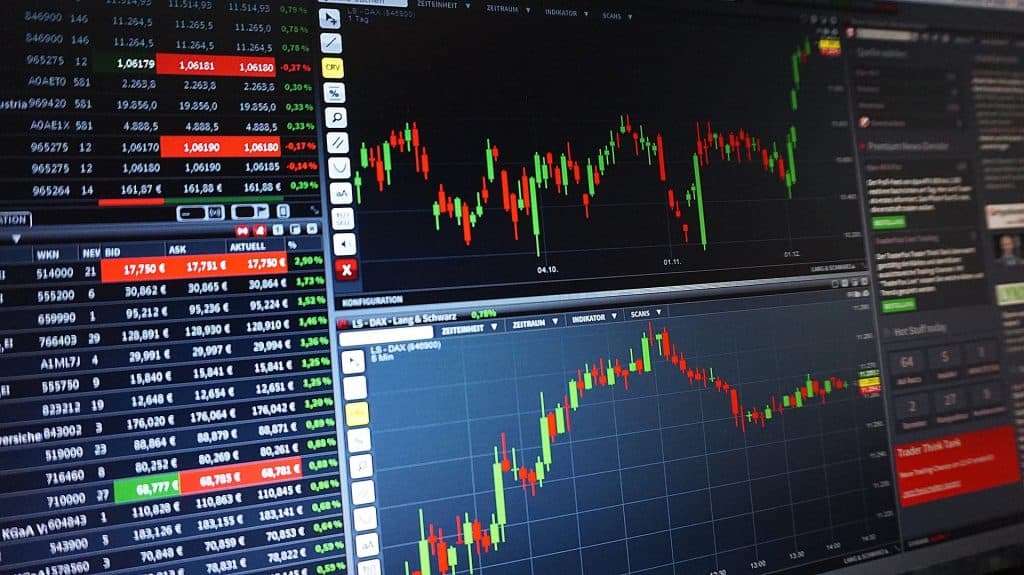
The Finance Ministry, through Minister Zbyněk Stanjura (ODS), presented the parameters of the so-called windfall tax (also referred to as a tax on unexpected profits, a war tax and other terms). The tax is intended to target sectors of the economy and society generating unexpectedly high profits. Its purpose is to raise funds to finance extraordinary expenditure. The affected segments include electricity and gas generation and trading, banking, energy commodity extraction, petrochemicals and wholesale fuel sales.
Windfall tax
Zbyněk Stanjura on Thursday evening presented the parameters of the windfall tax (hereinafter WFT), although economics itself does not recognise this term. The tax is to be introduced for three years – 2023, 2024 and 2025. According to the ministry’s presentation, the tax surcharge added to the corporate income tax rate will be 60%. This means that “excess” profits would be taxed at 79%, rather than 60%. It is not entirely clear whether this is a surcharge on corporate income tax or the tax rate itself.
The ministry will calculate unexpected profits from the average of the four preceding years, which will then be increased by 20%. Everything above this threshold is to be taxed with the WFT surcharge. There is also a discrepancy in the comparison period: the presentation refers to the four preceding years, but gives 2018-2021 in brackets. There is therefore no agreement on how the tax will be calculated for 2024 and 2025 – that is, whether it will be a rolling average or a fixed average (it can generally be assumed that 2022 will produce better results than 2018).
Stanjura estimates WFT revenues for 2023 at CZK 85 billion. Of this, banks are expected to pay CZK 33 billion, with the remainder to be paid mainly by the energy sector.
Experts: How did the ministry arrive at these figures?
In the case of banks, experts agree that they have no idea how the ministry arrived at this amount. According to their calculations, it will amount to several billion crowns. As for the energy sector – for example ČEZ – the situation is considerably more complicated, as the impact of the EU-level price cap for generators must also be taken into account. The producer price cap is EUR 180/MWh, with anything above this level taxed at 100%.
These two taxes must therefore be viewed together, as they affect each other. The parameters of the producer price cap are not yet known – for example, whether it will be applied individually or as a weighted average of producers’ prices. The EU-level cap is to apply from December 2022 to June 2023.
However, the Finance Ministry introduced further uncertainty into the market by announcing plans to introduce limits for individual generation sources. This would be similar to the European producer price cap. They are to be lower than EUR 180/MWh and introduced through an amendment to the Energy Act. However, it is unclear when the amendment is being prepared and when the limits will be known. If they were indeed included in the amendment, the temporary nature of the measure could be questioned. The European Commission had stressed the temporary nature of the tax.
In the first proposal for the European producer price cap, its introduction ruled out the possibility of any further taxation. The reason was an effort to encourage the further necessary development of renewable energy sources. However, this condition was removed in the second, adopted proposal.
The impact on energy companies will be substantial. ČEZ shares fell in response to the finance minister’s announcement from around CZK 940 per share to CZK 855 per share, i.e. by almost 10%. During the day, they traded at around CZK 880 per share.
Ad hoc measures
Companies affected by the WFT have strongly criticised the tax. Sev.en Group wrote on its Twitter account that the government is taking money from companies that are the only ones able to invest heavily in new power plants and heating plants. According to the group, EU and Czech energy policy has led to the domestic energy sector being underfunded, which caused the current crisis to reach its present scale.
Generators agree that electricity prices in recent years were so low that it did not pay to invest in new capacity. This situation could therefore recur as a result of the Finance Ministry’s measures. Moreover, the calculation of “unexpected” profits includes not only years affected by the Covid pandemic, but also completely different allowance prices from those now seen on the market. The transformation of the energy market is entirely disregarded by the calculation method.
A nightmare for the Prague Stock Exchange and renewable energy developers
The Finance Ministry’s measures are a thorn in the side of traders on the Prague Stock Exchange. Although many of them agree with the WFT to a certain extent, they had long wanted to know the tax’s design, which had been speculated about for several months. However, it is still not entirely clear. Moreover, the ministry said it would introduce price caps of an unknown level for electricity generators from an unknown date. Importantly, they may not be temporary.
For renewable energy sources, however, the situation can be addressed far more elegantly through auctions – operating support. This is not planned for solar PV. The development of wind power plants, meanwhile, takes several years.
Auctions in Czechia operate on the principle of contracts for difference (CfD), which essentially means that a generator bids for a fixed price. If the day-ahead market price is lower than the auctioned price, the state pays the difference to the generator, and vice versa. If the state were to introduce the limits, it would transfer significant risks associated with electricity sales to generators while taking away their risk premium, depending on the level of the price cap.
Translation disclaimer
This article is a machine translation of the Czech original and has not yet been fully reviewed. In case of any doubt, please refer to the Czech version.
Sdílejte článek prostřednictvím:
You might also like
26 October 2026, 19:59
26 October 2026, 14:24