82.799 solar installations were commissioned in Czechia last year, more than double the previous year

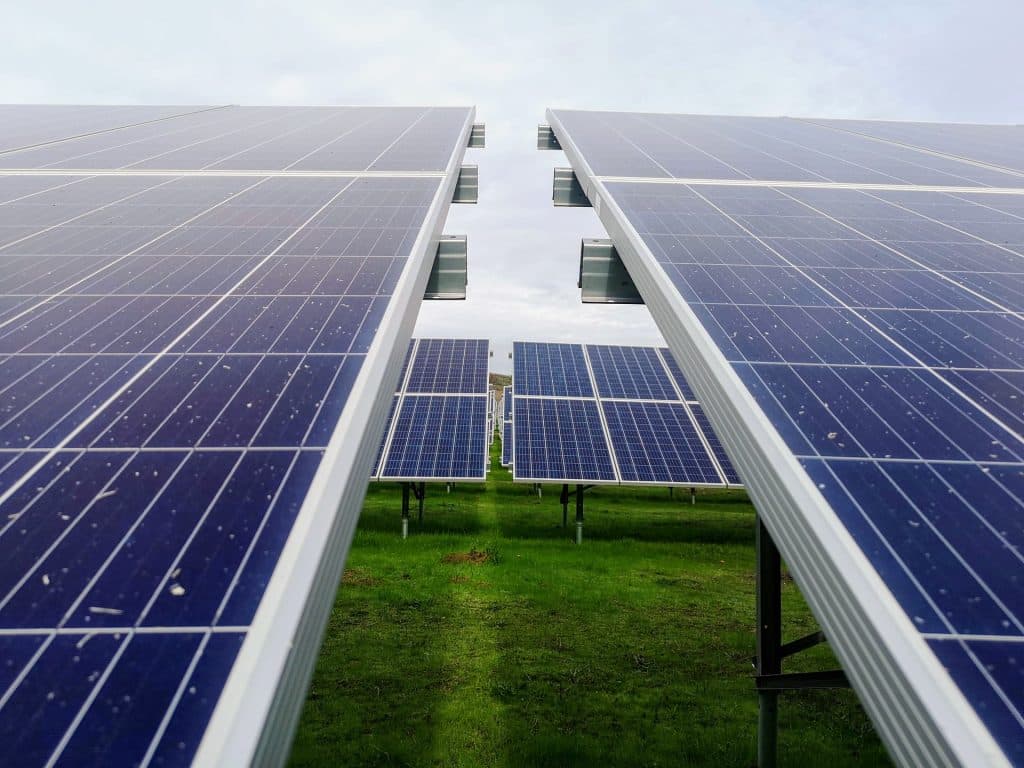
A record 82.799 new solar installations were commissioned in the Czech Republic last year, 49.039 more than in 2022. Installed capacity also rose significantly, by 970 megawatts (MW). Most of last year’s installations were on family homes, where around 80.000 solar power plants with a total capacity of 823 MW were installed. By contrast, few large solar parks are being built. The Solar Association presented the results to journalists today. Despite the growth, Czechia still lags behind neighboring countries.
More than 167.000 photovoltaic power plants are now connected in the Czech Republic. Of these, 116.000 were installed over the past two years, the Ministry of Industry and Trade said. „Last year, almost half of all photovoltaic power plants that you can see on the roofs of family homes across the Czech Republic were connected,“ said Radim Černý, a member of the Board of the Czech Association of Regulated Electricity Companies (ČSRES), in a ministry press release. The commercial installation segment also grew.
Despite last year’s record increase in the number of power plants, Czechia still lags behind neighboring countries. In Poland, for example, power plants with a capacity of more than 4.5 gigawatts (GW) were installed last year. Austria installed more than twice as much capacity as Czechia, and Hungary more than half as much again. The Netherlands and Germany are among Europe’s leaders. The installed capacity of solar sources in the Czech Republic, according to data from the Energy Regulatory Office, also remains below that of coal and nuclear power plants.
Development has so far been slower in the case of large solar parks. Although several were built last year, further installations have been put on hold. According to Jan Krčmář, executive director of the Solar Association, investors are often waiting to see how energy prices develop. He also cited uncertainty surrounding investment support in the Czech Republic and barriers to obtaining construction permits as problems. In the future, the situation could improve with agrivoltaics—the installation of photovoltaic panels in orchards, hop fields or vineyards, for example—although the necessary legislative framework still needs to be established.
More than 90 percent of the photovoltaic systems installed last year came with a battery, and storage with a total capacity of 917 megawatts was connected. This was a year-on-year increase of 255 percent. According to Jan Fousek, executive director of the Energy Storage Association AKU-BAT CZ, the number of installations with batteries is high, but they are still confined to household systems. At large projects, new sources installed with storage accounted for four percent last year, he said.
Competition in the market is significantly stronger than in the past, Krčmář said. This has also shortened waiting times for installations, he said. Problems persist with larger power plants, however, he acknowledged.
The sector was hit by the collapse of several companies last year. The biggest case involves the difficulties of Energetický holding Malina, which is insolvent after running into problems fulfilling a large number of contracts. In its insolvency petition, the company acknowledged liabilities—including customer deposits received—of almost 1,4 billion korun.
Minister of Industry and Trade Jozef Síkela (STAN) noted that one of the points in the government’s policy statement had been fulfilled over the past two years: it called for at least 100.000 solar power plants to be installed by 2025. „I place great emphasis on simplifying the permitting process for renewable energy sources, making their use more attractive—for example, through electricity sharing—and providing financial support for their development,“ the minister said.
This year, the Solar Association expects stronger investor interest in larger power plants, which will newly be eligible for subsidies from the Modernisation Fund. This should significantly speed up project administration and construction. The association said it remained uncertain, however, how attractive community energy would be under the current legislation approved by lawmakers last year. „Without functional community energy, we will not be able to harness the enormous potential of apartment building rooftops,“ Krčmář added.
Translation disclaimer
This article is a machine translation of the Czech original and has not yet been fully reviewed. In case of any doubt, please refer to the Czech version.




