
22 September 2026, 14:20
Loading...
Analysts: Czech ČEZ move to split company signals full state takeover

oEnergetice.cz, ČTK
23 April 2026, 17:20
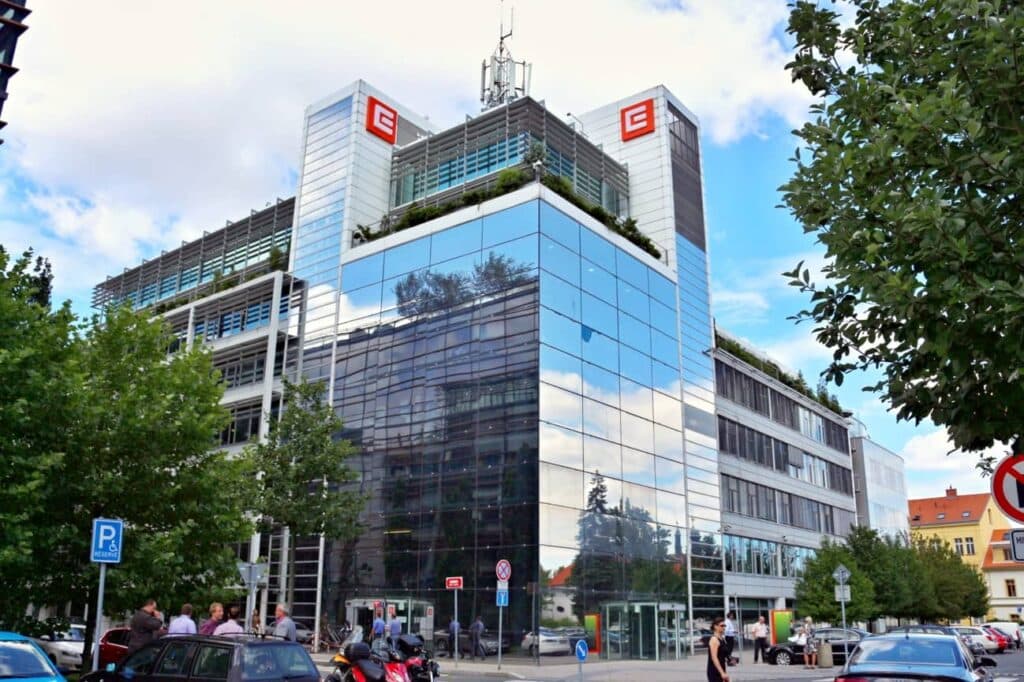
A proposal by the management of energy group ČEZ to spin off its non-generation business into a new subsidiary is a key step towards the planned nationalisation of the company. The sale of a stake in it should indicate the cost of the later planned buyout of the company’s minority shareholders, while ČEZ should also raise money for further steps. This follows from analysts’ comments to ČTK.
ČEZ’s board of directors today proposed establishing a new subsidiary, into which it intends to carve out energy sales and distribution, trading and energy services from the current structure. The company would retain a 51% stake in the new subsidiary and offer the remaining part to investors. The proposal will be decided by the company’s June general meeting.
According to XTB analyst Jiří Tyleček, this is a fundamental proposal in the long-running debate over the transformation of the domestic energy giant. “The reality of the proposal is that the state will retain 100% control over strategic generation in the parent company, while shifting clean and stable assets into the subsidiary,” he said. According to Tyleček, the sale of a stake in the subsidiary will provide the company with capital to finance the construction of new nuclear units. “The company will therefore first optimise its ownership structure, followed by nationalisation through the purchase of its own shares,” Tyleček noted.
In his view, the sale of part of the new company could create a market benchmark for valuing the assets, and thus a fair basis for a possible future offer to buy out shares in parent company ČEZ. “The valuation of the new company will be crucial, because the money raised will be used to buy shares to exceed a 90% stake, after which the remaining shareholders will be squeezed out,” Tyleček said. In his view, calling the general meeting and publishing the proposal shows that a political consensus on the method of nationalisation is very close.
“It appears that the government has convinced ČEZ’s board of directors that national socialism or state enterprise is the right path,” said Capitalinked analyst
com’s Radim Dohnal in response to the proposal. He views the goal of taking full control of ČEZ critically. “The state has never been and never will be a good manager, especially of such crucial and exposed assets as electricity generation, and at a time of rising populism. If the state wants to provide relief to certain groups of voters, it will undoubtedly be at the expense of ČEZ’s profitability. It will then not have sufficient funds for its previously announced goal, namely the construction of new units at Dukovany and Temelín,” Dohnal said.
According to Dohnal, selling a stake in the company’s non-generation business could at least reveal the real value of this segment. At the same time, however, he warned that if 49% of the subsidiary is owned by strategic investors, he cannot imagine the state being able to easily reduce revenues from regulated components of energy prices. “Investors would certainly take that very badly,” Dohnal added.
According to Trinity Bank chief economist Lukáš Kovanda, ČEZ should raise money through the sale of part of the new company, enabling it later to buy out at least two-thirds of the minority shareholders’ stake. “The state is thus indeed initiating steps towards full control of ČEZ’s generation business. Moreover, the steps may ensure that the state brings this part of ČEZ fully under its control without significantly burdening the state budget,” Kovanda said.
Analysts also noted that ČEZ shares have already reacted to today’s announcement with a modest rise. “This shows that there is no major surprise for shareholders. It remains the case that the key issue will be the buyout price for minority shareholders,” Tyleček added.
Translation disclaimer
This article is a machine translation of the Czech original and has not yet been fully reviewed. In case of any doubt, please refer to the Czech version.
Sdílejte článek prostřednictvím:
You might also like
22 September 2026, 12:50
22 September 2026, 06:09
21 September 2026, 15:25