22 September 2026, 14:20
Loading...
Battle over transformers and wind turbines: EU protects strategic electrical steel
Vojtěch Kříž
22 September 2026, 06:09
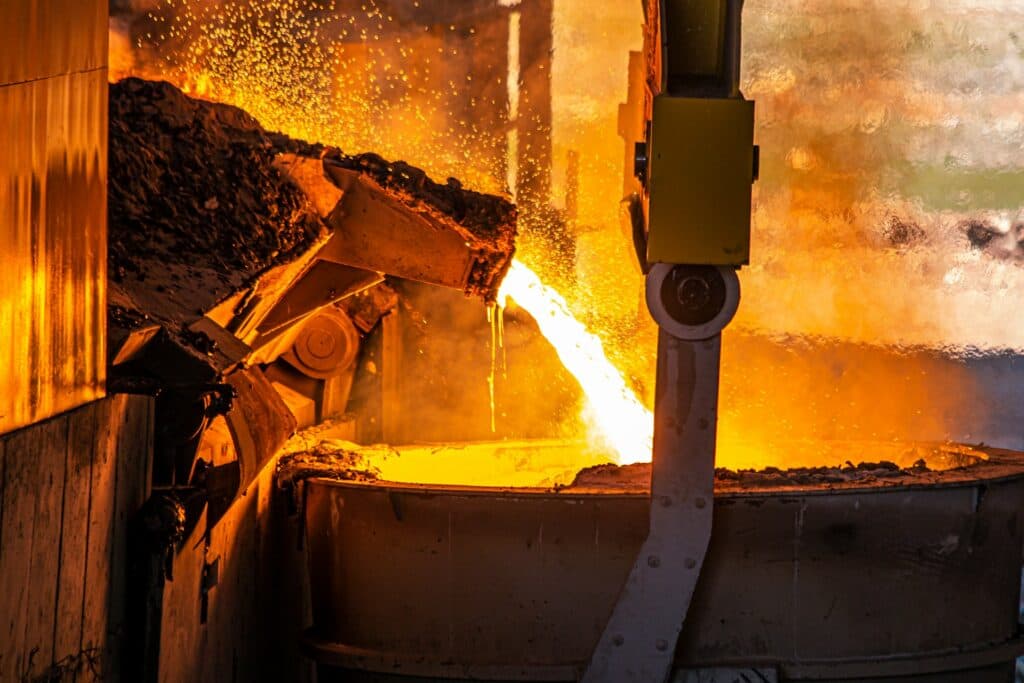
The European Union will introduce a set of import quotas and minimum prices for electrical steel and products made from it. The aim is to protect the European market from cheap imports, particularly from Asia. These provisional steps follow an ongoing investigation by the European Commission.
The measures will help Thyssenkrupp and its steel division TKSE, as well as Poland's Stalprodukt SA. They are the last companies still active in this sector. Electrical steel is a specific iron-silicon alloy. It is mainly used where its magnetic properties are needed, particularly in the power sector, for example in transformers. Unlike other industrial products, however, electrical steel was not included in the measures introduced by the EU at the beginning of the year.
For the steel itself, a minimum price of between EUR 2,800 and EUR 3,400 per metric tonne will be set within the quotas, while for volumes above the set quotas it will be EUR 3,500 per tonne. The restrictions also apply to products made from it. The aim is therefore to protect the entire value chain. The measures, which will take effect on 25 September, are provisional and the investigation is continuing. Final measures would have to be approved by a qualified majority of EU member states after the investigation concludes.
Fight to save the industry
Electrical steel was not included in the broader measures introduced by the EU at the beginning of this year to protect the European steel industry. The sector faces strong pressure from cheap competition, including from China.
Thyssenkrupp last year announced a temporary halt to production at its electrical steel plants in Germany and France after competing producers sold excess capacity on European markets. Brussels' move therefore comes as European industry is increasingly calling for better protection against China. China accounted for more than 50% of imports of this steel and related products into the EU in 2025.
Grain-oriented electrical steel [GOES] is an important element of the energy transition. It is used in the aforementioned transformers, but also, for example, in wind turbines and industrial motors. Its name stems from the complexity of the process required to create a specific orientation of crystalline grains, which reduces energy losses during magnetisation. Its production is therefore more complex than that of standard steel. The importance of electrical steel is thus growing with the electrification of the economy.
Decarbonising conventional steel production is nevertheless much more extensive than decarbonising electrical steel production. Traditional European steelworks often rely on blast furnaces, in which iron ore is reduced using coke. This process produces significant amounts of CO₂. This is why so-called "green" steel projects are also emerging in Europe. One example is Swedish start-up Stegra.
This creates a direct link between the development of green steel and electrical steel. Although the production of the two types of material uses different technologies and requires different manufacturing processes, both segments are part of the same European steel ecosystem. Specialised products such as electrical steel represent one part of this industrial chain with higher added value.
Europe's efforts to decarbonise the steel industry thus face a paradox: to manufacture the technologies needed for electrification, Europe requires large quantities of steel and some of its special grades, while at the same time it must reduce the emissions generated in their production. Steel companies are therefore investing in electric arc furnaces, direct reduced iron, hydrogen and recycling, while the EU is seeking through CBAM and safeguard measures to prevent European producers from being pushed out by cheaper foreign steel.
Translation disclaimer
This article is a machine translation of the Czech original and has not yet been fully reviewed. In case of any doubt, please refer to the Czech version.
Sdílejte článek prostřednictvím:
You might also like
22 September 2026, 12:50
22 September 2026, 06:09
21 September 2026, 15:25