7 November 2026, 17:23
Loading...
Association warns of growing number of poor-quality heat pumps on Czech market

oEnergetice.cz, ČTK
30 August 2023, 15:19

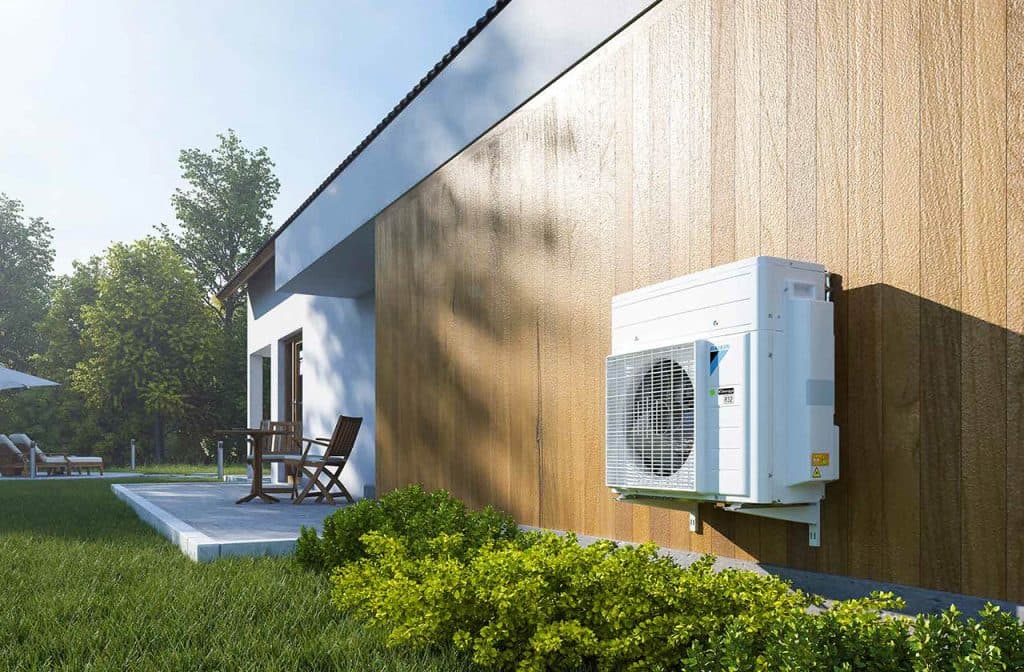
The number of poor-quality heat pumps on the Czech market has risen in recent months. These are primarily units imported from abroad or supplied by newly established, inexperienced companies. These suppliers also tend to have problems providing service. The Association for the Use of Heat Pumps (AVTČ) said this, recommending that buyers check a company’s track record and resources when choosing a supplier.
Interest in heat pumps has been rising in Czechia since last year, when energy prices soared. More than 60,000 units were installed in the country last year, twice as many as the year before. Demand continues to grow this year: Czech households and businesses bought around 40,000 heat pumps in the first half of this year, a year-on-year increase of 60 percent.
According to the association, rising demand has also brought an increase in the number of sellers who disappoint buyers with poor service or the quality of the product itself. The association says these are most often newly established companies importing poor-quality heat pumps into Czechia. The units may, for example, have low-quality components or be incorrectly configured.
Customers who have bought poor-quality heat pumps also turn to Czech companies with questions. Jiří Svoboda, owner of the Czech company Master Therm, said that some suppliers sell customers units tested at lower output, for example. “This then has a negative effect on their efficiency and noise levels,” he said. He estimates that units sold this way account for tens of millions of crowns a year in Czechia.
According to Svoboda, it is not unusual for customers to buy an air conditioner believing they are purchasing a heat pump. “You may not notice the difference at first glance, but the internal components are different. Although such a unit can heat a house, it will be expensive to run and will not perform well in the winter months and at low temperatures,” Svoboda said.
This year, AVTČ, together with the Chamber of Renewable Energy Sources (KOZE) and state authorities, therefore published a so-called ten-point guide to help prospective buyers choose a heat pump and supplier. It recommends checking the company’s track record, local representation and resources, as well as customer reviews, and, ideally, seeing and hearing the unit in person.
“One of the key factors to look for when dealing with a supplier is whether they will verify the proposed technical solution on site. Since you will also want them to come and inspect or service your unit in the future, it is important to check customer reviews, for example on the specialist website refsite.info, or find out whether the company belongs to an association,” said Lubomír Kuchynka of AVTČ.
Václav Skoblík of the UCED energy group also stressed the need for high-quality technical support when buying a heat pump. “I would definitely choose established manufacturers that have access to high-quality service and installation companies,” he said. The unit’s lifespan, he said, depends on the quality of its individual components. “The compressor is the part subject to the most wear, and its lifespan is determined by the number of times it starts. The number of compressor start-ups can be influenced by correctly sizing the heat pump, adding heat storage where appropriate, and using suitable controls. No one wants to have to replace a heat pump compressor,” Skoblík added.
Translation disclaimer
This article is a machine translation of the Czech original and has not yet been fully reviewed. In case of any doubt, please refer to the Czech version.
Sdílejte článek prostřednictvím:
You might also like

7 November 2026, 13:37

6 November 2026, 14:13