Chvaletice power plant in Czechia granted exemption from emissions limits

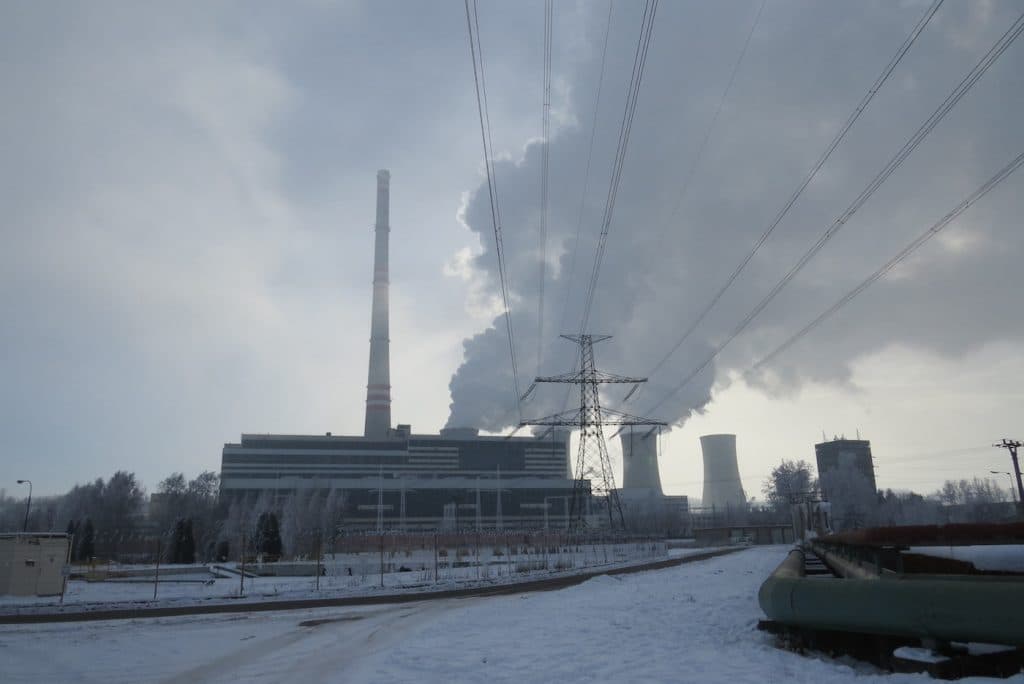
The Chvaletice power plant in the Pardubice Region has been granted an exemption from emissions limits for nitrogen oxides and mercury, which it had sought for several years. The Regional Court in Ostrava dismissed a lawsuit filed by environmental organisations against the Ministry of the Environment at the end of October last year and upheld the exemption, Petr Dušek said on behalf of the power plant. Electricity generation must currently comply with the conditions of the integrated permit issued by the Pardubice Regional Authority last July. The Frank Bold organisation has filed an appeal on a point of law against the court’s decision.
„The reasoning behind the ruling shows that the exemption was granted in accordance with the law, will not cause serious pollution and will not undermine the high level of environmental protection. In the meantime, the Chvaletice power plant has made progress in applied research and is preparing technologies to reduce mercury emissions,“ Dušek said.
The Regional Court granted the Chvaletice power plant a transitional period until 17 August 2027, with less stringent emissions limits of 190 micrograms per cubic metre for nitrogen oxides and 23 micrograms per cubic metre for mercury. During this period, the operator must submit regular reports on the adjustment and addition of emissions-reduction technologies and on the results achieved.
The power plant’s original integrated permit set an emissions limit for nitrogen oxides of 200 milligrams per cubic metre; the new annual average concentration is 175 milligrams per cubic metre. There was previously no emissions limit for mercury, but the annual average concentration is now set at seven micrograms per cubic metre. Under the integrated permit, the power plant may also exceed the limits for nitrogen oxides and mercury during an emergency, in the event of problems securing energy supplies in this year’s heating season. The limits are less stringent for the duration of the emergency, as also recommended by the Ministry of the Environment. During an emergency, the power plant may emit an annual average concentration of nitrogen oxides of 185 milligrams per cubic metre, while the mercury limit is 21 micrograms per cubic metre.
Environmental organisations criticised the regional authority after it issued the integrated permit, arguing that the provision allowing less stringent emissions limits during emergencies effectively amounted to an emissions exemption. Martin Vlasák, head of the regional authority’s Department of the Environment and Agriculture, said the power plant had already applied to amend its integrated permit following the court’s confirmation of the exemption. „The integrated permit is valid, the operator did not appeal against it and had no problem with it. I don’t know how they intend to justify being able to comply with it when the exemption now allows them to pollute more,“ Greenpeace spokesperson Lukáš Hrábek told the Czech News Agency (ČTK).
Environmentalists also criticise the power plant for having promised in the past to reduce production so it would not release as many emissions into the air. „But after receiving the exemption, the power plant increased production to record levels and pollution actually rose,“ Hrábek said. He pointed to the Tušimice power plant, owned by ČEZ, which cut its mercury emissions by 62 percent over the same period. In 2022, the Chvaletice power plant overtook other polluters to become the country’s largest source of mercury emissions.
Between 2019 and 2021, the regional authorities in Pardubice and Olomouc successively granted the power plant an exemption, but the Ministry of the Environment, acting as the appellate body, overturned both decisions. In the summer of 2021, the Olomouc Regional Authority tightened the exemption but still granted it, and the ministry upheld it definitively that autumn. The Regional Court in Ostrava later overturned it twice, and the Chvaletice power plant twice succeeded with appeals on points of law before the Supreme Administrative Court. On the third occasion, the Regional Court dismissed the environmental organisations’ lawsuits and ruled that the exemption was valid. The new emissions limits based on European legislation have been in force since 17 August 2021.
The Chvaletice power plant is the country’s newest lignite-fired power plant and has been operating since 1979. Severní energetická (Sev.en) bought the power plant from ČEZ in 2013 for 4.12 billion crowns. In 2022, it generated a record 4.9 terawatt-hours (TWh) of electricity. It has undergone a costly renovation in the past. To meet the required emissions limits for mercury and nitrogen oxides, it would have to invest further substantial sums. The exemption allows it to temporarily maintain less stringent limits.
Translation disclaimer
This article is a machine translation of the Czech original and has not yet been fully reviewed. In case of any doubt, please refer to the Czech version.




