
22 September 2026, 14:20
Loading...
Czech ČEZ under state control? Analysts see company split and uncertain financing

oEnergetice.cz, ČTK
15 April 2026, 16:55
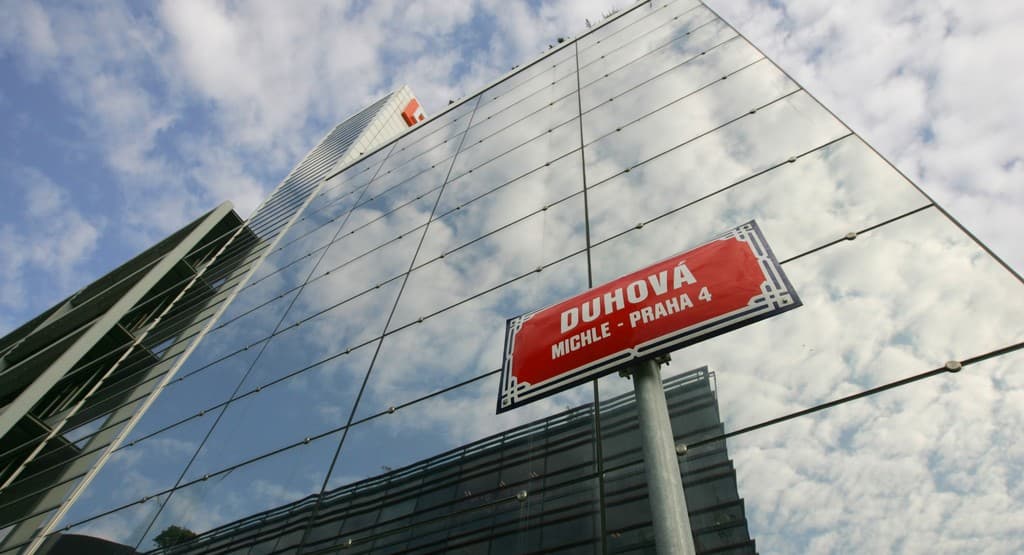
According to analysts, the process of nationalising energy company ČEZ will be gradual, with the company’s annual general meeting in June expected to provide greater detail on the entire procedure. Changes to the company’s articles of association may also be on the table, though specific costs are unlikely to be disclosed yet. This follows from analysts’ comments to ČTK. Analysts have mixed views on the plan to take full control of ČEZ itself. If the state proceeds, they recommend taking over the company’s generation business.
The state holds around 70 percent of ČEZ shares through the Ministry of Finance, while minority shareholders own the remainder. Prime Minister Andrej Babiš (ANO) said on Tuesday that the state would take the first steps towards nationalising ČEZ at the company’s annual general meeting in June this year. He did not specify the concrete steps. He confirmed that the government’s plan to take full control of ČEZ remains in force, and that it aims to complete it by the end of the electoral term in 2029.
XTB analyst Jiří Tyleček sees Babiš’s statement on Tuesday as the start of the ČEZ nationalisation process. At the company’s annual general meeting, the public could learn the outline of the process and receive confirmation that the company will be split into two parts: a fully state-owned generation business and a private distribution and trading business. "But it is still not ruled out that the state will want to take over all of ČEZ," Tyleček said. In addition, changes to the company’s articles of association could be on the meeting’s agenda to simplify the process, he said. The state should also present a specific financing plan.
"It must be expected that the process will be gradual. A squeeze-out cannot take place until the main shareholder has a 90 percent stake," Tyleček warned.
Tomáš Pfeiler, a manager at Cyrrus, expects the annual general meeting to provide more detail on the timetable for the share buyback. "However, the information may be general – there may be a price range, a duration for the buyback and so on. But an exact buyback price is unlikely to be announced," Pfeiler believes.
According to Capitalinked.com analyst Radim Dohnal, there may be two ways of taking control of ČEZ’s generation business. "Either ČEZ will start buying back its own shares from minority shareholders and then cancel them, so that the state’s stake approaches 90 percent. Or the government will push for a split of the company from the outset under the Transformations Act," Dohnal said.
Dohnal considers the plan to take full control of ČEZ fundamentally flawed. In his view, the government should instead seek to help address the geopolitical situation in the Persian Gulf or pursue an agreement with Poland or Hungary on temporarily reducing refinery margins. "An even more effective way to relieve the economy of expensive energy would be to designate acceleration zones for wind power plants, so that our share of electricity from wind rises from an absurdly low one percent to 15 percent, as in landlocked Austria. It would also help to encourage and educate people about saving all types of energy," Dohnal said.
According to Tyleček, the government’s move will always be seen as controversial. "Supporters of nationalisation argue that full control over generation is necessary for energy security, investment and greater state influence in the sector. Critics, on the other hand, argue that nationalisation itself will not improve control over energy prices, but may increase debt, worsen ČEZ’s dividend profile and damage the attractiveness of the Czech capital market. In my view, all the arguments are valid, and only future developments will show whether nationalisation was a good choice," Tyleček said. If the government does not change its mind after all, he would favour the option of splitting the company and having the state take over only its generation business.
Analysts further noted that Babiš’s statement on Tuesday boosted the company’s shares. "There is the prospect of a more concrete timetable. However, I would not expect a major increase, as further developments remain unclear and the buyback itself may take several years," Pfeiler added.
Translation disclaimer
This article is a machine translation of the Czech original and has not yet been fully reviewed. In case of any doubt, please refer to the Czech version.
Sdílejte článek prostřednictvím:
You might also like
22 September 2026, 12:50
22 September 2026, 06:09
21 September 2026, 15:25