6 November 2026, 14:13
Loading...
Czech government scraps subsidies for district heating companies; customers won't get compensation for high heat prices

oEnergetice.cz, ČTK
11 October 2023, 20:48
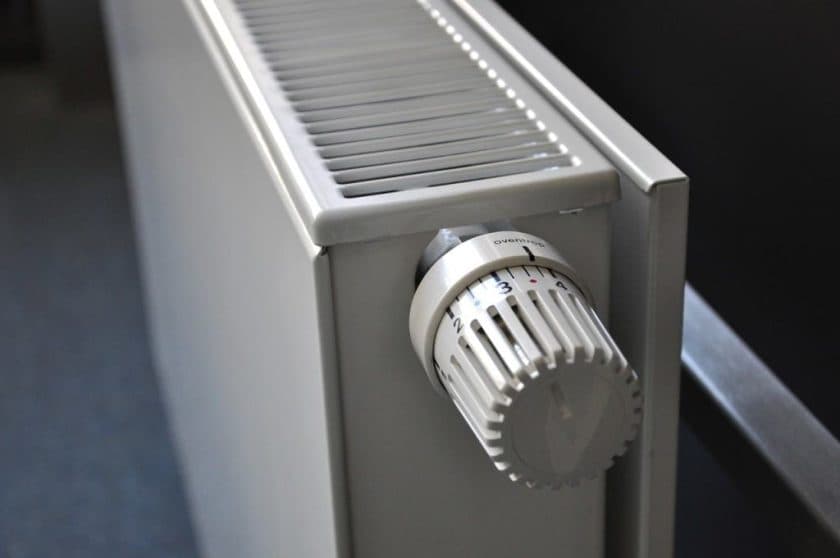
At its meeting today, the government decided to scrap the 17 billion koruna support for district heating companies approved last year. The companies were supposed to pass the money on to customers by lowering heat prices. This is according to the results of today's meeting of the government. Scrapping the subsidies is part of the government's austerity measures. The Czech District Heating Association disagrees with the decision, saying customers will suffer as a result.
The subsidy program of the Ministry of Industry and Trade, whose primary aim was to ensure lower heat prices for households, was approved by the government last December. District heating companies that received the funding were then supposed to pass on the full amount to customers in the form of lower heat prices. The program was subsequently awaiting approval from the European Commission.
However, the government will no longer wait for that, even though the Commission recently gave the subsidy program preliminary approval. According to a government document, the reason for scrapping the support is “a lack of financial resources in connection with the ongoing consolidation of public finances and the resulting austerity measures.”
The support was to be calculated based on last year's energy prices. Last year, partly as a result of Russia's aggression against Ukraine, the number of locations in Czechia where heat prices rose above 1000 Kč per gigajoule (GJ), excluding VAT, increased significantly. Their number rose by 107 between February and December last year, reaching a total of 345, according to data from the Ministry of Industry and Trade.
According to the Czech District Heating Association, by scrapping the support the government has abandoned district heating customers, since heating companies were only supposed to act as distributors of the support to customers. “Scrapping the support will therefore have no impact on district heating companies. The customers will suffer, as they will not receive the compensation the government promised them last year,” said Mirek Topolánek, chairman of the executive board of the Czech District Heating Association. He also criticized the government for failing to deliver on its policy statement by not creating the conditions needed to transform the district heating sector. The association said today's decision would also damage Czechia's reputation with the European Commission, which had been under pressure to approve the support as soon as possible.
“Calls for applications to receive this support were drawn up and prepared in cooperation with the Energy Regulatory Office and the Office for the Protection of Competition at the beginning of this year. All the conditions for launching this new program were met in June, when the European Commission approved the support. However, Minister Síkela kept district heating customers in uncertainty for four months and has now proposed that the government scrap this second support scheme as well. The people of Kocourkov would surely be delighted, but we cannot be very happy with this outcome,” Topolánek remarked.
In recent weeks, the government has also decided to end other forms of support introduced during last year's energy crisis. From next year, the state will no longer use the state budget to subsidize system services and losses incurred by distribution system operators. Together, these cost around 38 billion koruna this year. From next year, the costs will once again be included in the regulated component of electricity bills, paid by consumers.
The government also decided to shift part of the charge supporting renewable energy sources (POZE) back to customers. The state covered it in full this year in an effort to mitigate rising energy prices. Consumers will therefore once again pay a charge of 599 koruna for every megawatt-hour of electricity they use. The cabinet said the measure had applied across the board and was no longer necessary given the more favorable energy prices.
Most analysts therefore expect electricity prices to rise next year. They say further price cuts by suppliers, if any, will not prevent this, as they will be offset by the POZE charge and changes to distribution charges. In recent days, Minister of Industry and Trade Jozef Síkela (STAN) acknowledged that electricity prices could rise by up to 10 percent next year, although he expects a more modest increase.
Translation disclaimer
This article is a machine translation of the Czech original and has not yet been fully reviewed. In case of any doubt, please refer to the Czech version.
Sdílejte článek prostřednictvím:
You might also like
6 November 2026, 10:25