Czech solar boom continues, support set for changes

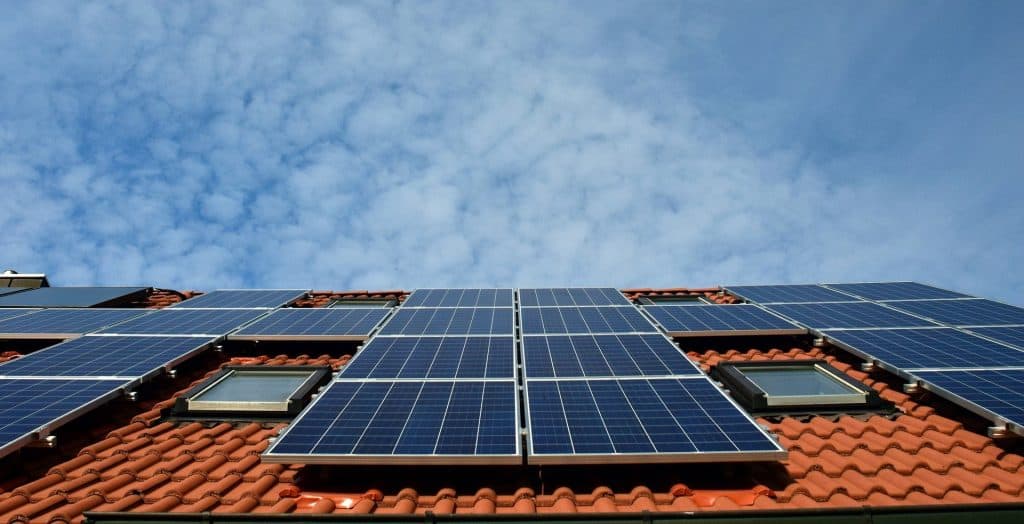
In 2024, ČEZ Distribuce connected new generating sources with a total installed capacity of 658 MW to its grid, reflecting record interest in renewable energy sources in the Czech Republic in recent years. The overwhelming majority of these additions came from rooftop photovoltaic plants, which have become a key tool for decentralised energy generation and have contributed to the growth of sustainable energy.
Overall, nearly 133,000 facilities using renewable energy sources are connected to ČEZ’s distribution grid, with a combined installed capacity of 8 GW. The highest number of new rooftop photovoltaic plants (PV systems) was commissioned this year in the Central Bohemian Region, confirming the importance of this region within the Czech energy sector.
This growth is largely supported by government subsidies from programmes such as New Green Savings, as well as legislative changes that make it easier to connect new installations.
The current solar boom can be seen as a positive signal, indicating the Czech Republic’s shift towards a greener energy future. On the other hand, it also brings challenges, including the need to modernise the distribution system so that it can handle an ever-increasing number of decentralised sources and ensure grid stability.
“In order to connect a growing volume of renewable sources, we must continuously modernise the distribution system and strengthen its capacity. Record investment of CZK 19.7 billion will allow us to respond to these requirements and ensure reliable and efficient energy supply,” said Martin Zmelík, CEO of ČEZ Distribuce.
Future support
Over the longer term, development is expected to shift from rooftop PV systems on family homes towards more commercial projects. In addition, a reduction in the New Green Savings subsidy has been announced, bringing several changes from 2025. Key changes include, for example:
- Upfront funding: From 2025, applicants will be able to receive part of the subsidy before project implementation begins. This measure is intended to help households that do not have sufficient funds for the initial investment.
- Lower maximum support for photovoltaics: Support for all individual measures will be reduced from 50% of costs to 30%, meaning that instead of up to CZK 160,000 for photovoltaics, applicants will receive up to approximately CZK 120,000. The eligible capacity for households will be reduced from the current 10 kilowatt-peak (kWp) to five, even though the average installation size on a family home usually reaches 7-8 kWp.
- Support for apartment buildings: Preferential treatment for homeowners’ associations (SVJ) and housing cooperatives makes it possible to finance projects more quickly, for example through the option of drawing subsidy advances before the system is connected to the distribution grid.
The planned changes thus prompted record interest in New Green Savings Standard, with applicants exhausting more than CZK 2 billion within four days. Applicants wanted to take advantage of the more favourable existing conditions. Applications for this programme were subsequently closed due to the exhausted allocation.
Only New Green Savings Light now remains available to households; however, the State Environmental Fund is expected to launch another call under New Green Savings, which falls under the Modernisation Fund.
Despite the changes to New Green Savings and stricter assessment of existing support for photovoltaics, continued support for the development of renewable energy sources remains evident, further supporting their expansion.
The announced methodology for designating acceleration zones, together with LEX OZE 3, which was approved a few days ago and is expected to take effect from the beginning of January 2025, should provide a further boost to the growth of these sources in the future.
Translation disclaimer
This article is a machine translation of the Czech original and has not yet been fully reviewed. In case of any doubt, please refer to the Czech version.