3 October 2026, 13:01
Loading...
CEO of ČEZ Distribuce: Blocked capacity and outdated tariff structures are holding back Czech grid development

Marek Kršák
30 June 2026, 12:12
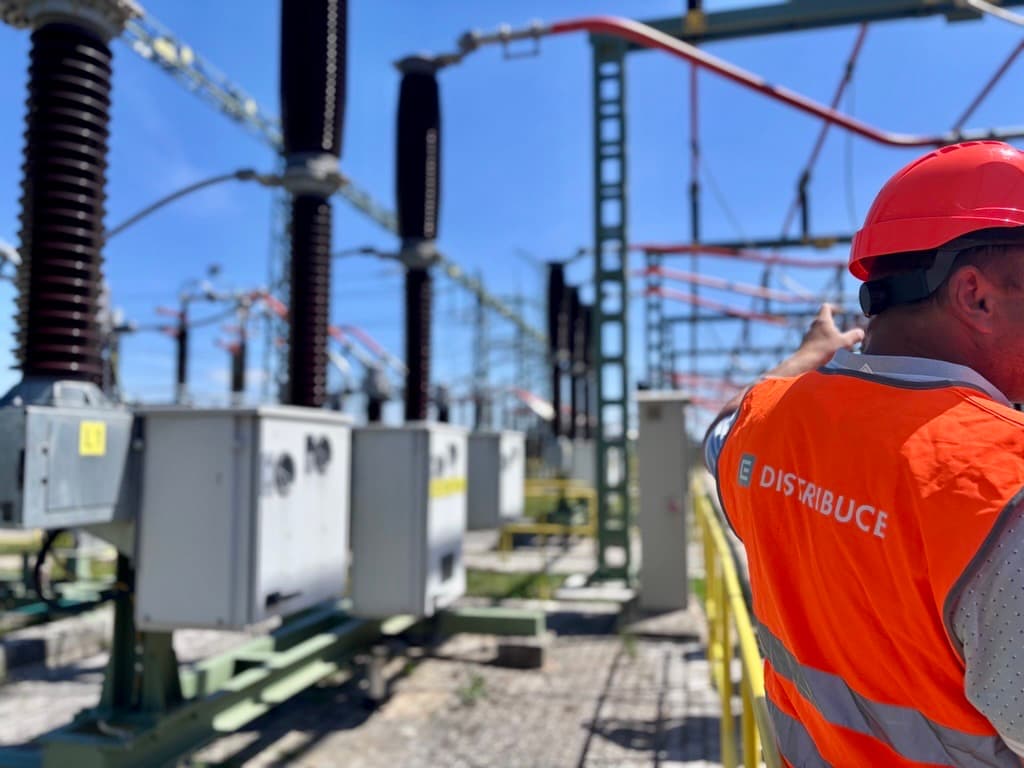
The Czech distribution system is undergoing its biggest transformation in decades. The rapid development of renewable energy sources, heat pumps, storage and new industrial projects is placing ever-greater demands on electricity grids. Representatives of ČEZ Distribuce told a press conference at the Milín substation that, alongside massive investment, more efficient use of existing capacity and a change to the tariff system being prepared by the Energy Regulatory Office (ERÚ) will be crucial to further development.
ČEZ Distribuce's distribution network currently comprises 284 substations, almost 48 600 transformer stations and 171 thousand kilometres of lines, and serves around 3.8 million connection points . Over the past ten years, more than 8 290 kilometres of new lines have been added, an increase of approximately five per cent. The number of transformer stations rose by more than 3 260 over the same period, while the number of connection points increased by around 209 thousand.
The structure of consumption is also changing significantly. Between 2020 and 2025, the number of connection points with heat pumps rose by 170 per cent, from 180 thousand to approximately 340 thousand. At the same time, interest in battery storage is surging. Distribution companies have received around eight thousand applications to connect storage facilities with a total capacity of 387 GWh and reserved capacity of 187 GW.
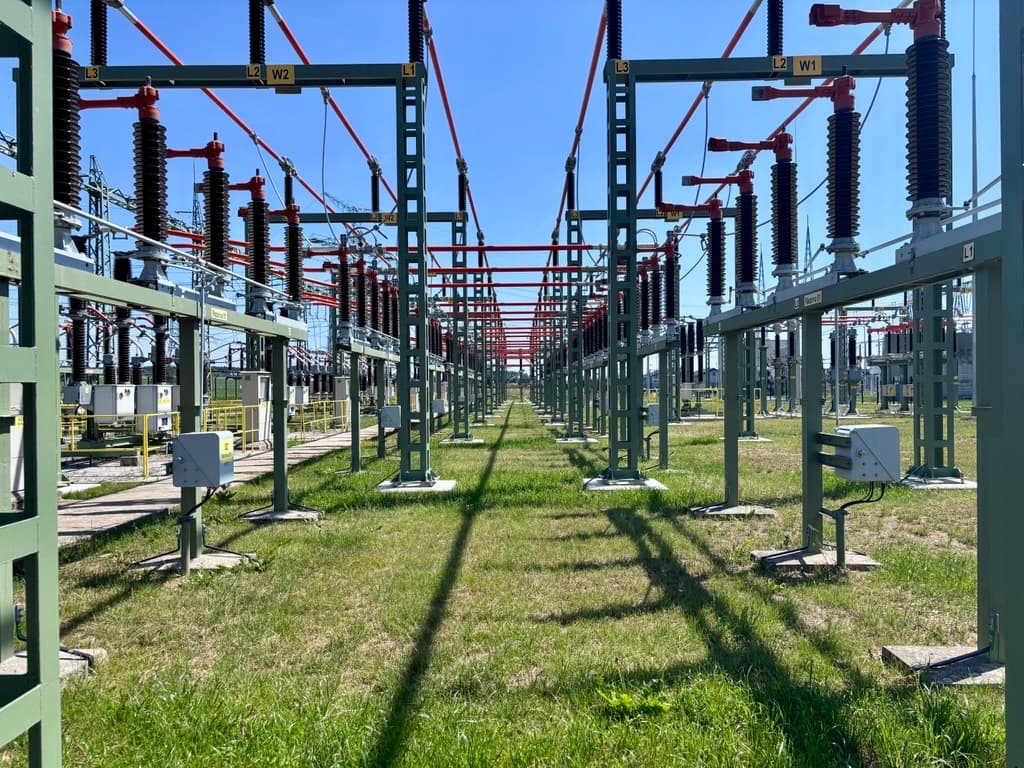
Milín substation, ČEZ Distribuce, Source: own
According to the distributor's representatives, however, reserved capacity has become one of the biggest problems facing the energy sector today. Many investors reserve capacity in the grid but subsequently do not use it. The capacity can remain blocked for up to five years. The result is a situation in which the grid appears full on paper, even though connection capacity is actually available.
According to Martin Zemlík, CEO of ČEZ Distribuce, spare capacity at the very high- and high-voltage levels is often physically available in the network, but reservations prevent it from being offered to new projects. The impact is felt not only by new electricity producers, but also by industrial companies and other large consumers that need to increase their capacity. Unused reservations are therefore holding back both generation and consumption, and extending the process of connecting new customers.
According to ČEZ Distribuce representatives, therefore, building more lines and substations is not the only right solution. It is just as important to unlock so-called paper capacity that has been reserved but is not actually being used. The planned change to the ERÚ tariff structure is expected to play a significant role in this regard.
Tariff structure reform
The current tariff system is almost twenty years old and was developed at a time when the energy sector operated in a completely different way. It does not reflect the emergence of decentralised generation, battery storage or the growing electrification of households and industry. Customers today primarily pay for reserved capacity through fixed monthly charges, but the system does not sufficiently encourage them to reserve only the capacity they actually need.
According to distributors, changing the tariff structure is intended to create an incentive to reduce excess reserved capacity. The released capacity could then be offered to new applicants without the need for immediate investment in further grid expansion. ČEZ Distribuce representatives describe changes to the rules for reserving capacity as one of the most important reforms needed in Czech distribution over the coming years.
Investment in the distribution system
Figures from the solar sector also illustrate the scale of the problem. Around 3 GW of new solar generation capacity has already been connected to the ČEZ distribution network, while connection agreements are in place for projects with a capacity of around 18 GW. According to experts, distribution capacity is in some cases becoming an investment asset, with the connection reservation itself gaining value regardless of whether the project is actually built.
Record investment in grid development is continuing at the same time. ČEZ Distribuce invests approximately 19 billion korunas a year. An increasing share of this spending, however, consists of so-called induced investments related to connecting new customers and generation sources. Whereas these amounted to two to three billion korunas a year in the past, they now stand at between six and eight billion. Rising costs, administrative burdens and inflation are also reducing the funds available for the strategic development of the system as a whole.
Digitalisation is also an important part of modernisation. Around 430 thousand smart meters have already been installed across the network. Further development is supported by the SmartME grant programme, the National Recovery Plan, the SELENA project and the ELEGRID programme, which focuses on modernising and strengthening distribution networks
Milín substation
The Milín substation is an example of long-term infrastructure development. The substation in the Příbram and Dobříš areas has recently been expanded as an unmanned joint hub for ČEPS and ČEZ. The development of the transmission and distribution systems also included the reinforcement of 156 kilometres of 110 kV lines. The site will also play an important role in the future connection of new energy sources, including planned projects in the Mělník area and Orlík. Building substations of this kind represents an investment of around 600 million korunas.
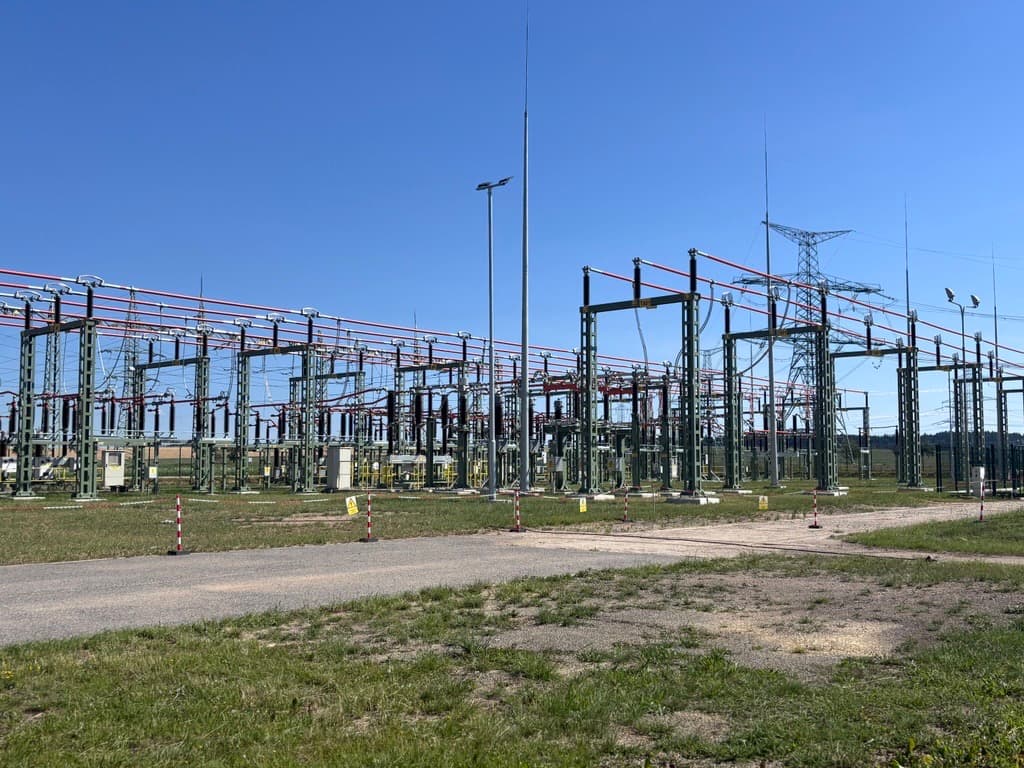
Milín substation, ČEZ Distribuce, Source: own
The future development of the Czech energy sector will not depend solely on billions of korunas of investment in new lines and substations. Making more efficient use of the capacity already available in the grid will be just as important. Limiting long-unused reservations and modernising the tariff system could free up capacity for new generators, industrial companies and customers, and accelerate the transformation of the Czech energy sector.
Translation disclaimer
This article is a machine translation of the Czech original and has not yet been fully reviewed. In case of any doubt, please refer to the Czech version.
Sdílejte článek prostřednictvím:
You might also like
3 October 2026, 07:43

2 October 2026, 21:55

2 October 2026, 15:14