Czech transmission operator ČEPS celebrates 25th anniversary
16 October 2023 marks 25 years since the founding of ČEPS, a.s., the Czech Republic’s sole transmission system operator. The company was entered in the Commercial Register on this day in 1998.
On 8 June 1998, the general meeting of ČEZ, a.s., decided to spin off its Transmission System Division as a separate company. This was in response to developments in Czech and European legislation aimed at liberalising the energy sector and establishing an electricity market. The aim of so-called “unbundling” was to separate electricity trading, transmission, generation and distribution. ČEPS, a.s., was founded on 20 August that year and entered in the Commercial Register on 16 October.
“Over its 25 years of existence, ČEPS has established an irreplaceable position at home and internationally. It is a respected holder of unique know-how and actively contributes to the transformation of the energy sector in the Czech Republic and Europe, where it is among the most active and visible transmission system operators. This is also reflected in the extent to which its employees are represented across all structures of the European Network of Transmission System Operators for Electricity (ENTSO-E),” says Martin Durčák, Chairman of the Board of ČEPS, a.s.
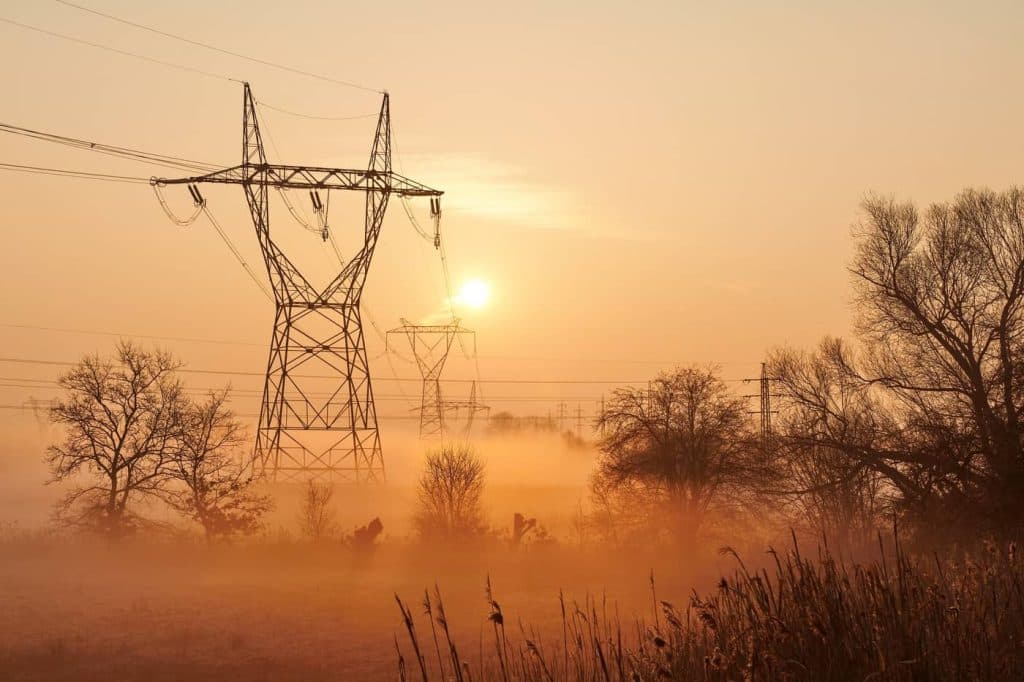
ČEPS operates in the Czech Republic as the sole transmission system operator. The transmission system is the backbone of the electricity system. The Czech Republic’s transmission system is part of the European transmission network, to which it is connected through 17 cross-border lines. It currently comprises 44 substations with 79 transformers and approximately 5,800 km of lines operating at 400 kV and 220 kV.
ČEPS ensures the safe and reliable transmission of electricity from generators to distributors, as well as the balance between electricity generation and consumption, which is essential for the functioning of the electricity grid. Last but not least, it works closely with other European operators of interconnected transmission systems and contributes to the development of the electricity market in the Czech Republic and Europe. The company is also an active member of a number of energy groups, platforms and associations within the EU, where it represents the interests of the Czech Republic. The sole shareholder of ČEPS is the Czech state, with shareholder rights exercised on its behalf by the Ministry of Industry and Trade.
Over its 25 years of existence, ČEPS has, among other things, completely modernised a total of 1,909 km of 220 kV lines and 604 km of 400 kV lines. It has built approximately 538 km of new 400 kV lines.
ČEPS company milestones:1999
- In September 1999, ČEPS began operating as an independent transmission system operator, in line with the EU trend towards energy liberalisation and the opening of the electricity market in the Czech Republic.
2000
- Ancillary and transmission services were defined, and the first tender for ancillary services was held.
- The Central Dispatch Centre opened at ČEPS headquarters.
2001
- Trading began on the daily ancillary services market, one of the first in Europe.
- Trading in schedules and the settlement of imbalances began (ČEPS carried this out until the end of the year).
- The first auction for cross-border capacity was held.
2002
- The first fully liberalised cross-border imports and exports of electricity.
- Centralised generation dispatch ended, with control transferred to individual generators and their owners.
2005
- ČEPS began acting as the auction office for allocating cross-border transmission capacity for electricity trading.
2007
- The dispatch room at the company’s headquarters was fully modernised, including the installation of the new unified TRIS dispatch control system.
2008
- In July 2008, the transmission systems of the Czech Republic, Hungary, Poland and Slovakia became separate control blocks, each fully responsible for managing its own area. They thus adopted the arrangement customary in Europe, under which a transmission system operator operates independently with respect to one of the two European coordination centres (in ČEPS’s case, the centre serving the northern part of the synchronous area, operated by Amprion in Brauweiler, Germany).
- ČEPS was a founding member of the Central European coordination centre for system operation, TSC, based in Munich.
2009
- In September 2009, the Czech and Slovak daily electricity markets were implicitly coupled. ČEPS provides cross-border transmission capacity and acts as a so-called shipper, ensuring electricity transmission and financial settlement.
- The balancing market was launched.
2010
- In December 2010, ČEPS became the “single point of contact”—the sole point for explicit allocation of cross-border capacity within the intraday cross-border electricity market for seven transmission system operators in the Central Eastern Europe region.
2011
- In April 2011, a videoconferencing system was commissioned within TSC to facilitate discussions between staff in operational planning departments and dispatch centres.
2012
- In March, the exchange of system imbalances between ČEPS, a.s., and SEPS began under the e-GCC project. In May, ČEPS, a.s., also joined the IGCC project, which further expanded the exchange of system imbalances to include other European transmission system operators. In September, Hungary joined the implicit coupling of the daily markets between the Czech Republic and Slovakia.
2013
- In April 2013, the Hungarian transmission system operator MAVIR joined e-GCC.
- ČEPS and 50Hertz agreed on a joint solution to the issue of unplanned electricity flows using phase-shifting transformers (PST transformers).
2014
- In November 2014, the daily markets of the Czech Republic, Slovakia and Hungary were coupled with Romania (the so-called 4M Market Coupling).
- The complete replacement of the TRIS dispatch control system was completed in August 2014, and a new dispatch telephone system was commissioned at the same time.
- In November 2014, the TSC initiative established TSCNET Services GmbH, which began providing services for day-ahead and intraday secure-operation forecasts.
2015
- ČEPS’s Ostrava dispatch centre closed on 31 January 2015.
- Construction began on phase-shifting transformers at the Hradec substation near Kadaň. An independent telecommunications network was built, including data transmission for dispatch control (TELCO).
2016
- In September 2016, ČEPS joined the TSC Multilateral Remedial Actions Agreement (MRA), an international multilateral redispatch mechanism coordinated by TSC.
2017
- In July 2017, the full set of PST transformers at the Hradec substation near Kadaň was taken over for dispatch control. The transformers are used to effectively manage transit flows on the interconnector with 50Hertz.
2018
- In October 2018, ČEPS, a.s., and other EU transmission system operators established the Joint Allocation Office (JAO), based in Luxembourg.
2019
- Connection to the single European intraday market (SIDC – Single Intraday Coupling – the XBID project).
2020
- In January 2020, the international TERRE platform was launched to provide balancing energy with a 30-minute availability period in the European context. ČEPS was the first European transmission system operator to join.
2021
- Daily implicit allocation of cross-border transmission capacity was introduced through so-called Interim Coupling on the borders with Germany, Austria and Poland.
- Provision of balancing services from aggregated units began.
2022
- The system switched to merit-order-based management of balancing services and introduced standard European balancing products.
- On 1 June 2022, ČEPS became the first transmission system operator to join the PICASSO platform for cross-border exchange of balancing energy. PICASSO enables the cost-efficient procurement of balancing energy from aFRR (automatic frequency restoration reserve, or secondary regulation) in the European context.
- On 18 July 2022, ČEPS became the first transmission system operator to join the international MARI platform for cross-border exchange of balancing energy, and subsequently carried out its testing. Launched on 5 October 2022, MARI enables the cost-efficient procurement of balancing energy from the manual frequency restoration process (mFRR, or tertiary regulation).
- Flow-based calculation of cross-border capacity on the daily market began.
- In March 2022, ČEPS began developing and implementing an IT solution for managing cross-border transmission capacity, the so-called Capacity Management Module (CMM), which will manage cross-border capacity for the exchange of balancing energy between transmission system operators in Europe. This will enable the centralised and automated management of cross-border transmission capacity within the single European balancing energy market.
2023
- On 1 March 2023, ČEPS began jointly procuring FCR reserves. This important step saw it join the common European market for FCR reserves, opening up further opportunities for Czech providers and those interested in providing this service. The common market will make FCR reserve procurement more efficient while reducing the risk of shortages for transmission system operators.
Translation disclaimer
This article is a machine translation of the Czech original and has not yet been fully reviewed. In case of any doubt, please refer to the Czech version.




