23 October 2026, 14:38
Loading...
ENTSO-E confirms in final report that renewable energy did not cause the 8 January incident

Martin Voříšek
22 July 2021, 10:35
The European Network of Transmission System Operators for Electricity (ENTSO-E), in its final report on the situation in the European transmission system on 8 January 2021, confirmed that electricity generation from renewable sources was not the reason for the split of the synchronous areas. Thanks to the rapid cooperation of transmission system operators, there were also no more serious impacts on electricity supplies.
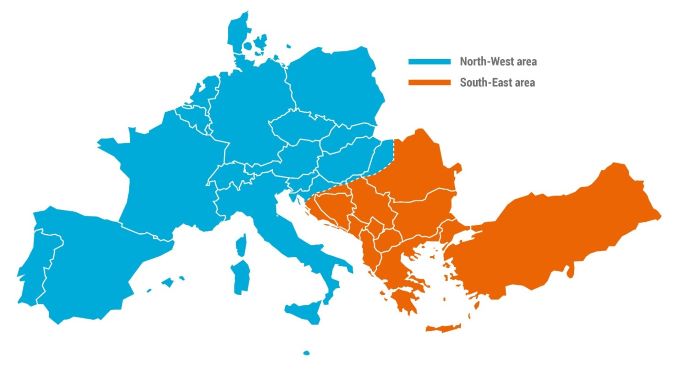
The incident at the beginning of this year was a reminder, after a long time, that despite sufficiently robust transmission system safeguards, unforeseen situations can occur that may threaten electricity supplies and even lead to a blackout. Although no blackout occurred as such, the synchronous area was split into two for more than an hour.
A special commission to investigate the causes of this exceptional situation was established on 4 March 2021 and, after four and a half months, published its final report on the incident. In addition to the causes and consequences of the incident, the report includes a summary of 22 recommendations on how to prevent similar incidents and mitigate their impacts (the full report can be found here).
"The initial event that caused the system separation on 8 January 2021 occurred at the Ernestinovo substation in Croatia. Generation from conventional power plants and renewable energy sources in the area where the system split was in line with scheduled generation, and there was no unplanned unavailability of generation resources." Final report on the incident of 8 January 2021.
It had already been stated that the fault was caused by the disconnection of two busbars by overcurrent protection at the Ernestinovo substation in Croatia. The ENTSO-E report confirms these findings and adds that high electricity generation from renewable sources or insufficient power adequacy were not to blame.
The detailed analysis further showed that the reasons were enormous power flows across Europe and low reserves for maintaining stability. ENTSO-E points out that as the common European electricity market continues to develop, such situations will become more frequent and more intense. Transmission system operators should therefore be sufficiently prepared, and the systems they operate should have adequate reserves to deal with similar situations.
Given the severity of the incident, the impacts were relatively limited: due to underfrequency, and thus a power shortfall in the northwestern area, so-called interruptible loads in France and Italy, with total demand of around 1.7 GW, were disconnected in order to reduce the frequency deviation. These are large customers contractually obliged to disconnect from the transmission system if the frequency falls below a certain threshold.
Translation disclaimer
This article is a machine translation of the Czech original and has not yet been fully reviewed. In case of any doubt, please refer to the Czech version.
Sdílejte článek prostřednictvím:
You might also like
23 October 2026, 11:01
23 October 2026, 06:34