23 October 2026, 14:38
Loading...
EU cross-border transmission links to expand by four projects, most at French borders

Martin Voříšek
25 December 2019, 12:34
According to current plans, four new interconnecting transmission links are due to enter operation in the European Union in 2020. As reported by the S&P Global Platts portal, three of them will be commissioned at France's borders, while the fourth will connect Denmark and Germany via an offshore wind farm.
As many as four new interconnectors are expected to help the European Union better manage the integration of renewable energy sources and contribute to the free trade of electricity within the EU. In addition, greater transmission capacity between member states is expected to reduce price differences between individual markets.
Transmission capacity will expand most at France's borders, where three new transmission links are due to enter operation. From France's perspective, interconnection with neighbouring countries is crucial: not only is France Europe's largest electricity exporter, and further interconnection may help it strengthen this position, but it is also heavily reliant on electricity for heating, which can trigger high demand for electricity imports during extremely low temperatures. In the event of severe frost and potential outages of nuclear units, France can therefore benefit from greater cross-border transmission capacity.
Two of the three new links at France's borders will transmit electricity to and from the United Kingdom. They are the two new projects – ElecLink and IFA 2. Both interconnectors are HVDC direct-current links with a transmission capacity of 1000 MW.
The third interconnector is the HVDC direct-current link between France and Italy, known as Piedmont-Savoy after its starting and end points. Even the additional connection, which will raise Italy's cross-border transmission capacity to 4,4 GW, is unlikely to equalise prices between Italy and neighbouring countries, and Italy will continue to have slightly higher electricity prices. The French-Italian link is due to be commissioned in the middle of next year.
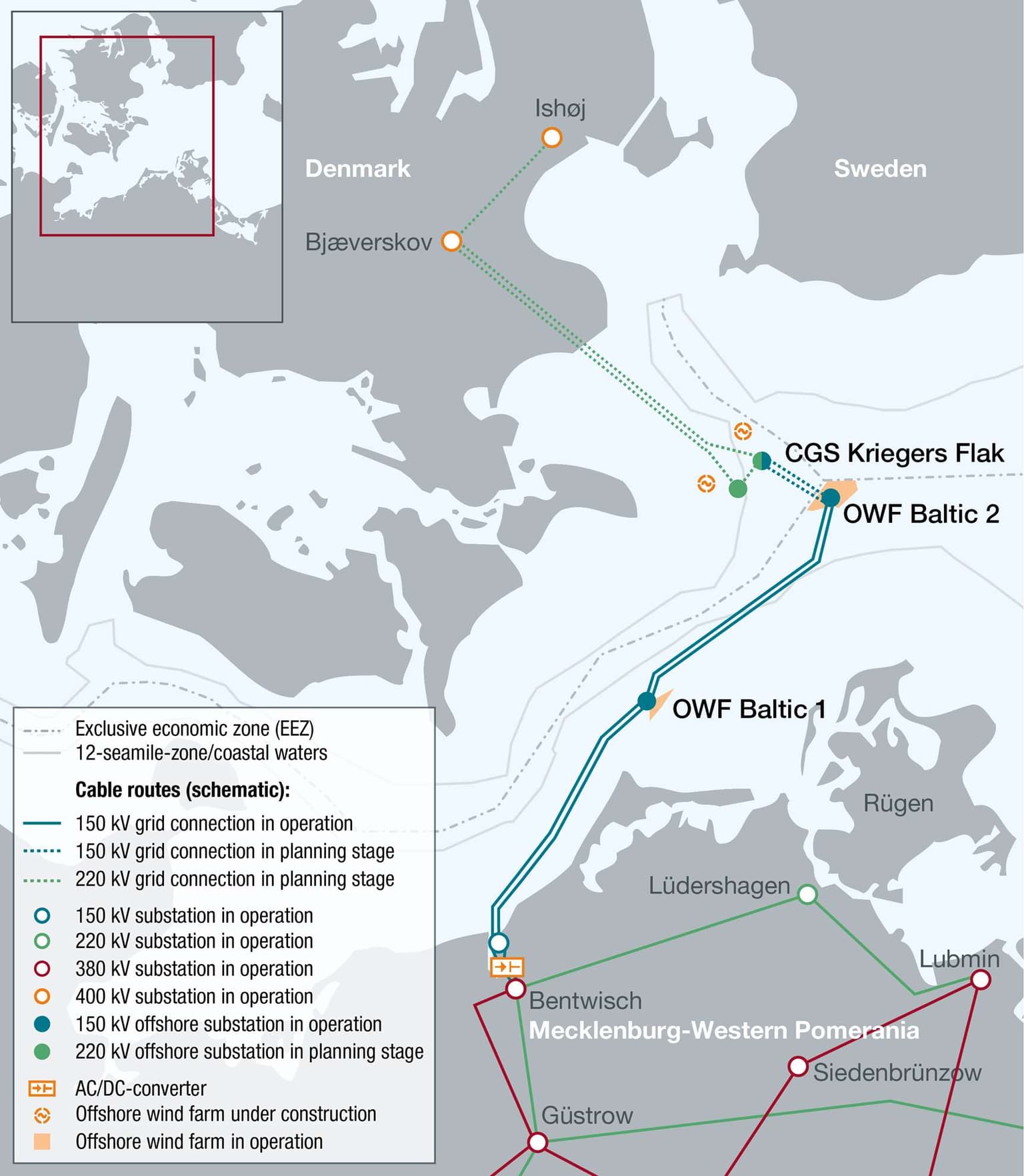
The fourth project, which is due to be launched in the first quarter of 2020, is an interconnection between the German state of Mecklenburg-Western Pomerania and the Danish island of Zealand. The project, known as the Kriegers Flak Combined Grid Solution, is expected to have a transmission capacity of 400 MW once commissioned.
The European Union's objective remains to support transmission links connecting individual member states. The EU expects this to reduce price differences between individual bidding zones while also improving the integration of renewable energy sources into the system.
Until the adoption of the so-called fourth energy package (also referred to as the “Clean energy for all Europeans package”), the EU's target was for each member state to have cross-border transmission capacity equivalent to at least 10 % of total installed capacity in the country. The new electricity market directive, issued as part of this package, already refers to a 15% target for interconnection between member states by 2030.
Translation disclaimer
This article is a machine translation of the Czech original and has not yet been fully reviewed. In case of any doubt, please refer to the Czech version.
Sdílejte článek prostřednictvím:
You might also like
23 October 2026, 11:01

23 October 2026, 06:34