
24 September 2026, 11:23
Loading...
Experts: Czech state must speed up grid reinforcement or outages will occur

oEnergetice.cz, ČTK
19 December 2025, 17:41
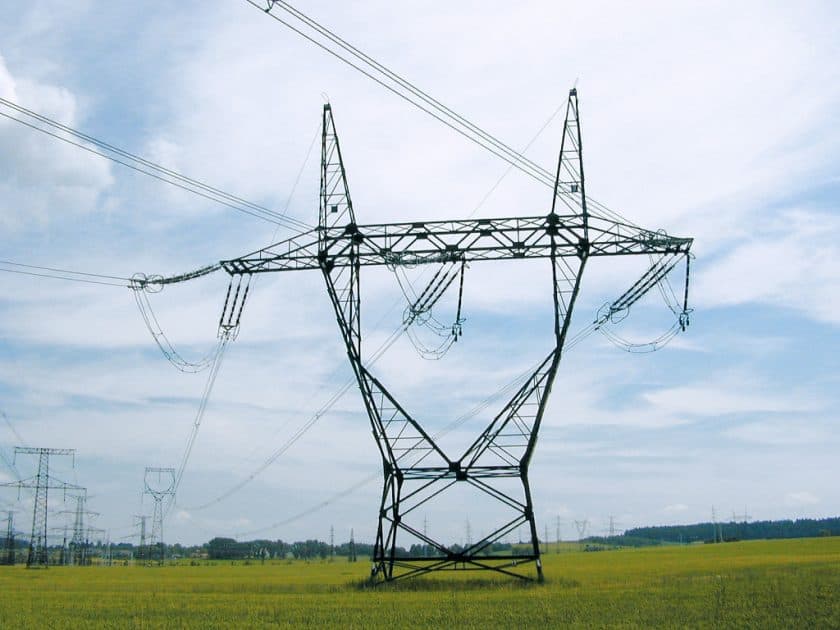
The state must speed up and simplify the preparation of projects to reinforce power grids. Without this, a large-scale electricity outage like the one Czechia experienced in July will recur. Maintenance and inspection of individual parts of energy infrastructure also need to be improved. This follows from analysts' comments to the Czech News Agency (ČTK). They also warn against replacing large generating sources too quickly.
The massive power outage on 4 July, which lasted several hours, affected around one million customers. Czechia has 6.3 million connection points. Transmission system operator ČEPS said today that the outage was caused by an unprecedented combination of unrelated events. The main cause was a cable falling onto line V411, caused by an earlier faulty repair. Other outages also occurred alongside this. The system had not been overloaded beforehand.
"From our perspective, it is important that there was no systemic failure in the organisation of the energy sector," said Michal Macenauer, strategy director at consultancy EGU.
According to him, the findings of the investigation into the July outage show that, besides the combination of outages, the blackout was also underpinned by the transformation the electricity sector is undergoing. "Namely, the replacement of large sources with predictable generation profiles by sources with fluctuating output," Macenauer noted.
At the same time, he warned that unless the state changes course, outages will recur. "At the system level, I therefore recommend at least decisively simplifying and dramatically shortening the preparation and approval of any grid construction projects, whether refurbishment or new lines, because the current situation leads to an unnecessary accumulation of outages and weakening of the grids. It is important to review and change the settings of renewable energy source protection systems in order to expand the range of conditions in which they will operate under non-standard grid conditions," Macenauer added.
Jiří Gavor, an ENA analyst and executive director of the Association of Independent Energy Suppliers (ANDE), described ČEPS's report today as seriously prepared. At the same time, he said it contains a number of measures to reduce the likelihood of such extensive outages recurring.
"Power systems are designed and operated to meet the N-1 criterion. This means that in the event of the failure of just one, even important, element—in this case, the breakage and fall of a high-voltage conductor—the system should remain operational. However, there was also a loss of significant capacity, and that proved fatal. Unfortunately, such an unfortunate coincidence of two independent faults does happen from time to time; such cases can be found in history," Gavor said.
He stressed that it is therefore necessary at present not to neglect the appropriate investments and to continue improving maintenance and inspections so that similar outages do not occur more frequently.
In response to the outage, ČEPS adopted several preventive measures. These include tightening reliability standards in operational planning and preparation, reviewing protection settings for intermittent sources, and introducing extraordinary diagnostics after every repair of a line connection in addition to standard thermal imaging inspections.
Translation disclaimer
This article is a machine translation of the Czech original and has not yet been fully reviewed. In case of any doubt, please refer to the Czech version.
Sdílejte článek prostřednictvím:
You might also like

24 September 2026, 10:30
24 September 2026, 06:56
23 September 2026, 17:27